
Bathroom water damage is priced in stages. First correct the source. Then determine what must dry, be removed, repaired, or rebuilt. A small visible stain can involve a shower assembly, wall, floor, subfloor, framing, vanity, or room below. A pre-demolition price is therefore an informed scenario, not a guaranteed final total.
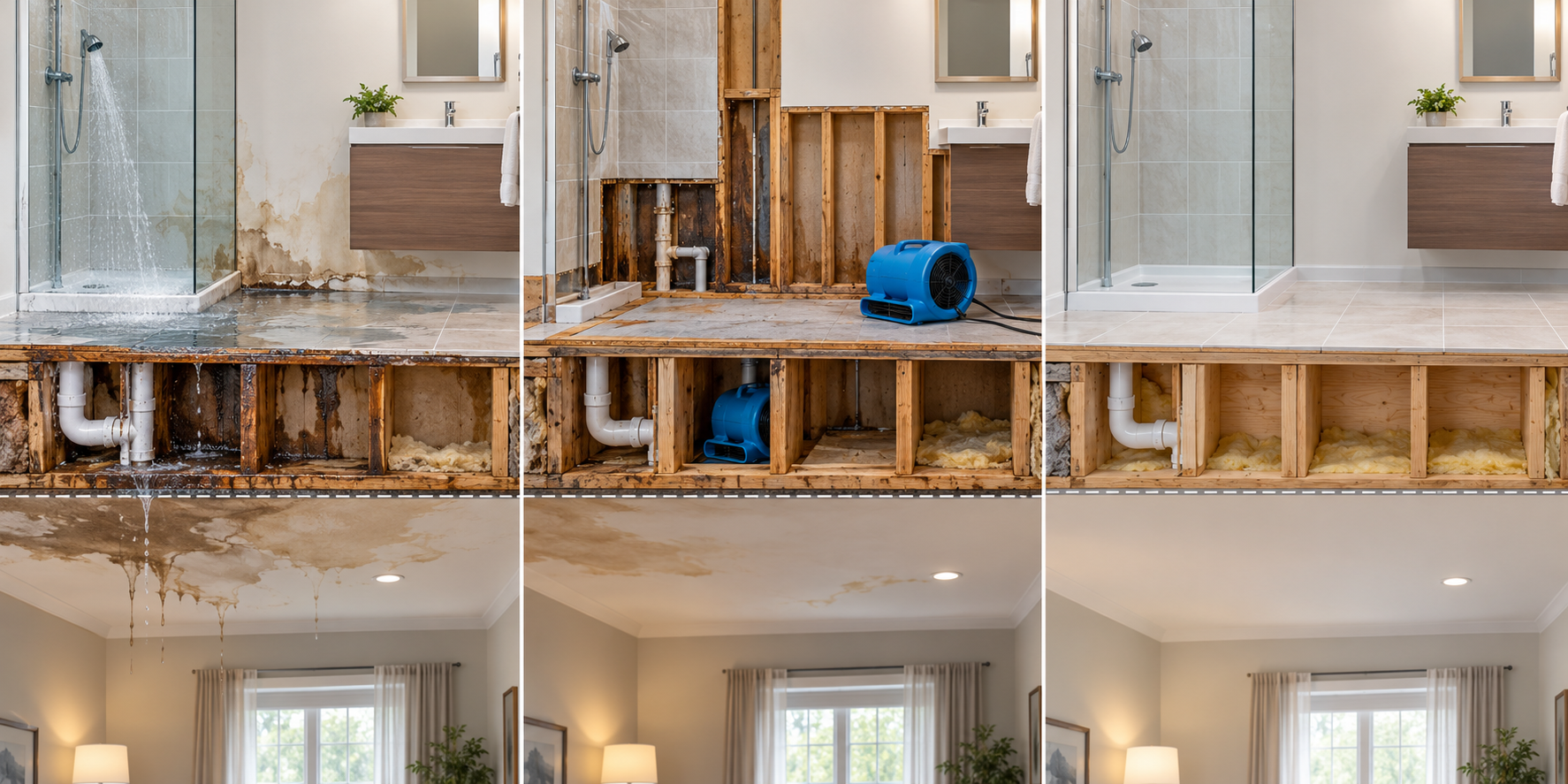
Bounded planning example
For a hypothetical localized U.S. loss with a known source and accessible finishes, a limited case might use $3,000 for drying, source correction, removal, and finish repair. A concealed wet-area and subfloor rebuild could use a separate $18,000 case. A Canadian comparison could use C$4,000 and C$24,000. These are rounded worked assumptions, not market averages or currency conversions; restoration, hazardous materials, and multi-room losses require separate scopes.
Source correction comes first
Possible sources include a plumbing connection, drain, tub or shower pan, sealant, waterproofing layer, ventilation problem, or water escaping the room during use. EPA and Health Canada guidance both emphasize identifying and correcting the moisture cause; cleanup alone does not prevent recurrence. A damaged finish should not be closed over while the source remains uncertain.
What may be affected
| Area | Possible scope |
|---|---|
| Visible finish | Drying, cleaning, removal, replacement, paint, tile, grout, or trim |
| Wall assembly | Drywall or backer, framing, insulation, penetrations, and restoration |
| Floor assembly | Finish, underlayment, subfloor, framing, transitions, and flooring below fixtures |
| Wet area | Pan, surround, waterproofing, drain, substrate, tile, and enclosure |
| Adjacent spaces | Ceiling below, baseboards, cabinetry, or other finishes reached by the water |
Health Canada notes that mold may be hidden behind walls or ceilings. Its small-area cleanup category is a guide for mold-cleanup pathways, not a universal threshold for replacing bathroom materials or rebuilding a shower. Older buildings, recurring moisture, vulnerable occupants, or hazardous materials need specialist assessment.
A 2026 This Old House survey of 1,000 U.S. homeowners who had recently remodeled a bathroom reported that nearly one-quarter encountered unexpected water-damage repairs. The page does not disclose enough sampling detail to establish a representative rate, and the result does not predict whether this bathroom has hidden damage or what repairs would cost. It is a reminder to document concealed-work allowances and approval steps, not a probability or fixed contingency.
Build three budget cases
The limited case corrects a known source and repairs accessible finishes. The moderate case removes wet materials, repairs substrate or subfloor, and restores a defined wet-area section. The extensive case includes a failed waterproofing assembly, concealed framing, multiple rooms, significant flooding, insurance restoration, or hazardous-material work.
Use photos, moisture or condition documentation where appropriate, quantities, unit prices, and approval rules for concealed work. Keep drying, source repair, bathroom reconstruction, and restoration visible instead of hiding everything in “water damage.”
Boundaries
Localized reconstruction of an existing bathroom or wet area belongs here. Mold, asbestos, lead, or other environmental hazards belong with hazard abatement. Disaster-driven or multi-room recovery belongs with restoration. Independent plumbing repairs remain plumbing work when the pipe or fixture—not the bathroom reconstruction—is the dominant decision.
The strongest budget tells you what failed, what is wet, what is being removed, what is being rebuilt, and what event moves the project into a specialist scope.