
Replacing bathroom floor tile is a room-specific project because fixtures, moisture exposure, transitions, and possible subfloor damage affect the work. The tile price is only one line. Removal, leveling, underlayment, toilet and vanity coordination, and restoration can control the installed total.
Bounded planning example
For a hypothetical 50-square-foot U.S. bathroom floor with a sound substrate, a worked replacement case might use $5,000 for removal, tile, setting materials, fixture coordination, and restoration. If leveling and subfloor repair are needed, use a separate $11,000 case. A Canadian comparison could use C$6,500 and C$14,000. These are rounded scope assumptions, not market averages or currency conversions.
What the quote should include
- protection, access, removal, dust control, and disposal;
- inspection and repair allowance for subfloor or framing;
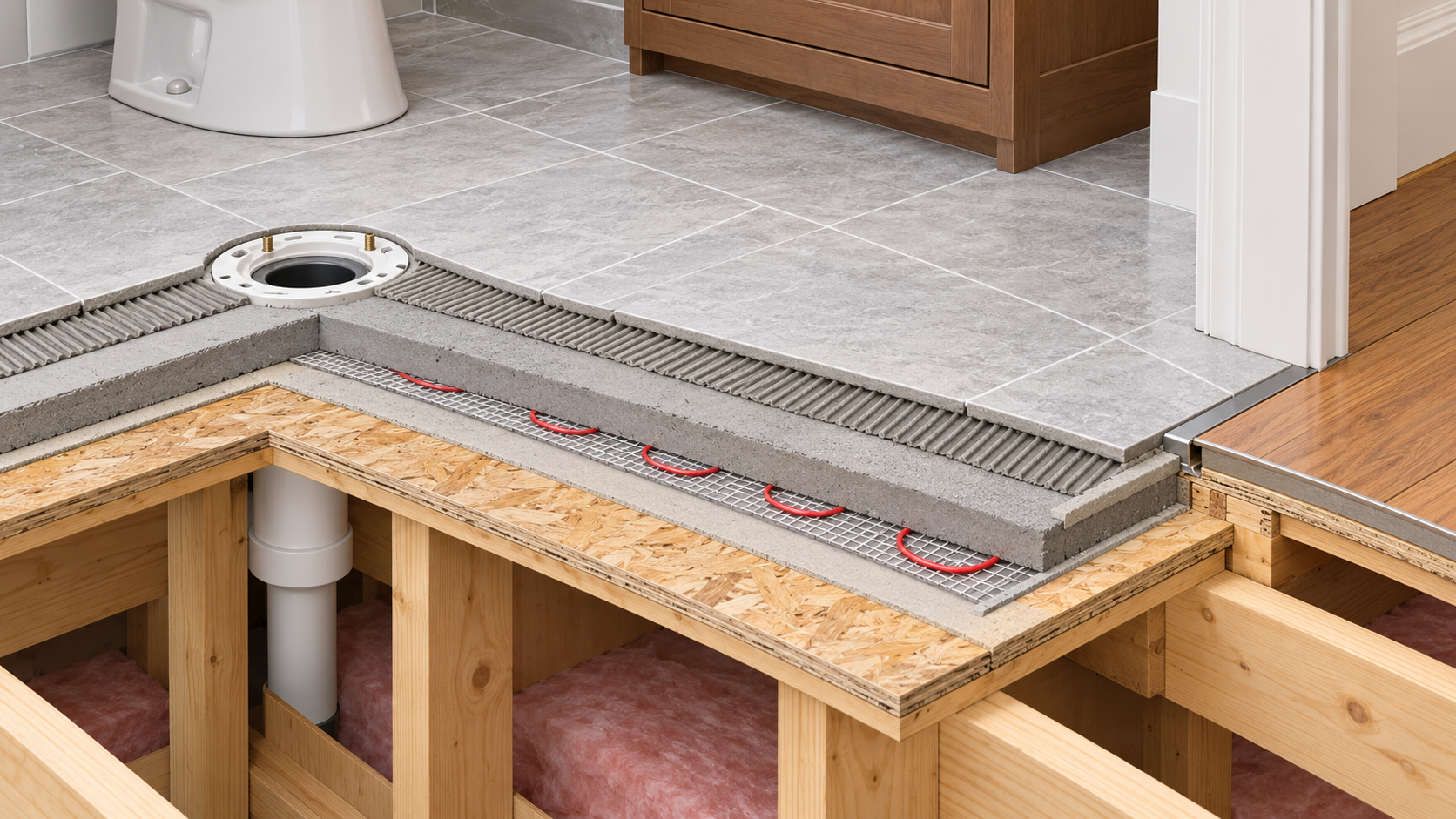
- leveling, underlayment, membrane or other system where applicable;
- tile, waste, pattern, setting materials, grout, trim, and transitions;
- toilet, vanity, door, baseboard, and floor-height coordination;
- heated-floor preparation or installation if selected;
- cleanup, paint or wall repair, and any inspection or permit scope.
Ask whether the floor continues beneath the vanity and toilet, whether those fixtures are removed, and whether the quote restores the room edges. A material-only quote is not an installed bathroom budget.
Moisture and floor condition
A soft area, staining, recurring leak, or damaged finish can indicate more than worn tile. EPA guidance treats water penetration and wet-material repair as separate from cosmetic improvement. Identify and correct the moisture source before closing a new floor. If water damage is concealed, use a defined allowance and an approval process.
Waterproofing requirements outside a shower or wet room vary by system and jurisdiction. Do not call every bathroom floor waterproof or assume a new tile surface solves a leak.
Pattern and material drivers
Large-format tile may change substrate flatness and handling. Small tile, borders, diagonal patterns, complex layouts, stairs, and many penetrations can add cutting and setting labor. Natural stone or premium products can add preparation and maintenance considerations. A simpler pattern can reduce labor without removing necessary underlayment or moisture control.
Coordinate heated flooring
If the floor is already open, radiant heating may be an option, but it adds controls, electrical capacity, floor buildup, compatibility, and repair considerations. Price it as a separate option rather than assuming the tile replacement includes it.
The best floor budget explains the substrate, fixture interfaces, moisture boundary, material, pattern, and restoration—not just the area multiplied by a tile rate.