
Bathroom flooring should be compared as an installed system, not a material price. Preparation, floor height, moisture exposure, fixture removal, transitions, underlayment, slip considerations, heated-floor compatibility, maintenance, and the condition below the finish can outweigh the cost difference between products.
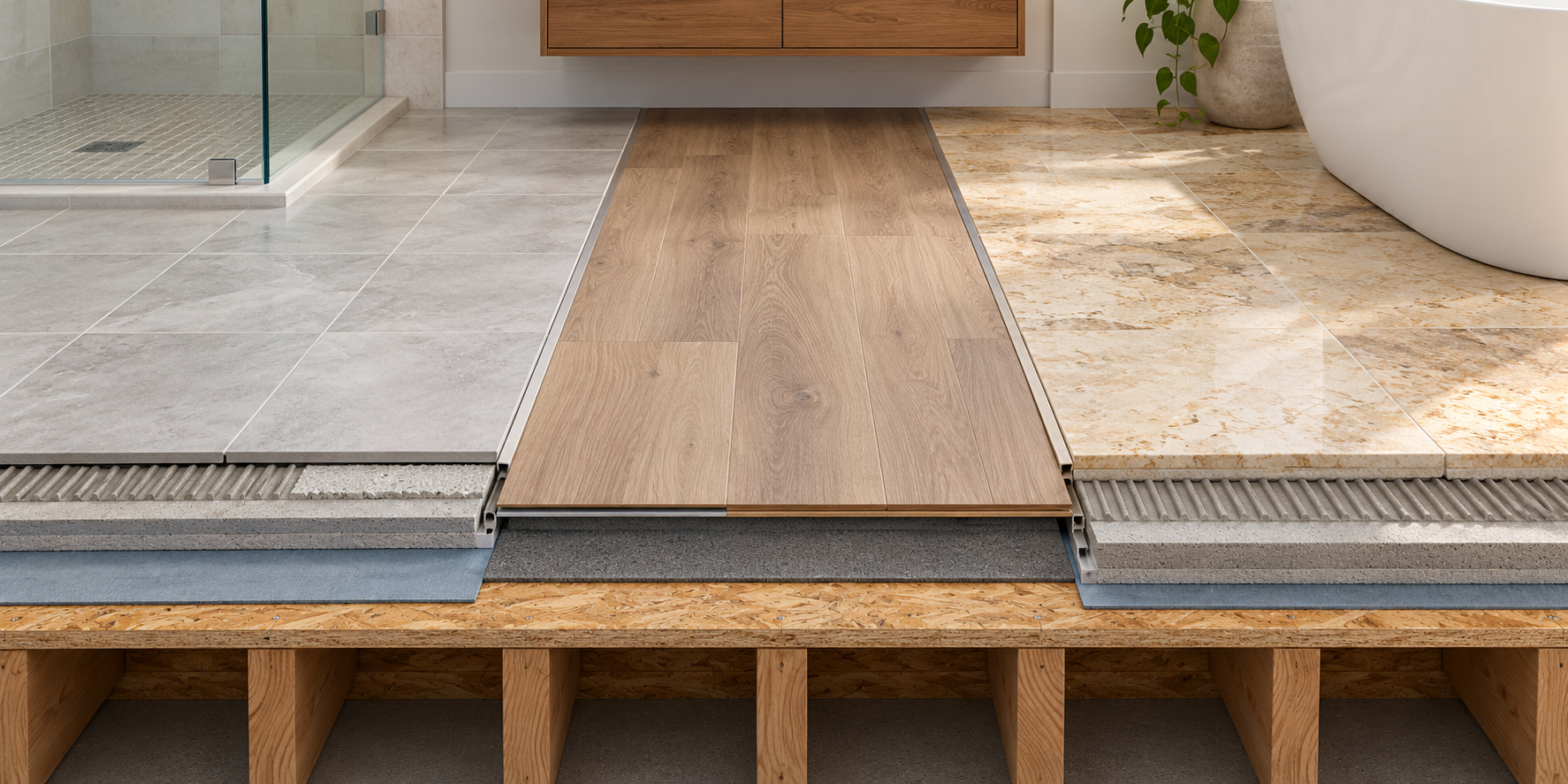
Bounded planning example
For a hypothetical 50-square-foot U.S. bathroom floor with a sound substrate, a worked resilient or tile finish case might use $4,000, while a natural-stone case with more preparation could use $8,000. A separate Canadian comparison could use C$5,200 and C$10,500. These are rounded installed-scope assumptions, not market averages or currency conversions; wet-room waterproofing and subfloor repair are additional.
Compare the complete choice
| Flooring class | Potential fit | Questions that control the project |
|---|---|---|
| Ceramic or porcelain tile | Broad design range and common bathroom use | Substrate flatness, underlayment, pattern, grout, transitions, and labor |
| Resilient or vinyl products | Can suit a lower-complexity finish scope when the product and substrate are compatible | Product water claims, seams, edges, floor preparation, and moisture below |
| Natural stone | Premium appearance and a different maintenance profile | Weight, substrate, sealing, flatness, slip behavior, and labor |
| Other systems | May fit a defined design or wet-room assembly | Manufacturer suitability, installation method, repairability, and local conditions |
“Water-resistant” is not the same as a waterproof floor assembly. Do not call every product waterproof or assume a finish solves a leak below it.
The preparation budget
Request separate lines for removal, disposal, subfloor and framing inspection, leveling, underlayment, moisture-control system where applicable, finish, grout or seams, trim, transitions, toilet and vanity coordination, door clearance, and restoration. A premium product over a damaged or uneven substrate is not a complete solution.
Wet rooms and accessibility
A conventional bathroom floor and a wet-room floor have different water-management boundaries. A wet room may require broader waterproofing, controlled drainage, slope, and transition work. NAHB guidance identifies slip-resistant bathroom and shower floors as a common accessibility feature, but product selection needs project-specific review and no material class is automatically safe for every user.
Heated-floor interaction
If the floor is being opened, compare the cost and floor buildup of a heated system as a separate option. Confirm controls, electrical capacity, compatibility, sensor placement, repair implications, and finished height before choosing the finish.
Choose by use and installation
Select tile when its preparation, labor, maintenance, and repair profile fit the project. Consider resilient products when a compatible system and installation can manage the room’s moisture conditions. Consider stone when its premium finish, structure, maintenance, and slip trade-offs are intentional. The quote should identify product, substrate, moisture boundary, interfaces, and warranty assumptions.