
Two bathroom quotes can have very different totals because they include different work. A percentage breakdown copied from another project is not a reliable standard: a finish-heavy refresh, a custom shower rebuild, and a layout change distribute money differently. Use a component map to find omissions and understand which choices cascade into other work.
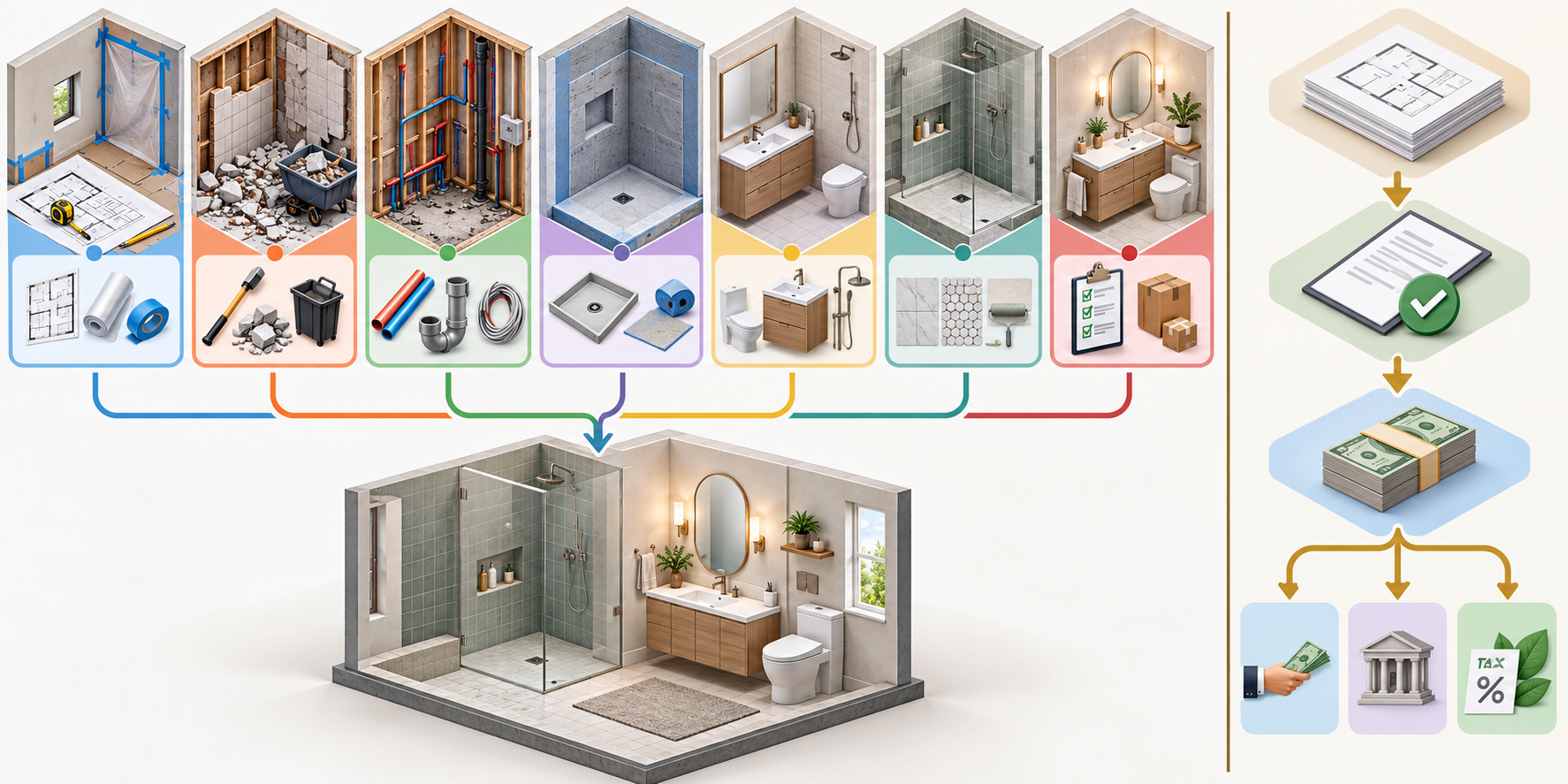
Bounded planning example
For a hypothetical U.S. remodel, an illustrative $24,000 budget could allocate $3,000 to planning, protection, and demolition; $5,000 to rough work; $7,000 to the wet-area assembly; $5,000 to fixtures and cabinetry; and $4,000 to finishes and closeout. A separate Canadian planning case could total C$31,000 using the same categories. The figures are rounded assumptions for testing whether a quote covers each layer, not market averages or a currency conversion.
The cost layers to separate
| Layer | What it can include | Why it varies |
|---|---|---|
| Planning and protection | Measurements, design coordination, dust control, access, and protection of the home | Complexity, occupied conditions, and design responsibility |
| Demolition and disposal | Removal, sorting, containers, hauling, and surface preparation | Depth, material, access, and number of layers |
| Rough infrastructure | Plumbing, wiring, controls, framing, and ventilation changes caused by the remodel | Fixture moves, existing construction, and local trade requirements |
| Wet-area assembly | Pan or base, substrate, membrane/system, seams, drain, tile or panels, and enclosure | System choice, condition, custom details, and waterproofing interfaces |
| Fixtures and cabinetry | Tub, shower, toilet within a coordinated remodel, vanity, countertop, sink, faucets, and hardware | Product tier, availability, fit, and included installation |
| Finishes | Tile, flooring, paint, trim, mirrors, and accessories | Material, pattern, preparation, and restoration boundary |
| Closeout and risk | Cleanup, testing, permits where applicable, allowances, and contingency | Jurisdiction, concealed conditions, and contract controls |
Keep outside assistance separate from the trade-cost split. If an accessibility program may support part of the work, compare the gross quote, the items the program has approved, the cash needed before payment, and any grant, reimbursement, loan, or tax result as separate figures. A funding cap is not a project price or an award; the accessible bathroom cost guide covers the eligibility and timing questions.
Labor is not a single percentage
Labor can be concentrated in demolition, custom tile, waterproofing details, access, or multi-trade coordination. Material-heavy choices can still require more labor when they add cuts, transitions, support, or special handling. Ask what production assumptions sit behind each line instead of demanding one labor-to-material ratio.
The wet area deserves detail
Visible tile is only one layer. A system-specific installation handbook treats membranes, corners, seams, penetrations, drains, and transitions as parts of an assembly. A quote should identify the proposed system and the surfaces it covers, not simply say “waterproofing included.” Ask how the installer will address the drain, wall-to-floor transition, niches, benches, and penetrations.
Infrastructure and finish cascades
Moving a fixture can add openings, rough-ins, framing, floor repair, and new finish work. A heavier or custom product may change access and support. A new ventilation route can add ceiling, wall, roof, or exterior termination work. A floor change can affect the toilet, vanity, door clearance, and heated-floor opportunity.
Put options in a separate column. This shows whether a higher finish choice is driving the total or whether the base project already requires the work.
Contingency and allowances
Use a defined allowance for concealed substrate, framing, or plumbing conditions when the opening cannot be predicted. The quote should specify the assumed quantity, unit price, evidence required, and homeowner approval process. An undefined “as needed” line is a transfer of risk, not a usable budget.
How to compare breakdowns
Normalize the room boundary, fixture count, layout, wet-area system, finish allowances, demolition depth, ventilation route, protection, disposal, taxes, permits or inspections where applicable, and restoration. Then compare the base total, expected concealed-work total, and optional upgrades. US and Canadian market observations should remain in their own currencies and source definitions.
The breakdown is doing its job when you can explain what each dollar—or each allowance—buys, what is retained, and what condition would change the final price.