
Stair safety work is appropriate when the household can still use the stairs but the environment has avoidable hazards. A coherent retrofit may combine handrails, lighting, tread repair, contrast, floor transitions, and landing visibility. It can be a more proportionate project than powered access when the problem is the stair condition rather than the ability to climb it.
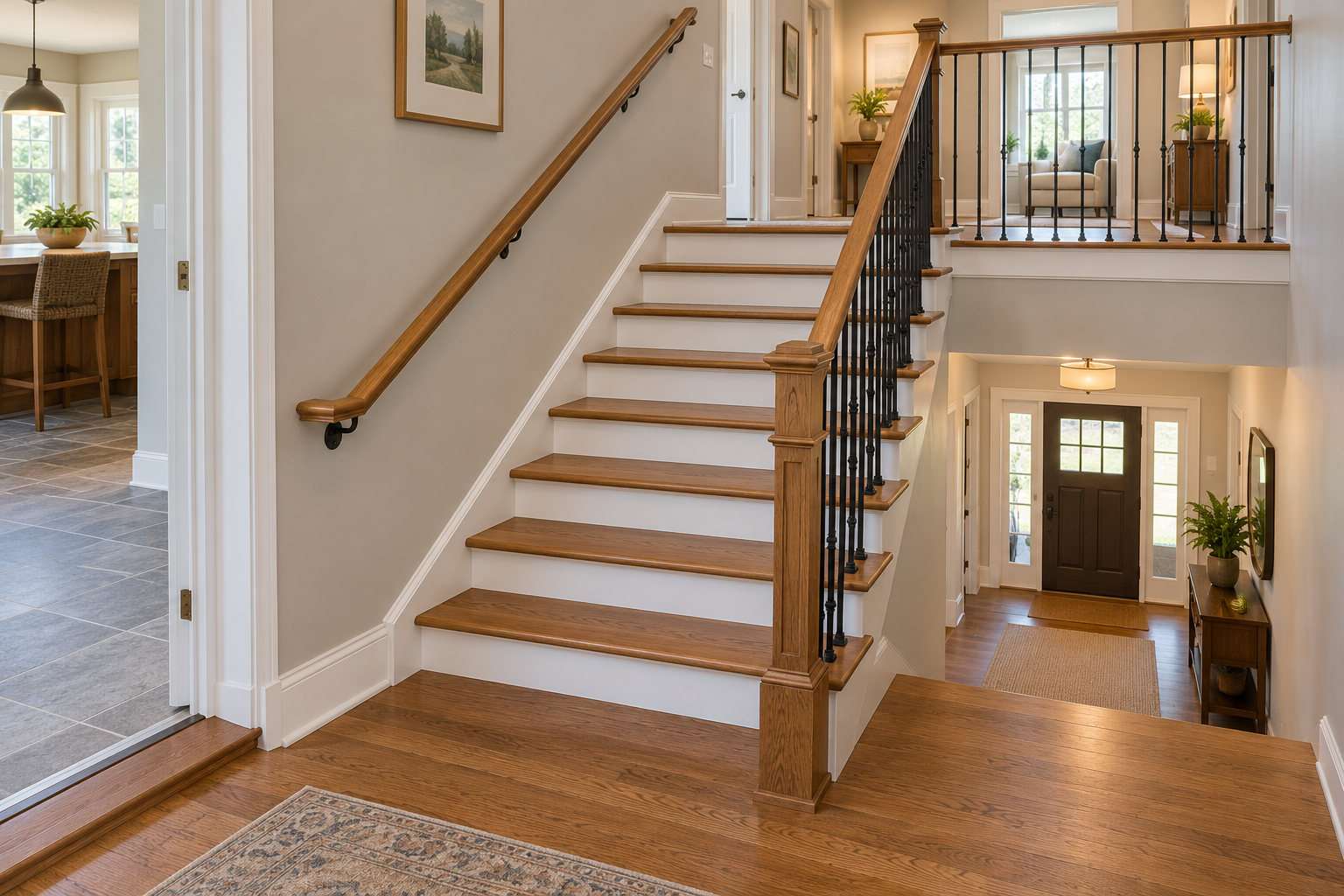
Identify the hazard before pricing the fix
Walk the stairs in the conditions in which they are actually used. Look for loose or poorly positioned handrails, missing light at the top or bottom, glare, worn or loose coverings, inconsistent edges, clutter, slippery surfaces, difficult switches, and transitions at landings. Note whether a person carries items, uses a device, needs a caregiver, or approaches from more than one route.
The CDC and NIA support addressing home hazards as part of fall prevention, but no modification guarantees that a fall will not occur. Personal health, vision, balance, footwear, medication, and behavior also matter. This article focuses on environmental work and does not provide medical advice.
Handrails and guards
A loose rail may need repair, new blocking, replacement fasteners, or a new rail that follows a more usable path. Adding a second rail can improve access for different hand preferences or stair widths. The support, height, continuity, clearance, and ends must suit the stair and applicable local requirements.
Guards and handrails are not the same thing. A guard addresses a fall from an edge; a handrail is for grasping and guidance. Required details vary with stair type, opening, occupancy, and local code. Ask a qualified contractor to identify which condition exists and what rules apply rather than relying on a universal diagram.
Lighting and controls
Lighting cost may include a fixture, a brighter source, a switch relocation, a second control, wiring, patching, or a new circuit. The goal is even visibility of treads, nosings, handrails, and landings without glare or harsh shadows. A control at only one end of the stair can leave the person navigating in darkness when returning.
Changing a switch or wiring requires appropriate electrical work. Motion or automatic lighting may help some households, but controls must be reliable and easy to operate. Detailed smart-home selection belongs in the technology category; this article covers the accessibility objective and construction implications.
Treads, coverings, and contrast
Loose carpet, damaged nosings, uneven surfaces, and slippery finishes can create a route problem. The remedy may be tightening or replacing a covering, repairing a tread, refinishing the stairs, adding a suitable visual contrast, or rebuilding part of the stair. Replacing every tread is a different project from repairing one loose section.
Avoid creating a visual pattern that makes edges harder to read. Product performance depends on the material, lighting, moisture, cleaning, and user vision. A qualified installer should confirm adhesion, edge security, and compatibility with the stair construction.
Safer landings and transitions
Landings need enough clear area for the person to stop, turn, open a door, or receive assistance. A new handrail may conflict with a door. A threshold or floor transition may be the actual trip point. Include adjacent hallway, entry, and floor work when it affects stair use.
Cost scenarios
A small safety package may involve a rail repair, better bulbs or fixtures, and removal of trip hazards. A medium project may add wiring, multiple rails, surface work, and landing changes. A larger retrofit can include stair reconstruction, flooring, wall repair, structural changes, or a decision to install a stair lift.
Ask for an itemized quote with demolition, electrical, carpentry, surface, paint, permits, and finish restoration separated. U.S. and Canadian labor and code environments differ; local quotes are more useful than a converted price.
Safety retrofit or stair lift?
If the person can use the stairs with improved conditions, a safety retrofit may preserve exercise, speed, and ordinary circulation. If climbing or descending is no longer a safe or practical option, compare a stair lift, platform lift, elevator, or first-floor living. The answer should follow the user’s actual ability and route, not the lowest product price.
Contractor questions
Ask the contractor to identify the hazard, proposed correction, structural and electrical assumptions, applicable local requirements, and maintenance. Request photos or a plan showing lighting controls, rail locations, landing clearances, and finish transitions. If the stairs are the only route between floors, agree when they will be unavailable and how the household will reach sleeping, bathing, and an exit during the work. Ask what is outside the quote and how concealed damage is handled.
A good stair retrofit reduces specific environmental risks and explains what it cannot solve. It should make the route more predictable without implying that a checklist replaces a functional assessment or professional judgment.
Check the result with the user
After installation, walk the route with the intended person in normal and low-light conditions. Check hand placement, foot placement, visibility, door operation, clear landings, and the ability to stop or turn. Record maintenance responsibilities for bulbs, batteries, coatings, fasteners, and clutter control.
Reassess after a fall, a new device, a change in strength or vision, or a change in who assists. A safer stair is a maintained route that supports the person’s actual routine; it is not a permanent guarantee based on one inspection.