
A stair lift can avoid a larger floor-to-floor remodel, but it is not just a chair and rail. The installed cost depends on the staircase geometry, equipment, power, landing, user transfers, installation, service, and any structural or finish work. Straight and curved systems are different purchase and ownership decisions.
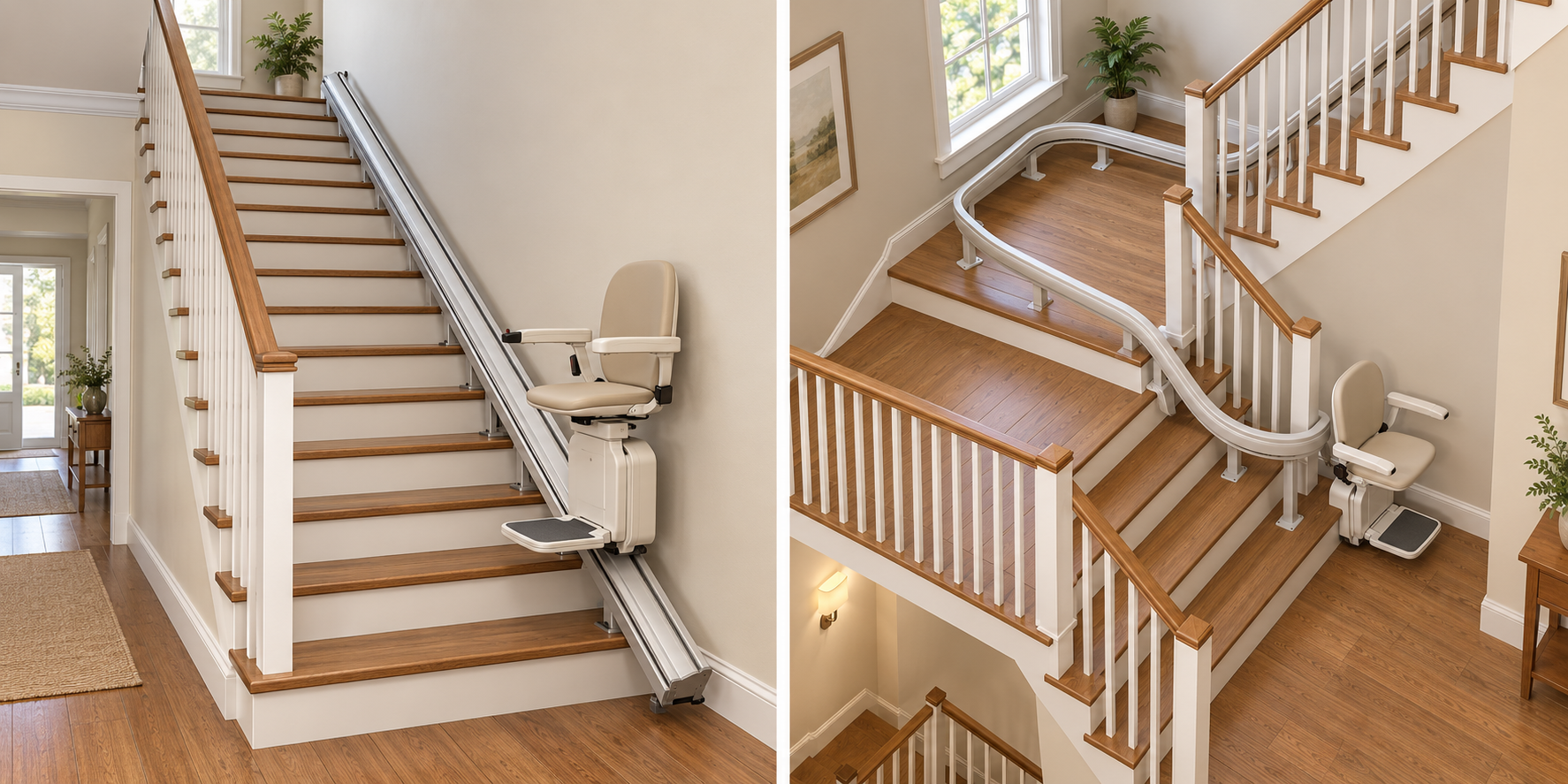
Straight versus curved systems
A straight lift follows one flight with a relatively consistent rail path. It may be the simpler and less expensive configuration when the stairs, landings, and top and bottom approaches are suitable. A staircase with turns, intermediate landings, multiple flights, or unusual geometry generally needs a curved or custom rail system.
Curved systems cost more because the rail is designed for the actual staircase and may require more measurement, fabrication, installation time, and service planning. A quote should state whether it is custom, reusable after removal, or tied to the property. An outdoor lift adds weather, corrosion, drainage, and temperature considerations.
What the installation quote should include
Separate the equipment from:
- site measurement and configuration;
- rail, seat, controls, and charging components;
- delivery and installation;
- electrical work or a new outlet where needed;
- landing or handrail adjustments;
- removal of an old system;
- testing, commissioning, and user orientation;
- warranty, maintenance, call-outs, and parts;
- future relocation or disposal.
The stair itself may need repair before the lift is installed. Loose treads, poor lighting, an obstructed landing, or a handrail conflict can remain a safety problem even when the lift is operating.
Fit and user suitability
The user must be able to approach the lift, transfer to the seat, use the controls, and arrive safely at the destination. A caregiver may need space to assist. A lift that reaches the upper floor does not solve a narrow doorway, an inaccessible bathroom, or an unsafe landing at the top.
Ask for a functional and site review before purchase. Equipment suitability is user- and model-specific. Do not assume that a used unit, a rental, or a standard seat fits every body, stair, transfer pattern, or future need.
New, used, and rental options
A new system can offer a clearer warranty, current parts, and a configuration selected for the staircase. Used or reconditioned equipment may lower the equipment price, but the installed cost still includes inspection, compatibility, rail fit, batteries, service, warranty limits, and possible modifications. A rail from another house is not automatically transferable.
Rental availability depends on the market and expected duration. It can make sense for a temporary need when the staircase and user fit are confirmed, but transport, installation, removal, minimum terms, damage, and service should be included in the comparison. Temporary does not mean safe for every user.
Standards, approvals, and safety
ASME identifies A18.1 as covering design, construction, installation, operation, inspection, testing, maintenance, and repair of stairway chairlifts and platform lifts, including household applications. The applicable edition, adoption, inspection process, and local requirements depend on the jurisdiction and installation.
This article does not provide repair, bypass, adjustment, or installation instructions. Do not defeat a safety device or modify a rail or seat. Use a qualified provider, ask who performs testing and service, and obtain local confirmation of permit or inspection requirements.
Cost scenarios and alternatives
A straightforward indoor straight-flight installation can be a focused equipment and installation project. Curved, outdoor, multi-flight, or difficult-access systems can become a larger capital and service commitment. Add electrical, landing, repairs, removal, and finish work to the quote before comparing alternatives.
If the need is only at the entrance, compare a ramp or platform lift. If the whole household should live on one level, compare first-floor living. If long-term multi-floor access and a major budget justify it, compare a home elevator. A stair lift often has the advantage of a smaller construction footprint, but it occupies the stair and may not carry every user or item.
Questions to ask the provider
Request a site-specific layout, user-capability assumptions, power and charging plan, warranty, service response, maintenance requirements, removal cost, and the handling of a power failure. Ask what happens if the user’s device or transfer method changes. Confirm whether the quote includes rail customization, installation, testing, and local approvals.
The right stair lift decision is about a safe and maintainable route between floors. Price the system as an installed service with a future ownership plan, not as a chair purchased from a catalog.