
Replacing a heating-oil tank can be a routine fuel-storage project or the beginning of an environmental investigation. The first budget question is whether the tank is above ground, in a basement, outside, or underground, and whether there is evidence of corrosion, staining, odor, or a previous release. The heating appliance itself is a separate system decision.
Define the tank scope
Ask for a written inspection and proposal that identifies:
- tank location, material, capacity, age, and condition;
- supply and return piping, filters, valves, supports, and access;
- fuel transfer or temporary heat during the work;
- removal, disposal, abandonment, or replacement method;
- excavation, slab or finish restoration, and delivery access;
- testing for a release and the response if contamination is found;
- permits, notifications, reporting, and local environmental requirements.
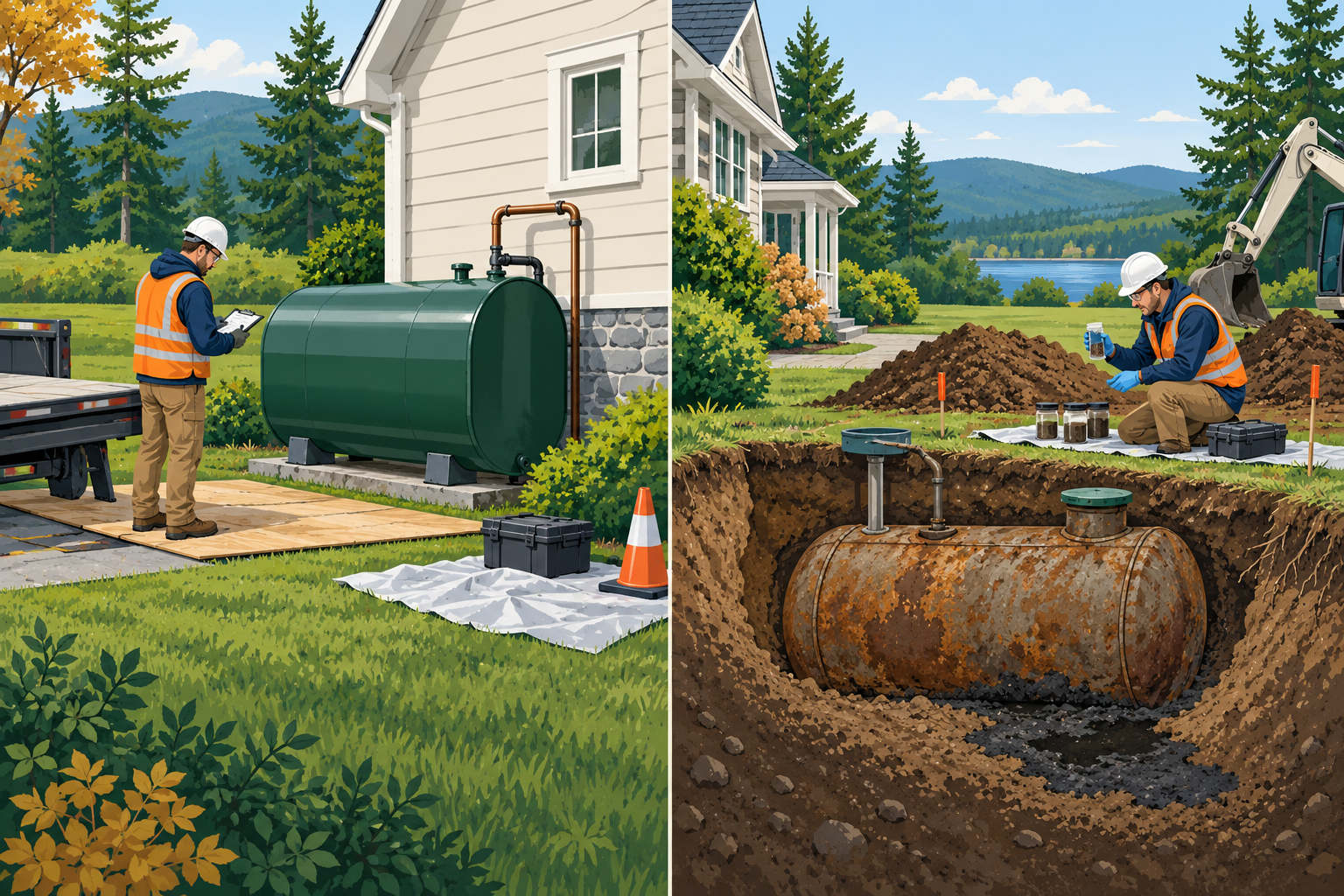
An above-ground tank with good access is not the same project as an underground tank whose condition or history is unknown. A leaking tank may require sampling, soil or building remediation, disposal, and restoration beyond the replacement itself.
Federal rules do not answer every local question
U.S. EPA explains that a tank storing heating oil for consumptive use on the premises may be excluded from the federal underground-storage-tank definition, while state programs may still regulate tanks that are excluded federally. That distinction is not permission to remove, abandon, or replace a tank without local review. Canadian provincial and municipal requirements were not established by the available research and must be checked locally.
Compare replacement with a fuel-system change
If the tank is near the end of its life, compare its replacement with the cost and feasibility of changing the heating system or fuel. Include new equipment, electrical capacity, fuel delivery, chimney or venting changes, controls, permits, and disposal. Do not assume the alternative is cheaper simply because it removes the tank.
Questions for the contractor
- Is the proposal for inspection only, replacement, removal, or all three?
- What evidence would trigger sampling or a separate environmental scope?
- Who handles notification and disposal?
- Does the price include piping, fuel transfer, access, restoration, and taxes?
- What local authority or insurer documentation is needed?
- How will the home be heated while the system is out of service?
Do not cut, drain, move, or abandon a fuel tank yourself. Fuel, vapors, releases, and disposal can create fire, health, and environmental hazards. Price routine work and release contingencies separately so an apparently low tank quote does not conceal the major risk.
Identify the tank and the intended outcome
Before requesting estimates, record whether the tank is aboveground or underground, its approximate capacity and age if known, location, visible condition, supply and return lines, connected equipment, and whether it is in active use. Gather previous inspection or service records, fuel delivery history, leak reports, and any permits or closure paperwork. Do not disturb suspected asbestos, corroded fittings, contaminated soil, or a tank with unknown contents; describe the concern to a qualified contractor.
Clarify whether the job is repair, replacement in place, relocation, removal, or permanent closure. Each outcome can involve different piping work, excavation, lifting, disposal, permits, and heating interruption. A buyer assessing an existing property should ask who owns the tank, whether a supplier has a claim or lease, and whether the seller has records of prior work. If no reliable record exists, price a professional assessment before assuming the tank can remain in service.
Separate normal replacement from release response
Ask the contractor to price the known work and describe the process if a release or contamination is found. A routine tank replacement proposal may cover pump-out, disconnection, removal, new tank, line work, testing, and restoration, while soil sampling or remediation may be additional. Request clear unit rates, approval steps, disposal documentation, and the contingency amount excluded from the fixed price. A quote that hides investigation and cleanup inside a small “allowance” can mislead the owner about exposure.
Regulation differs by tank type, capacity, use, and location. U.S. federal underground-tank requirements do not automatically define rules for an aboveground heating-oil tank or a Canadian property. Ask the appropriate environmental or fire-safety authority which notification, closure, inspection, and record requirements apply. Use a contractor familiar with the local rules and obtain written confirmation when a tank is permanently removed or closed in place.
Compare bids and manage heating continuity
Ask each bidder to identify protection of the building, disconnection and reconnection, temporary heat if needed, access equipment, excavation depth assumptions, disposal destination, new tank specification, line replacement, testing, permits, and finish restoration. Confirm whether the existing boiler or furnace is included; a tank replacement alone does not service or replace the appliance. State who handles electrical controls, fuel lines, venting, and startup so work does not fall between contractors.
Plan timing around fuel level, weather, and household occupancy. Ask how long the system may be unavailable and what temporary heating is safe for the building. Keep combustible materials and occupants away from active work as directed by the contractor. Owners should not siphon fuel or attempt to disconnect a tank. For an unoccupied seasonal home, arrange access, key control, freeze protection, and post-work checks before the crew arrives.
Preserve a complete record
After work, collect the tank make, capacity, serial number, installation date, inspection and test documents, permits, disposal receipts, photographs of the work area, and any soil or water sampling results. Record the contractor’s warranty, maintenance interval, emergency contact, and the location of shutoffs. Update insurance records and disclose any unresolved investigation or repair obligation to future owners as required.
The final budget should show the known installed work, the separate investigation and release contingency, heating interruption, and any future service responsibility. Where site conditions remain unknown, label the estimate provisional and identify the next test or inspection needed. That is more useful than presenting one precise removal figure before anyone has established what is in the ground.
Avoid mixing different tank rules and prices
When the system is not being replaced, ask the service provider how the existing tank is monitored and what condition would trigger an inspection. Preserve fuel deliveries, leak checks, and maintenance notes with the tank records. They help a later contractor distinguish normal service history from a new condition found during removal.
If there is a release concern, ask which laboratory, environmental consultant, and contractor roles are included and who coordinates regulator communication. Keep the testing plan and responsibility explicit before excavation begins.
Keep the tank estimate distinct from any furnace or boiler work, chimney or vent changes, fuel conversion, and home renovation. If a new heat source is part of the project, obtain a separate scope that identifies which equipment and building changes are included and which qualified trades will perform them.
If the tank is part of a real-estate transaction, request the seller’s written authorization for inspection and clarify who pays if testing is recommended. Keep the result, limitations, and follow-up recommendation in the purchase file. A visual inspection may not establish underground conditions, so describe precisely what was checked and what remains untested.
An aboveground residential heating-oil tank, an underground tank, and a regulated commercial storage system can fall under different rules and contractor scopes. Confirm the tank’s capacity, use, location, and status before using a regulation or quote as a comparison. A federal underground-tank resource can explain one U.S. framework, but does not establish the requirements for every residential tank, state, province, or municipality. Ask the local authority and a qualified environmental professional which requirements apply.
If a seller or service record says a tank was “abandoned,” request the closure documentation and confirm what work that term describes. A tank left in place, removed from service, or physically removed can require different evidence. Ask whether lines were disconnected, contents handled, inspections completed, and the site restored. If records are missing, price a professional review before budgeting a straightforward replacement.
Request more than one proposal when practical, but first verify that the bidders understand the same tank and intended outcome. Give them the same photographs, access details, existing records, and heating-continuity needs. Ask each bidder to state whether sampling, regulatory notification, contaminated-soil handling, restoration, and final reporting are included. Compare those scope elements before comparing the total; different prices may reflect different assumptions about release response.
Preserve receipts and findings even when no contamination is found. Buyers and future contractors may need proof of removal, disposal, testing, and closure. Keep any unresolved environmental condition separate from ordinary maintenance in the ownership budget. Do not represent a contingency as proof that a release exists; use it to explain what remains unknown until inspection or testing is complete.
Set expectations for the finished site
Ask whether the work will leave a basement, utility room, yard, or driveway ready for its next use. Clarify patching of openings, removal of temporary equipment, grading, surface restoration, and who reconnects the heating appliance. Request a completion record that identifies the old tank’s disposition and the new tank or heating arrangement, if applicable. If excavation reveals a condition that changes the work, pause for documented owner approval and any required professional or authority direction. A clean handoff should state what was done, which inspections or tests were completed, and whether any follow-up remains. This keeps routine replacement, cleanup, and environmental investigation visible as separate parts of the property budget.