
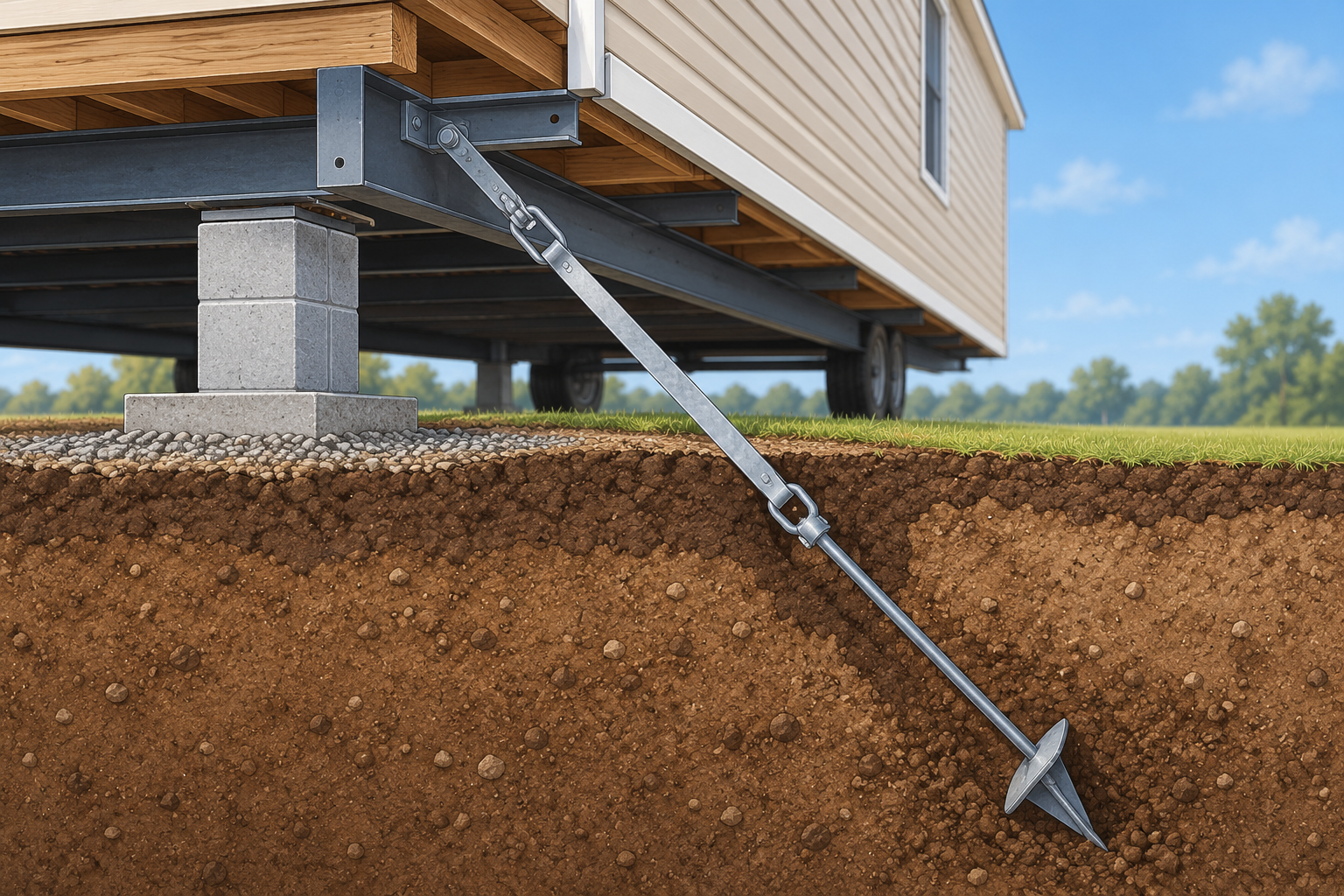
An anchor system is more than a strap. It connects the home or frame to ground through anchors, ties, straps, hardware, foundation components, and soil. Corrosion, loose hardware, changed grade, settlement, a move, a new addition, or wind, flood, or seismic exposure can change whether the existing system is appropriate.
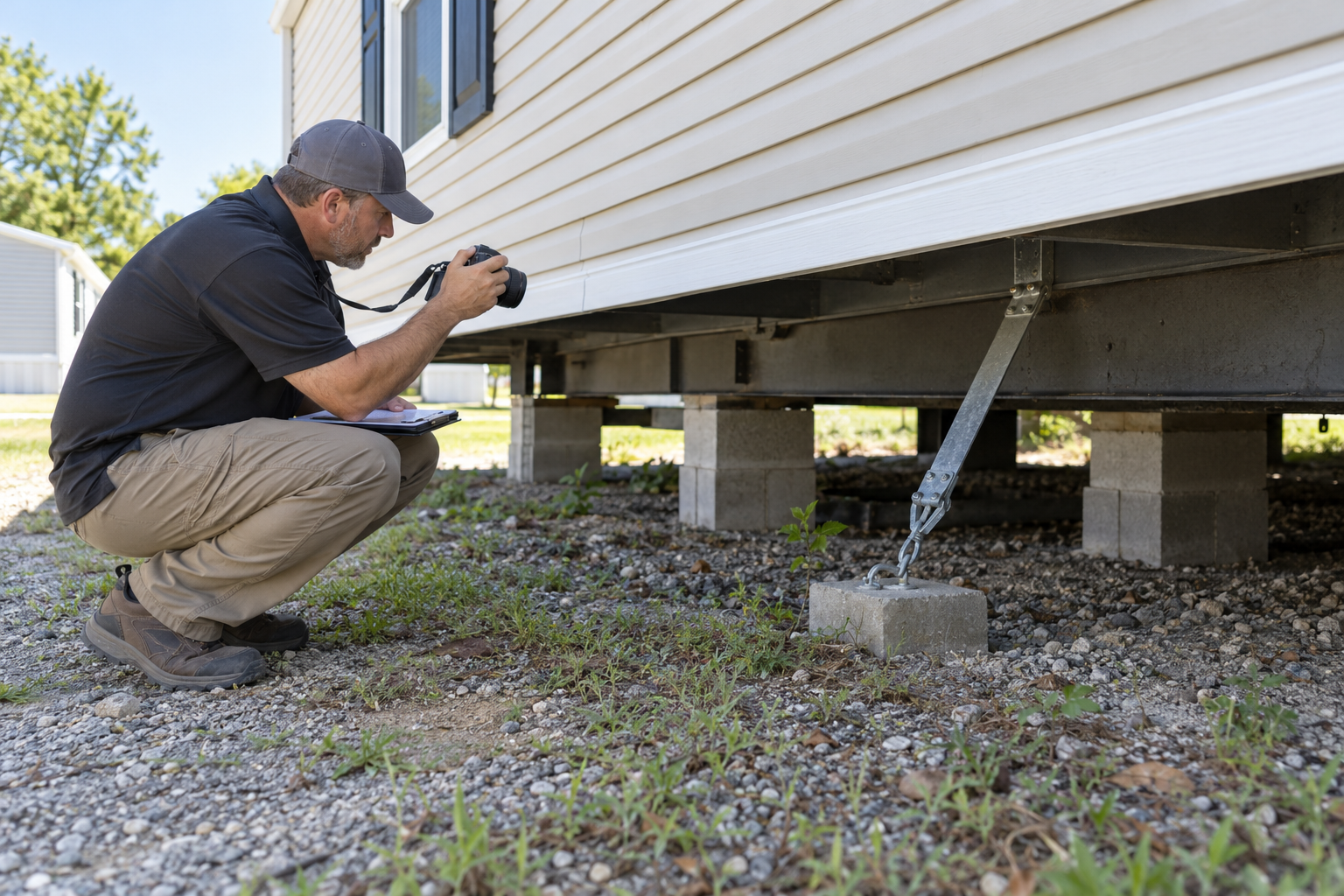
Why a visual check is not enough
Look for missing or damaged straps, corrosion, displaced anchors, damaged frame connections, washout, exposed hardware, and signs of movement. These observations justify an assessment; they do not establish spacing, capacity, soil suitability, or code compliance. Do not tension, cut, replace, or add an anchor based on a generic online pattern.
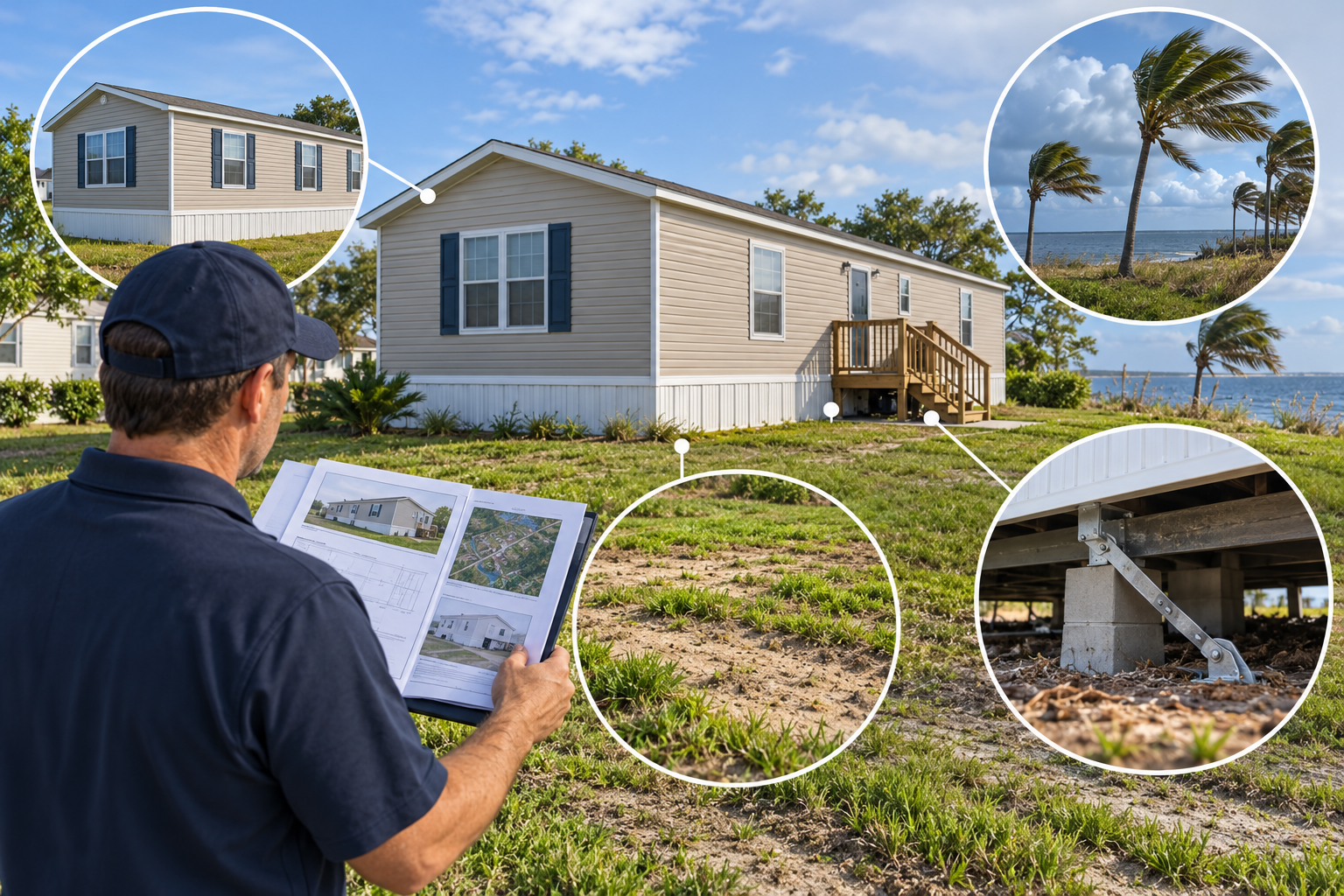
U.S. installation standards treat anchoring as dependent on the home, site, soil, foundation, and wind conditions. HUD installation guidance also points owners to approved manufacturer instructions and the responsible state or local program. FEMA’s flood claims material illustrates why the foundation connection and frame ties matter in a flood-prone area, but claims guidance is not a universal installation design.
What affects the repair quote
The scope may include locating buried anchors, excavating, replacing corroded straps or hardware, correcting soil or drainage, repairing frame or foundation connections, releveling, engineering, permits, inspection, and access through skirting or landscaping. Flood or seismic exposure, an addition, a new site, or a permanent-foundation conversion can move the work from a component repair to a system redesign.
Ask for a written description of the observed condition, the design basis, the products or assemblies proposed, and who verifies the finished work. Make the home’s labels, section count, installation date, manufacturer instructions, site hazard, and foundation type available.
Keep safety and price separate
There is no universal strap count, anchor spacing, capacity, or replacement price for every manufactured home. A low-cost hardware line is not comparable with an engineered retrofit. Price inspection, access, engineering, materials, labor, drainage, permits, and follow-up separately. Obtain local U.S. or Canadian quotes under the rules that apply to that property; do not transfer a U.S. requirement into Canada.
If the home has shifted, the soil has washed out, or an anchor is damaged near a structural support, limit the work to a safe professional assessment until the system is understood. The cost of preventing movement or water damage is part of the anchor decision, not an optional add-on after the repair.
Separate inspection from engineered correction
For a U.S. planning model, assume $600 for an initial inspection, $1,500 for access and minor hardware work, $3,500 for a limited anchor correction, and $2,000 for engineering or follow-up: $7,600 before major foundation or flood work. A separate Canadian model might use CAD 800 + CAD 2,000 + CAD 4,500 + CAD 2,500 = CAD 9,800. These are illustrative allowances only; anchor capacity, spacing, corrosion, soil, wind, flood, seismic exposure, and applicable rules control the real scope.
Do not accept a hardware-only price as a complete repair price. The quote should identify the home classification, existing attachment, design or manufacturer basis, access method, drainage or soil issue, permit or inspection need, and post-work verification. If the home has shifted or the ground has eroded, price stabilization and cause correction before cosmetic close-up.
Understand the system before pricing hardware
Ask the professional to trace the load path from the home or chassis through its connection, strap or tie, anchor, and soil. A corroded strap may be one visible defect, while a shifted footing or eroded anchor location may make a component replacement inadequate. The assessment should describe anchor type and condition, attachment points, soil or pull-test information if relevant, home and foundation configuration, exposure, and applicable manufacturer or authority requirements. A photograph of a strap does not show capacity, spacing, or what lies below grade.
Tell the contractor about a move, addition, roof change, flood, washout, releveling, or change in grade. Each can affect how the system works. Ask whether access through landscaping, skirting, decks, or a crawl space is needed and who restores those areas. If an anchor is buried or its connection is concealed, have the scope identify exploration and the point where the owner approves replacement or redesign.
Do not approve a generic anchor pattern from an online chart. U.S. installation material is a program-specific framework; site conditions and design zones matter, and Canadian rules must be verified locally. A new installation, existing-home repair, addition, or flood retrofit can have different requirements. Request the design source and the authority or professional responsible for accepting the finished work.
Arizona illustrates why permit date and exact anchor system matter for a new installation. The Arizona Department of Housing says permits issued after May 1, 2026 are subject to revised, DAPIA-approved instructions adding vertical ties for three named systems: Minute Man LLBS, Oliver 1100, and Tie Down Xi2. This state update concerns specified new-installation permits. It does not establish a retrofit duty for an existing home, apply to every anchor, or provide a repair price. If an Arizona installation or repair involves one of these systems, confirm the applicable approved instructions with the installer, manufacturer, design professional, and local authority. The detailed technical bulletins and site design remain system- and project-specific. Read the Arizona installation notice.
Compare a service visit with a system correction
A limited repair may replace accessible damaged hardware when the rest of the attachment and soil are documented as sound. A broader scope may add excavation, replacement anchors, frame connection repair, releveling, support correction, drainage work, engineering, permits, inspection, or reconstruction after a flood. A redesign may be appropriate when the home has changed or exposure is different from the original installation. These alternatives should be priced separately when the assessment cannot yet decide among them.
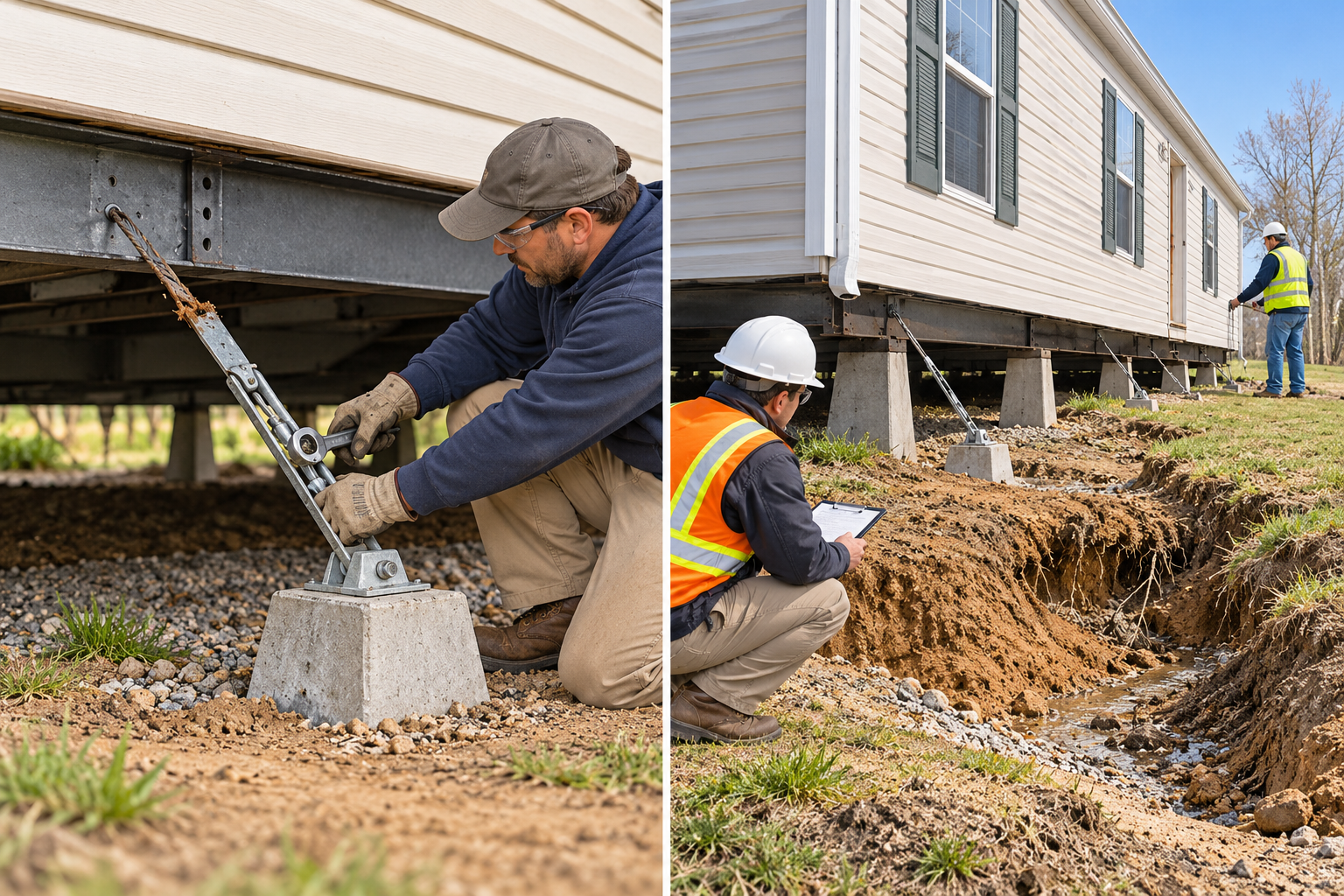
Ask the proposal to separate inspection, locating or excavation, temporary stabilization, hardware, installation, soil or drainage work, engineering, permit, post-work inspection, backfill, and finish restoration. State whether testing, manufacturer consultation, engineering calculations, or a written certification is included.
 Clarify whether the price covers one damaged anchor or a full perimeter review. A low material line should not be presented as the cost of restoring the complete restraint system.
The budget should account for consequences as well as repair. A failed connection can damage the home or utilities; a major redesign can disrupt decks, skirting, landscaping, or occupancy. Insurance may have its own documentation needs after a loss. Ask the insurer or lender directly if a certificate or inspection is required, because an installer invoice may not satisfy that request.
Use a three-case quote plan
A straightforward case assumes visible, accessible corrosion with stable supports and no soil or movement concern. A more involved case adds buried-anchor access, multiple attachments, or finish removal. A complex case includes settlement, erosion, hazard exposure, structural connection damage, engineering, or reinstallation. These cases organize questions but do not imply typical dollar ranges. Ask local qualified contractors to price each plausible scope after inspection.
For every bid, compare the same home section count, foundation, access, attachments, soil assumption, and exposure. If one contractor proposes replacing straps and another proposes a designed anchor system, ask what condition drove the difference. Obtain an explanation before choosing by price. A “to code” promise should identify the code or program, edition, authority, and scope being reviewed.
Treat flood-insurance details as a separate check
FEMA’s NFIP materials identify foundation and anchoring information as part of manufactured-home coverage or rating questions. They do not provide a generic anchor spacing, capacity, or retrofit design. A dated application guide is not a current premium quote or a universal certificate requirement. If flood insurance is part of the decision, ask the insurer which home identifiers, foundation description, first-floor-height information, and supporting documents it needs, then have the local floodplain official identify any site-specific approval or repair requirement.
Close the work with records
Keep the original condition photographs, repair design, material or product information, anchor locations, installation notes, inspection record, and final invoice. Ask whether the contractor provides a sketch or annotated site plan and which parts remain uninspected. If a later addition or move changes the home, the record helps the next professional decide whether a new review is required.
If the home moves again or undergoes foundation conversion, treat the existing anchor record as historical context, not approval for a new site. Soil, wind, flood, seismic exposure, grade, foundation, and local requirements may be different. The cost of anchoring is properly compared as a site-specific system scope with a documented result, not as a universal number of straps or a hardware purchase.
Document which parts remain in service
Where a limited correction leaves part of the system untouched, ask the installer to identify the inspected and uninspected areas on a sketch. Record the anchor locations, attachment condition, access limits, and any section or support that could not be checked. This avoids later treating a local hardware repair as a full system certification. If a subsequent addition, grading change, or site flood occurs, tell the professional because it can change the original assumptions.
For a sale or insurance renewal, ask the recipient whether it wants a whole-system review or only evidence of the repaired component. The documentation scope can affect project cost and should be known before the contractor mobilizes.
Ask what future changes would invalidate the repair
A repair can be appropriate for today’s use and still need review after an addition, site grading, roof replacement, move, flood, or foundation conversion. Have the contractor identify which assumptions depend on the current soil, home arrangement, and hazard exposure. Keep the approved design and location record where future contractors can find it. If landscaping or a new utility trench may disturb an anchor, mark that location and contact the installer before digging.
A warranty should specify what is covered, for how long, and whether it applies to hardware, labor, or system performance. Ask whether maintenance or inspection is required and which conditions are excluded. Include that value in the comparison rather than relying only on the lowest installation price.
Coordinate anchor work with adjacent repairs
Anchors can be blocked by a deck, landscaping, skirting, or utility route. Ask whether temporary removal and restoration are priced and whether another contractor must move an obstruction first. If new grading or drainage work is planned, coordinate it before final anchor placement so the soil and access assumptions remain valid. A sequence agreed by the trades reduces remobilization and avoids disturbing a completed system.