
Recurring landscape maintenance is priced by the service package, visit frequency, season length, property conditions, and travel. “Lawn care” may mean mowing only, while a full-service plan may add edging, bed care, shrubs, mulch, seasonal cleanup, irrigation observations, or materials.
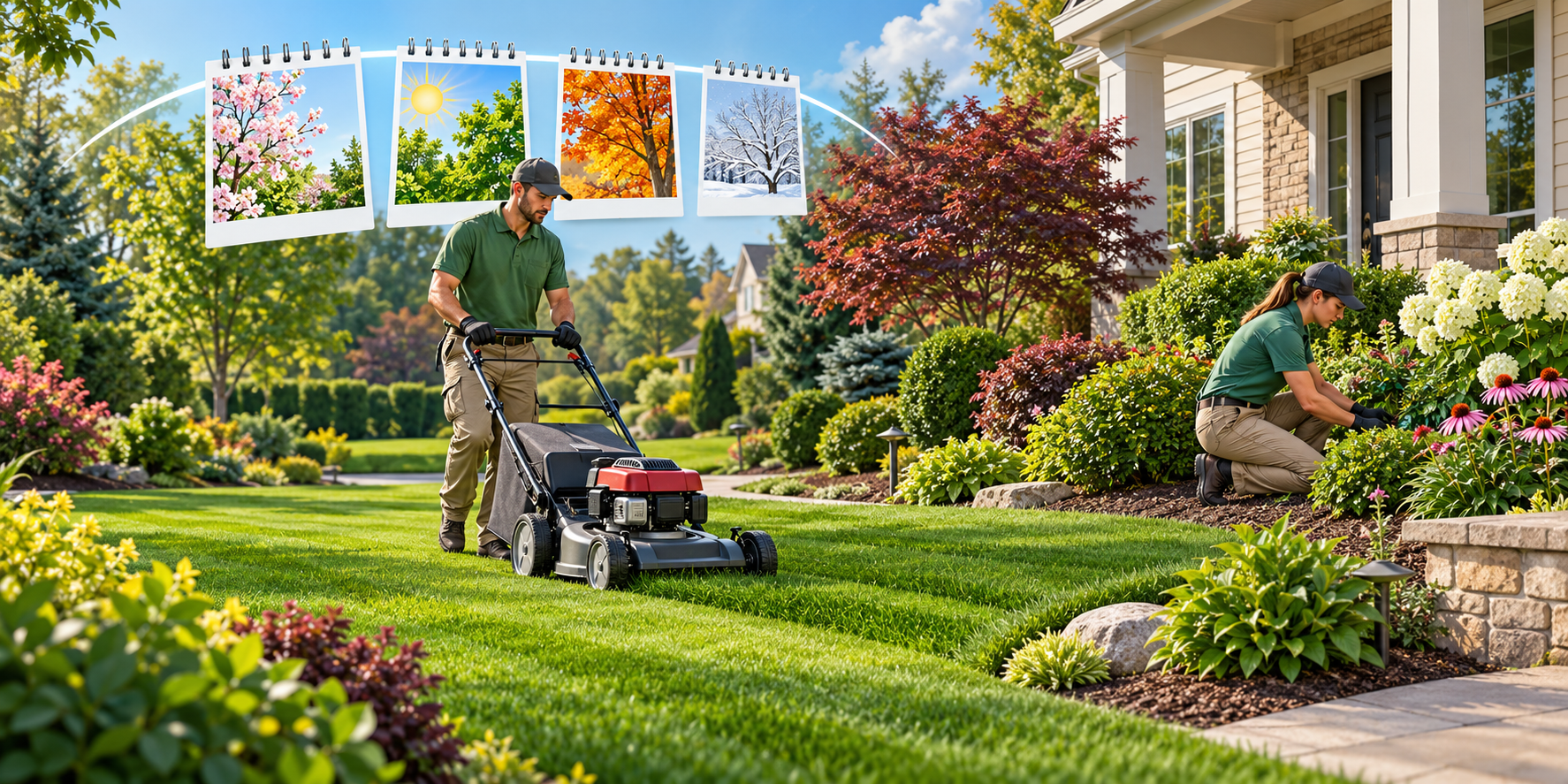
Define the package
Ask the provider to list each included task and frequency. Possible lines include mowing, edging, blowing, bed and shrub maintenance, leaf or spring cleanup, mulch, irrigation checks, plant replacement, green-waste disposal, and seasonal visits. Large-tree pruning, hazardous-tree work, pest-dominant treatment, and major irrigation repair should be separate scopes unless specifically included.
The property’s area, slope, access, vegetation density, gates, travel distance, surface conditions, and disposal needs can change the time per visit. Climate affects the number of service months, so an annual total is not comparable unless the season and visit schedule match.
Contract and price questions
Compare per-visit, monthly, seasonal, and annual structures using the same number of visits. Ask about minimum charges, weather rescheduling, cancellation, extra materials, disposal, irrigation repairs, fall or spring cleanups, and service outside the normal season. A low monthly fee may exclude the work that matters most to your property.
EPA encourages irrigation checks for leaks, head condition, schedules, and seasonal changes, but a general maintenance visit is not automatically an irrigation audit. Price a documented audit separately when water use, a high bill, or system performance is the main decision.
The active evidence does not establish a comparable current U.S. or Canadian service range. Keep currencies separate and use a task-and-visit schedule to compare local proposals. Avoid including tree work or pest-control claims without the appropriate professional and regulatory scope.
A bounded annual example
For a seasonal plan, list the number of visits and price mowing, edging, beds and shrubs, cleanup, mulch or plant materials, disposal, irrigation observations, and travel separately. Compare two proposals only after matching their season length and visit count; a monthly fee without a task schedule is not a meaningful annual estimate.