
Planned tree removal is priced around the tree and the site, not height alone. A scheduled removal in an open yard can be very different from a tree over a house, fence, pool, road, or utility line. Before comparing quotes, confirm whether the tree has been assessed and whether removal is actually the selected risk treatment.
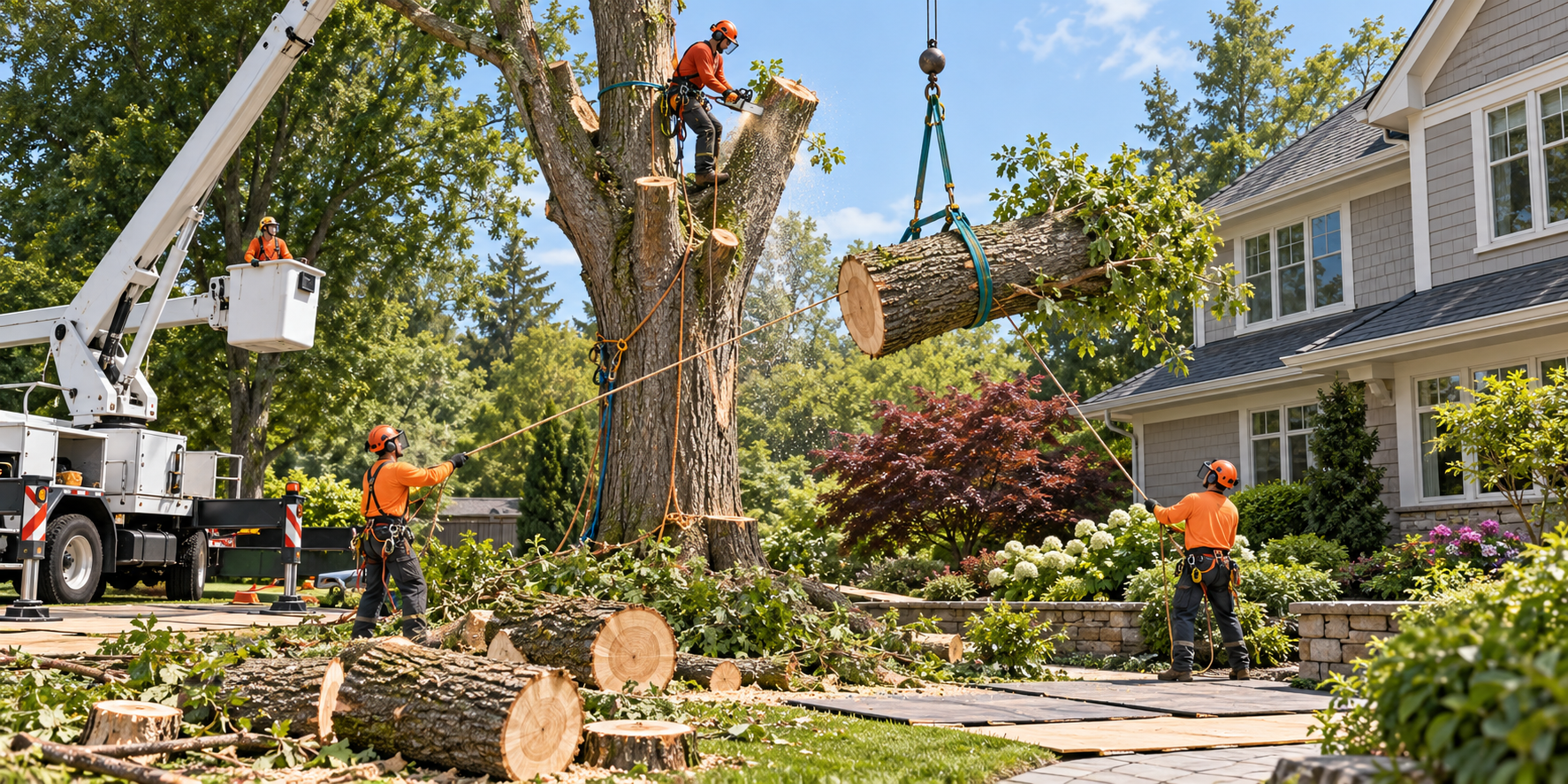
What a removal quote may include
Ask for separate lines for site protection, climbing or lift work, rigging, crane or traffic control, cutting and lowering, chipping, log and brush hauling, cleanup, stump grinding or removal, permits, arborist reports, replacement planting, and restoration. Stump work is often a separate decision. Grading, drainage, hardscape repair, and building or utility work should not be hidden in a tree-removal total.
TreesAreGood explains that possible risk responses include target management, pruning, cabling or bracing, routine care, and removal. A professional assessment should account for the tree, site, targets, weather, and consequences. It should not be reduced to a universal “lean equals remove” rule.
Cost context
Angi’s 2026 specialist summary reports a U.S. signal of roughly USD 200 to USD 2,000 or more, with an average near USD 750, and notes that cranes and site complexity can add cost. This is a broad market signal with mixed job scopes, not a quote or a Canadian estimate. The active evidence does not establish a comparable current Canadian range.
Local rules can change the project
Municipal rules can change whether planned removal is allowed and what it costs. In Toronto, activity that can injure or remove a bylaw-protected private tree at least 30 cm in diameter is prohibited unless authorized by a permit. The city’s application instructions for a private tree at that threshold list an application fee, an arborist report, and a landscape and replanting plan; confirm current documents and fees with the city. Applying does not guarantee approval, and any exceptions or permit conditions need to be confirmed with Toronto. This is a local example: thresholds, permit triggers, fees, documents, and replacement rules vary by jurisdiction.
Toronto’s separate ravine and natural-feature process has a published fee schedule under Municipal Code Chapter 658. By-law 402-2026 took effect September 1, 2026 and lists application fees of $87.57 per tree for a non-construction ravine permit and $183.03 for a boundary or neighbour tree under that non-construction category. The by-law provides for annual adjustment. These are Toronto Chapter 658 application fees; they are not the fee schedule for every Toronto private-tree permit under Chapter 813, and they do not include arborist, removal, or contractor costs. Confirm the current amount and whether the property falls within Chapter 658 before budgeting.
Compare contractors
Verify insurance, relevant qualifications, utility coordination, equipment, disposal, cleanup, permit responsibility, and what happens if concealed conditions change the method. Ask for a written make-safe plan if the tree is unstable or storm-damaged; urgent work belongs in emergency tree removal. Do not attempt felling, rigging, or work near power lines yourself.