
An installed radon mitigation system is an operating building system, not a one-time purchase that can be forgotten. The fan can stop, an indicator can show an abnormal condition, a pipe or membrane can be damaged, or a renovation can change the pathways the original design depended on. Maintenance combines simple observation, records, retesting, and professional service when the system or result calls for it.
Know what was installed
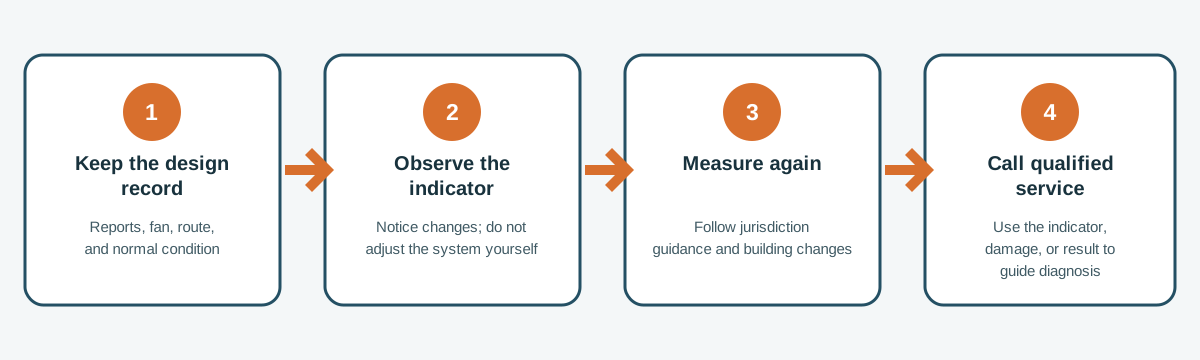
Before judging a system, find the installation record. Keep the baseline radon report, test location, foundation description, suction points, pipe route, fan model, indicator or alarm, crawl-space membrane information, installer, warranty, and follow-up test. Without this information, a service provider may need to spend time reconstructing the design before deciding whether a component is failing.
The record should also show which parts were included and which were outside the original scope. A radon fan does not repair a leaking foundation, replace a damaged floor, or correct every ventilation issue. Separate building work can affect the mitigation system and should be recorded.
The system indicator
Many systems include a visual pressure indicator or another warning device. Its meaning is specific to the installed system and should be explained by the installer. A changed reading, empty indicator, unusual alarm, or sign that the fan is not operating is a reason to call the installer or a qualified mitigator—not a reason to adjust the system blindly.
Compare the indicator with the normal condition described in the handover documents. A single glance cannot prove that the radon level is low. It can show that something in the system may have changed. If the indicator is damaged, unreadable, or missing, ask for a professional check and a replacement or better documentation.
What an owner can observe safely
Without opening, modifying, or dismantling the system, look for visible changes such as:
- a fan that is silent when it was normally audible or that develops a new grinding or vibrating noise;
- an indicator or alarm that changes from its documented normal state;
- pipe movement, impact damage, disconnected joints, or water staining;
- condensation, frost, or drainage signs around a pipe or fan;
- a crawl-space membrane that is torn, lifted, or no longer sealed at an edge;
- electrical damage, a tripped circuit, or an inaccessible service area;
- new odors or building changes near the foundation.
Do not enter a contaminated, unsafe, or difficult space just to inspect a component. Do not bypass an alarm, alter the fan wiring, drill new suction holes, or connect a replacement fan without a qualified assessment.
When to retest
Retesting answers a different question from checking whether a fan runs. A fan can operate while a damaged membrane, new addition, disconnected pipe, or pressure change leaves an area inadequately controlled. In the United States, EPA recommends retesting a home at least every two years. Health Canada recommends retesting homes with active mitigation systems every five years to check that the system functions as intended. These are separate jurisdiction-specific recommendations, not a shared North American interval; applicable state, provincial, territorial, professional, transaction, and system-specific guidance may also matter.
Retest after a major change when the project affects the foundation, floor, crawl space, occupancy, ventilation, heating equipment, or an existing mitigation route. Finishing a basement, adding a room, changing a slab, sealing a crawl space, or creating a new lived-in level can change the relevant test location and design. A long-term measurement may be more useful than a short check when the decision is about average conditions.
Fan service and replacement
Fan life, warranty, noise, electricity use, and replacement price vary by model, installation, environment, and operating conditions. There is no single universal replacement interval that applies to every system. Ask the service provider to identify the failed component, explain whether the existing design remains suitable, and state whether the work is a component replacement or a redesign.
An exterior or attic fan may have weather, temperature, condensation, and access considerations. A fan in a finished area may have noise or patching implications. An electrical fault may need a separate licensed trade. The lowest-cost service call may not be the correct solution if a renovation changed the pressure field or the system no longer covers all occupied areas.
A new result changes the maintenance decision
If a retest is elevated, first confirm the test location, duration, device, conditions, and comparison framework. Do not assume that replacing the fan or adding sealant will solve the result. A qualified mitigator may review suction performance, foundation communication, pipe integrity, crawl-space membrane, sump and drain conditions, occupancy, and recent building work.
US and Canadian results must remain attached to their national guidance. EPA uses 4.0 pCi/L (150 Bq/m³) as its US action framework. Health Canada recommends corrective action above an average annual 200 Bq/m³ in a normal occupancy area. These are not interchangeable maintenance thresholds.
Budgeting for ownership
Routine ownership costs can include electricity, an occasional retest, indicator or alarm replacement, service access, fan replacement, and repairs to a membrane or pipe. A service quote may also include travel, diagnostic time, electrical work, patching, or a post-service test. Request those line items separately so a small component price is not mistaken for the complete cost of restoring performance.
When comparing a new installation or major redesign, use the questions in radon mitigation cost. The original system’s design and the current test matter more than a generic national allowance.
Records for future owners
Save every report and note the date of each test, the location, units, device, and conditions. Record fan and indicator changes, service calls, renovations near the foundation, and any new occupancy. Buyers and sellers can then distinguish a current measurement from an old claim that the system was once installed.
Maintenance is successful when the owner can answer three questions: what areas the system was designed to control, how the system’s normal condition is recognized, and when the home was last measured. If any answer is missing, the next cost may be documentation or professional assessment before a repair can be priced responsibly.
Budget for the system as an owned building component
The installation price is only one part of the system’s lifetime cost. A homeowner may pay for electricity, periodic testing, an indicator or alarm, fan service, and repairs to a pipe or crawl-space membrane. Those items occur on different schedules, and there is no single annual allowance that fits every fan, foundation, and service agreement.
When reviewing the installation documents, identify the fan model, warranty period, expected service access, electrical responsibility, and how the indicator is meant to look in normal operation. Ask the installer which symptoms require a service call and which can wait for a planned check. The answer should be specific to the equipment rather than a generic promise about fan life.
A useful maintenance budget separates three kinds of work:
| Work type | Typical reason to request a quote |
|---|---|
| Routine observation or measurement | A recommended retest date, changed occupancy, or a major building project. |
| Component service | A fan, indicator, electrical connection, or visible pipe condition has changed. |
| System reassessment | A retest is elevated, a new area is occupied, or the original design no longer fits the foundation. |
Ask providers to state travel, diagnostics, electrical labor, replacement parts, testing, and finish repair separately. A replacement fan quote may not include the measurement that confirms performance afterward. Conversely, a high result does not automatically mean the fan is defective; the cause may be a changed pathway or incomplete coverage.
If the home is sold, pass along the test reports, equipment information, service history, and warranty terms. A buyer can then budget for continued operation instead of paying a professional to reconstruct an undocumented system before any repair is considered.
Distinguish a service call from a redesign
When a system changes, ask the provider to diagnose before authorizing replacement parts. A failed indicator, silent fan, damaged pipe, elevated retest, or new occupied room may point to different work. Replacing a fan without checking whether the original design still covers the foundation can leave the main question unresolved.
Request separate pricing for diagnostics, component replacement, electrical service, restoration, and post-service testing. If the provider recommends redesign, ask what building condition changed and which areas the revised design will cover. Keep the prior report and as-built sketch available so a service technician can compare the current installation with the original scope.
A written service record should include the date, observed issue, work completed, parts replaced, test result if any, and unresolved limits. This helps the next owner avoid paying for another diagnostic visit simply to understand the system history. It also keeps maintenance distinct from a new radon measurement recommendation.