
Gravel driveway repair can mean reshaping the existing surface, adding aggregate, rebuilding a soft section, or correcting the route water takes across the drive. Those jobs have different costs. Filling a rut with loose stone may look inexpensive, but it can be short-lived if the underlying base is soft or water keeps running through the same spot.
The useful first question is what failed: the surface, the support below it, or the drainage path. A clear diagnosis helps you compare a maintenance visit with a larger repair or reconstruction estimate.
What gravel driveway repairs cost
Published Canadian estimates provide local context, not a universal rate. The examples below come from a 2026 planning guide and one Chatham-area provider. Their scopes are different, so they should not be averaged or treated as a market range. All amounts are CAD; for a U.S. driveway, compare current local estimates in USD rather than converting a Canadian figure.
| Published example | What it describes | Important limit |
|---|---|---|
| CAD $300–$900 | BuildPlanner’s top-up-and-regrade visit example | Planning context; project length and included quantities vary |
| About CAD $500 | Chatham Lawn Care’s short residential regrade and top-up example | One approximate local offer; driveway dimensions, line items, and tax treatment are not stated |
| CAD $3,000+ | Chatham Lawn Care’s long rural or farm laneway example with fresh stone and crown restoration | One provider’s open-ended example; length, base condition, and drainage scope affect the quote |
These examples help explain why a short surface service and a long laneway project can differ substantially. They do not tell you how much gravel your driveway needs or whether its base can be reused.
Match the repair to what you see
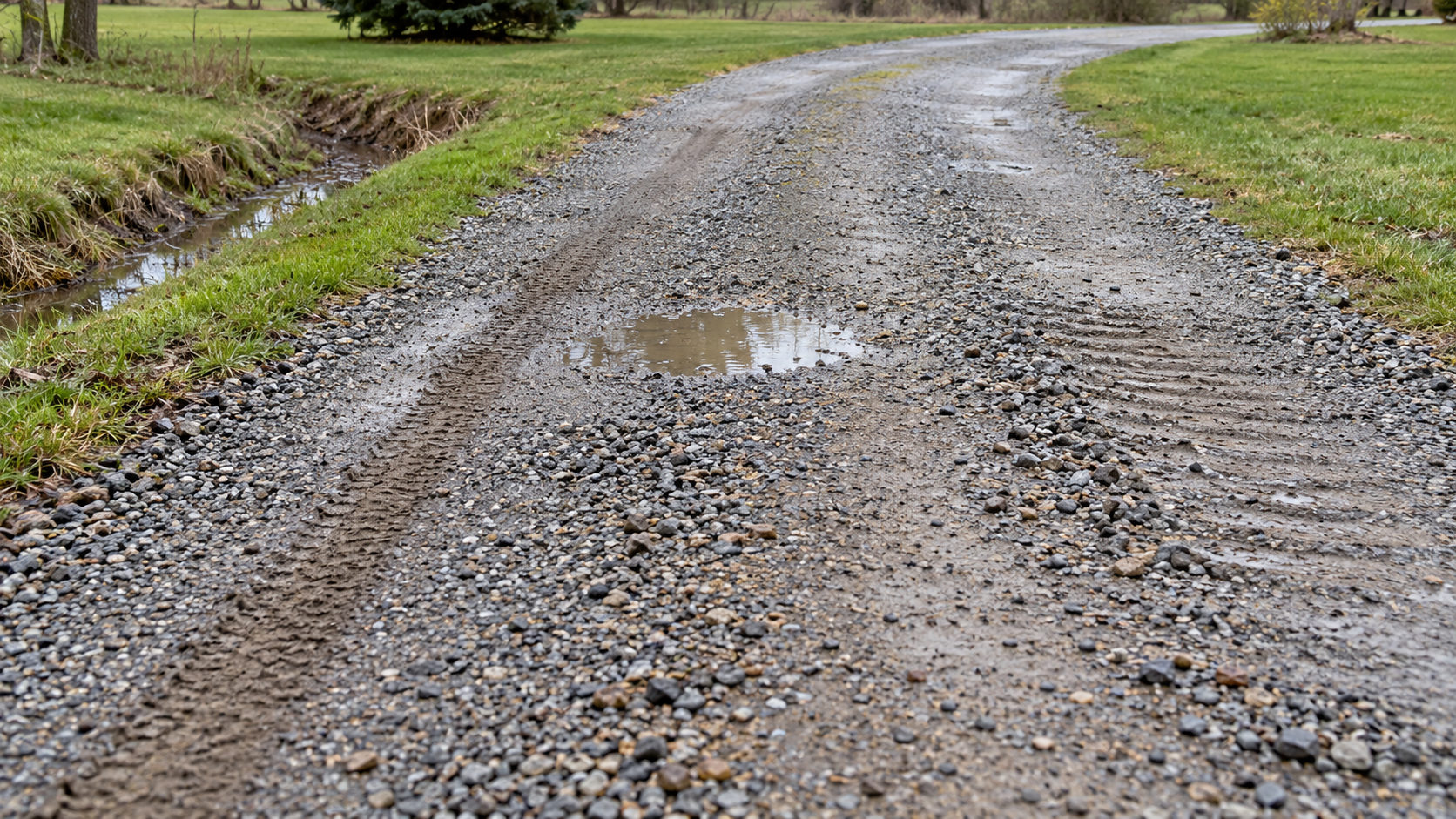
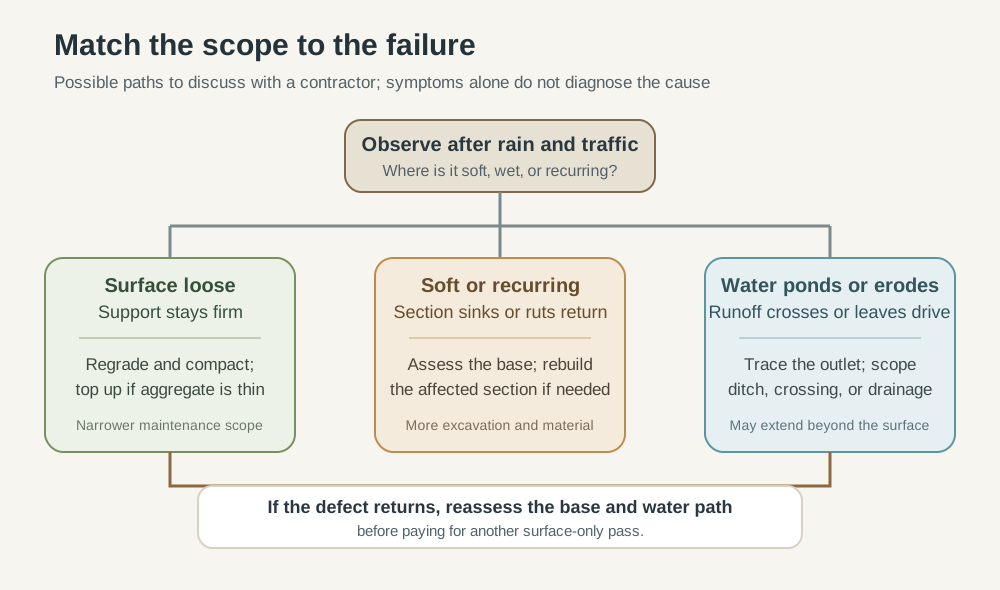
Look at the drive after rain or snowmelt and note where water sits, crosses, or leaves the surface. Record which areas are soft, where vehicles turn or brake, and whether the same defects return after grading. These observations help a contractor investigate the cause; they do not replace an on-site assessment.
| Distress | What to ask the contractor to inspect | Why it affects the work |
|---|---|---|
| Shallow ruts or potholes | Whether the surrounding surface and base remain firm | A stable area may need shaping and compaction; a soft section may need excavation and replacement |
| Washboarding or ripples | Where it occurs, whether traffic turns or brakes there, and what aggregate is present | Regrading may smooth the surface, but repeated ripples can return if the cause is unchanged |
| Bare, muddy, or thinning areas | Whether material is depleted, mixing with soil, or being carried away | The estimate may need new aggregate, separation or base work, or a change to the water route |
| Flattened crown or ponding | Whether water can leave the driveway and where it goes | Reshaping alone may not work if the outlet, ditch, crossing, or surrounding grade is the constraint |
| Eroded edge or washout | Whether runoff enters from outside the drive or concentrates at an edge or crossing | The job may include drainage or site work beyond grading the gravel surface |
When a regrade is enough—and when it is not
A maintenance regrade generally reshapes and compacts the existing surface, pulling displaced material back into the driving area and restoring a useful profile. If the aggregate is thin, a top-up adds new material. This narrower scope can make sense when the support below is firm and water has a working path away from the drive.
Adding gravel is not the same as repairing a failed base. If a section stays soft, sinks under traffic, or develops the same ruts soon after grading, ask whether the contractor found saturated or unstable material beneath the surface. A durable repair may require removing failed material, restoring the supporting layer, adding aggregate in stages, and compacting it. The affected length and depth matter more than the visible hole alone.
Repeated maintenance also changes the economic comparison. A low-cost grading visit may be reasonable for a surface defect on a stable drive. If several visits have not corrected the same area, compare their combined cost and disruption with a scoped section rebuild. If most of the driveway has lost support or drainage, ask for a reconstruction estimate and compare it with the cost of continued top-ups.
Why drainage changes the price
Water can loosen or move surface material and weaken the support below it. The driveway’s crown or cross-slope, ditches, culverts, slopes, and the outlet all affect whether runoff can leave. A new layer of stone may hide a low spot without correcting the water path, so ask the contractor to show where water enters and where the proposed repair will send it.
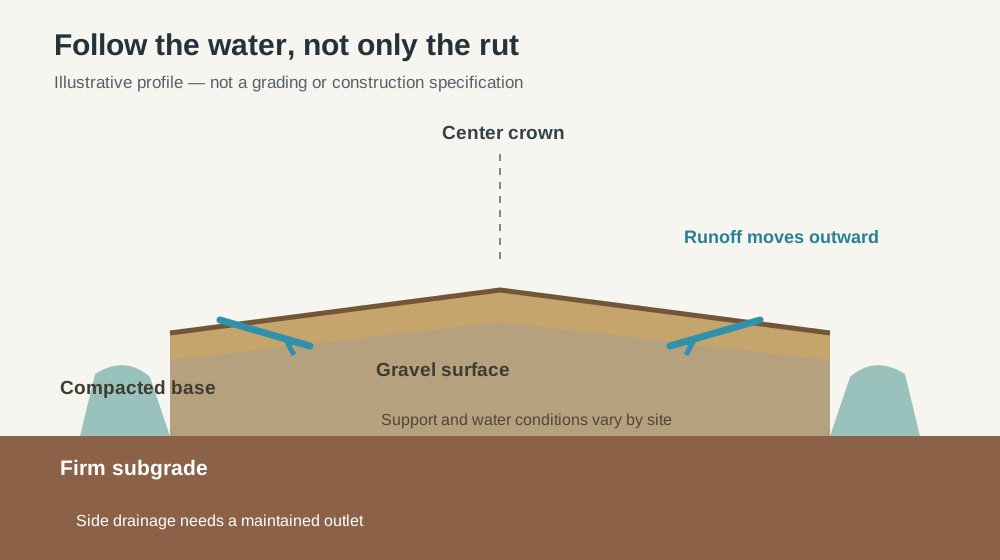
A driveway-local correction might include reshaping the surface or clearing a nearby ditch, if that work is within the contractor’s scope and permitted at the property. If runoff comes from a larger area, a culvert or outlet is failing, or grading would send water onto a neighbor or public way, the project may need broader drainage or access expertise. Rules for discharge, culverts, and work near a road depend on location; confirm them with the relevant local authority before approving that scope.
What moves the estimate
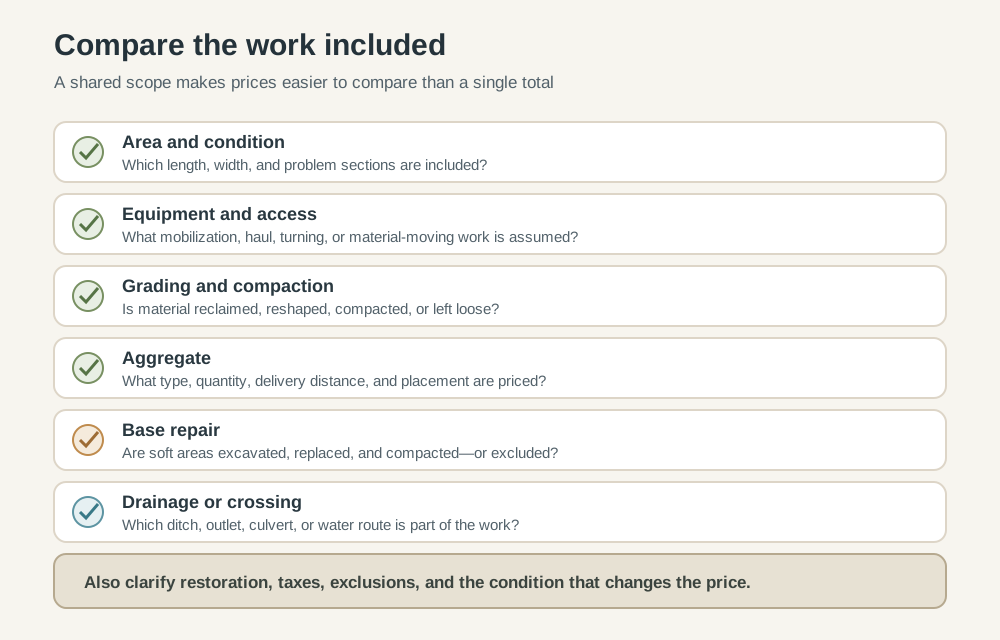
Area and access affect how much grading, aggregate, and equipment time a project needs. Material source and haul distance matter more on a long or remote drive, while a small site can still carry equipment travel or minimum charges. Work below the surface changes scope further: removing soft material, rebuilding a section, and compacting new aggregate cost more than reshaping a stable surface. Drainage, crossings, shoulders, and restoration can also become separate work. This is why a short top-up price is not comparable to a bid that includes excavation, drainage, or a long haul.
If the proposed intervention is a new gravel driveway rather than a repair, compare it with the separate gravel driveway installation guide.
How to compare repair quotes
Ask each contractor to price the same affected area and intended result. Use the checklist below to compare what is included. When an item is excluded, ask what site condition would add it and when you would approve that change. A lower total may describe a narrower repair rather than better value.
For a recurring defect, ask how the proposed work addresses its cause and how the contractor will check whether the result holds. If water is the main issue, have the estimate name the feature being changed and its intended outlet. Confirm responsibility for approvals and restoration when a culvert, roadside ditch, or public connection is involved. For a separate ponding, pitch, or channel-drain problem, see the driveway drainage repair guide.
Before grading and compaction, tell bidders about planned work that may cross the drive, such as a conduit route, gate, parking pad, or paving change. Coordinating a trench or surface change now may avoid reopening and restoring a completed repair later. Keep electrical, utility, and road-access work in its own approved scope; gravel grading does not settle those requirements. Ask who will locate existing services and restore the surface after a crossing is installed.
Maintenance and closeout
Maintenance recommendations vary. BuildPlanner uses regrading and top-ups every one to three years as a planning example, while Chatham Lawn Care recommends annual work and more frequent attention for some busy or clay-heavy rural lanes. These are source-specific suggestions, not a schedule that applies to every property. Traffic, aggregate, slope, water, snow clearing, and local conditions all matter.
After major rain, snowmelt, grading, or heavy use, check whether water still leaves the driving surface and whether soft spots or washboarding return. A simple record of the affected area, repair date, material added, and observed water path can help distinguish a one-time surface repair from a recurring base or drainage problem. If a defect returns, investigate what changed before ordering another top-up.
At completion, ask the contractor to identify the areas graded, the material and approximate quantity used, any base or drainage work, and the maintenance assumptions behind the estimate. If the work required excavation or equipment near utilities, confirm that the appropriate locating and site-safety steps were handled by qualified people.
When the project is larger than a gravel repair
A driveway repair can include local grading and drainage, but it is not automatically the right scope for site-wide runoff, a failed road crossing, or a long private-access route. If the quote includes those conditions, separate them so you can see whether the gravel surface, a crossing, or broader property drainage is driving the cost. The driveway material comparison can help when the decision has shifted from repair to replacing the surface.