
A permeable driveway is an engineered pavement and drainage system, not just a different surface. Its price depends on excavation, the stone base, soil and groundwater conditions, overflow routing, surface choice, and the maintenance the owner can arrange. Local rebates or stormwater-bill credits may change the economics, but they are conditional and cannot be assumed in a project budget.
How the system works
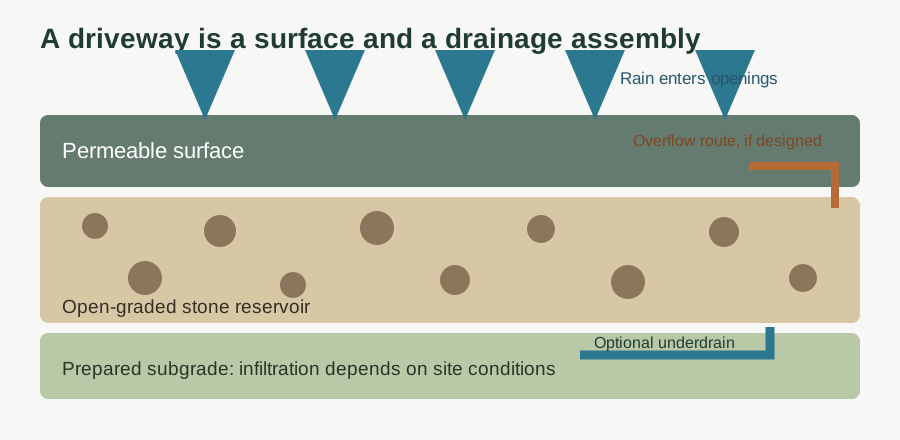
Permeable interlocking pavers, pervious concrete, and porous asphalt have different surface structures. Water passes through openings or connected pores into a clean, open-graded aggregate reservoir. The soil may absorb some water; an underdrain may carry water away where infiltration is limited; and an overflow route may still be needed during larger storms.
The surface is only one part of the assembly. A quote should identify the proposed surface, bedding and reservoir layers, subgrade preparation, edge restraint, slope, overflow, and any connection to an approved outlet. A contractor should explain which parts are designed to infiltrate, store, or convey water. A permeable surface does not automatically solve water entering a garage, flooding a low spot, or draining toward a neighbor.
What drives the installed cost
The largest cost differences often come from work below and around the visible surface:
- Removal and excavation: Existing concrete or asphalt may need to be cut, removed, and hauled away. Excavation depth and access for equipment affect labor and disposal.
- Base and subgrade: The design may require a deeper stone reservoir, soil testing, separation fabric, stabilization, or a different approach where soils infiltrate slowly.
- Water handling: Underdrains, overflow structures, connections, grading, or restoration can add work. Their need depends on the site design and local requirements.
- Surface and edge details: Paver pattern and restraint, porous-asphalt mix, or pervious-concrete placement each involve different materials and installation methods.
- Site logistics: Tight access, utilities, retaining edges, slopes, roots, and protection of adjacent paving or landscaping can increase the work.
- Testing and approvals: Design, inspection, utility locating, or stormwater documentation may be separate quote items.
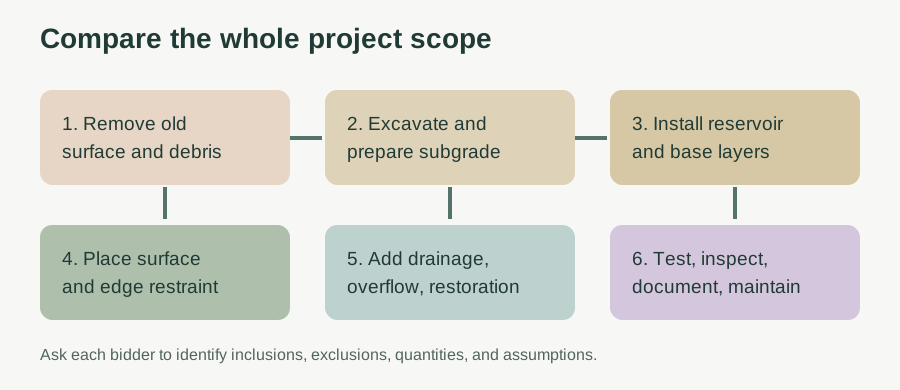
Ask bidders to price the same measured area and state excavation assumptions, layer depths, material quantities, removal, drainage connections, restoration, taxes, and exclusions. A low surface-only quote is not comparable with a complete system price.
Compare costs over the ownership period
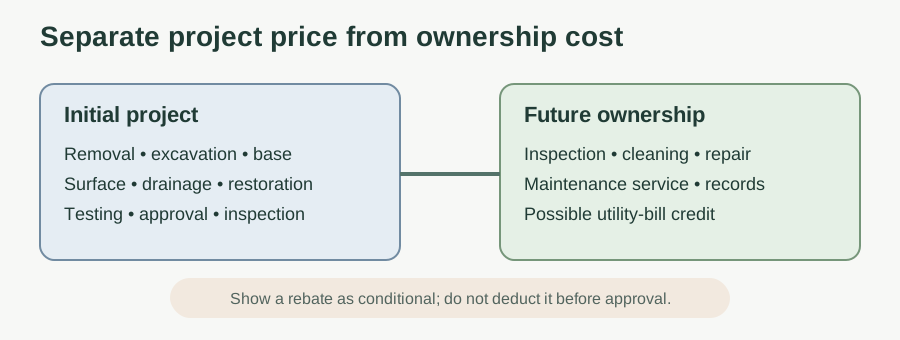
The initial installation is only part of the decision. Sediment, leaves, soil tracked from nearby areas, and winter sanding can clog surface openings. Maintenance may include inspection, sweeping, joint or surface care, sediment control, and occasional vacuum cleaning with suitable equipment. The needed work depends on the system, site exposure, and observed performance; a universal cleaning interval or household service price is not established.
Before signing, ask who maintains the system, what equipment is needed, how often the contractor expects inspection, and what conditions would require cleaning or repair. Clarify whether maintenance is included in a warranty or required by an approval or incentive. Keep the as-built details, overflow route, inspection results, and service records so a future contractor can identify the system rather than treating it as ordinary paving.
EPA guidance describes long-term operation and maintenance responsibility for private stormwater practices in the United States, but that does not establish a universal rule for every Canadian municipality or property. Confirm the responsibility and any recorded maintenance obligation locally.
For a useful comparison, keep the initial project and future ownership costs in separate columns. The project column should cover the complete installed work and any required testing or approval. The ownership column should list inspection, cleaning, joint or surface repairs, and any maintenance contract the owner expects to use. Add a local rebate only as a conditional cash inflow after checking timing and eligibility; show a recurring utility credit separately because it offsets a bill over time rather than reducing the contractor’s invoice. This makes it easier to see whether two bids include the same base assembly and whether an apparent price difference comes from omitted work, future service, or an unconfirmed program benefit.
Use the same driveway area, removal assumptions, drainage outcome, and restoration boundary in each bid. Ask contractors to identify a unit price when area or excavation quantities may change, but do not treat a per-square-foot figure as comparable unless the layer depths and included work match. Keep contingency for unknown soil or buried conditions distinct from the base bid so a change order does not obscure the original scope.
Local rebates and bill credits are different
Some municipalities offer construction rebates; others reduce a recurring stormwater utility charge when an approved practice manages runoff. These are not discounts from the paving contractor, and the examples below do not predict eligibility or savings for another address.
| Program type | Published example | What to verify |
|---|---|---|
| Installation rebate | Ottawa’s Rain Ready program lists a permeable-pavement rebate of $50 per square metre, up to $5,000. The page describes applicant pathways and prior approval conditions for some driveway additions. | Current funding, accepted design, application steps, eligible work, and the program’s stated dollar currency before relying on a reimbursement. |
| Installation rebate | Washington, D.C.’s RiverSmart page lists $15 per square foot for eligible permeable-paver replacement, with a 100-square-foot minimum and a $6,000 property cap. The property must meet location and design rules; payment follows approved work and inspection, and funding is limited. | Whether the property is in an eligible area, the qualifying contractor and surface, available funds, and the required pre-approval and inspection. |
| Stormwater-bill credit | Minneapolis lists a 35% or 45% residential stormwater-fee credit by zone for qualifying practices, including pervious pavement. Kitchener lists 20%, 30%, or 45% tiers based on captured runoff volume and includes permeable pavers among eligible practices. | The applicable parcel, runoff calculation, design acceptance, application period, and actual fee on the household’s bill. A percentage is not a construction-cost reduction. |
| No automatic driveway credit | Brampton says a permeable driveway alone does not establish a residential charge reduction. Portland’s Clean River Rewards page describes discounts for listed onsite runoff practices but does not establish direct permeable-driveway eligibility. | Ask the utility what it counts and whether the proposed driveway connects to an eligible practice. |
Other local programs use parcel-specific formulas or design thresholds. For example, Waterloo’s published credit page leaves one runoff-volume interval unstated, and Raleigh says permeable pavement can still count as impervious for residential permitting unless it is professionally engineered under the cited rules. Treat such examples as reasons to verify the specific design and address, not as general North American requirements.
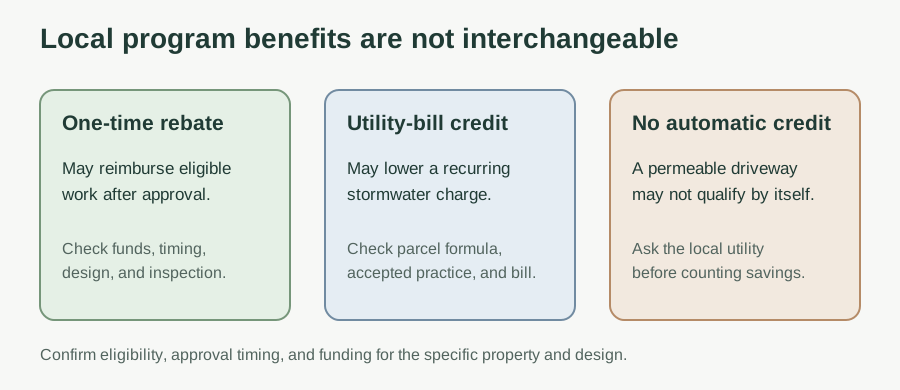
A credit should be included in a budget only after confirming the property qualifies, the proposed work qualifies, funds or application windows remain available, and any approval must occur before construction. If reimbursement comes later, the homeowner may still need to fund the full project price upfront. Do not subtract a maximum award from a quote as though it were guaranteed cash.
Is a permeable driveway suitable for the site?
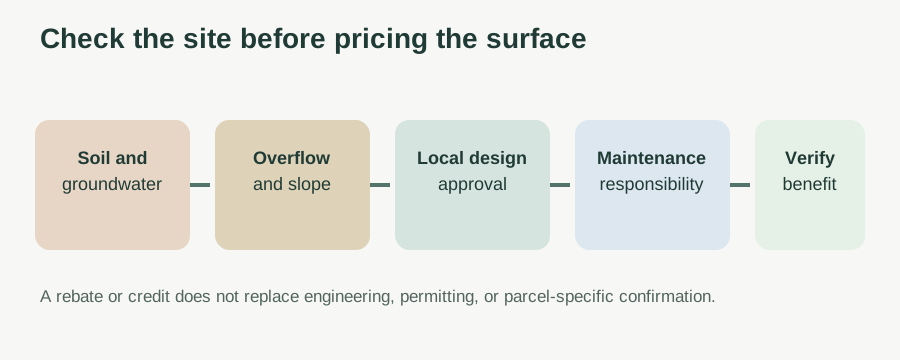
Soil infiltration, groundwater, slope, contamination risk, nearby foundations, wells, septic components, utilities, and the lawful discharge route can all change the design. A site with limited infiltration may need an underdrain or storage route; another may not be suitable for infiltration near a structure. These choices require site-specific assessment.
Ask who is responsible for testing the soil, confirming the groundwater assumptions, selecting the overflow route, and obtaining any required approval. Confirm where roof and neighboring runoff will go during a storm larger than the design condition. If the underlying problem is broad grading or water management, compare a driveway project with a separate site-drainage solution rather than expecting the pavement alone to correct it.
Questions to put in the quote
Request proposals that describe the complete assembly and allow an apples-to-apples comparison:
- What surface and base system is proposed, and what are the layer depths and materials?
- What site information supports the infiltration, groundwater, and overflow assumptions?
- Are demolition, excavation, disposal, testing, underdrains, connections, permits, and restoration included?
- What will be inspected at completion, and how will the owner recognize clogging, settlement, or overflow problems?
- Who supplies future cleaning or repair, what equipment is needed, and what does that service cost for this property?
- Does a local rebate or fee credit apply to this parcel and design, and what must be approved before work starts?
- Which parts of the system must remain accessible or maintained for the design or incentive to stay valid?
Compare the complete installed scope, the drainage outcome, maintenance responsibilities, and any verified local program benefit. The best economic choice is the system that fits the site and can be maintained—not simply the surface with the lowest initial quote or the largest advertised rebate.