
A post or column cannot be priced without checking the beam above and the footing or foundation below. Current evidence does not establish comparable national installed prices; ask whether each proposal includes temporary support, final bearing, footing work, connections, access, and the condition of adjacent supports.
Published price context
HomeGuide’s U.S. Lally-column page, dated October 15, 2024, reports US$1,300–US$2,500 installed per replacement column. That example applies to Lally columns; it does not price wood posts, masonry piers, new footings, beam correction, or temporary support as a complete project.
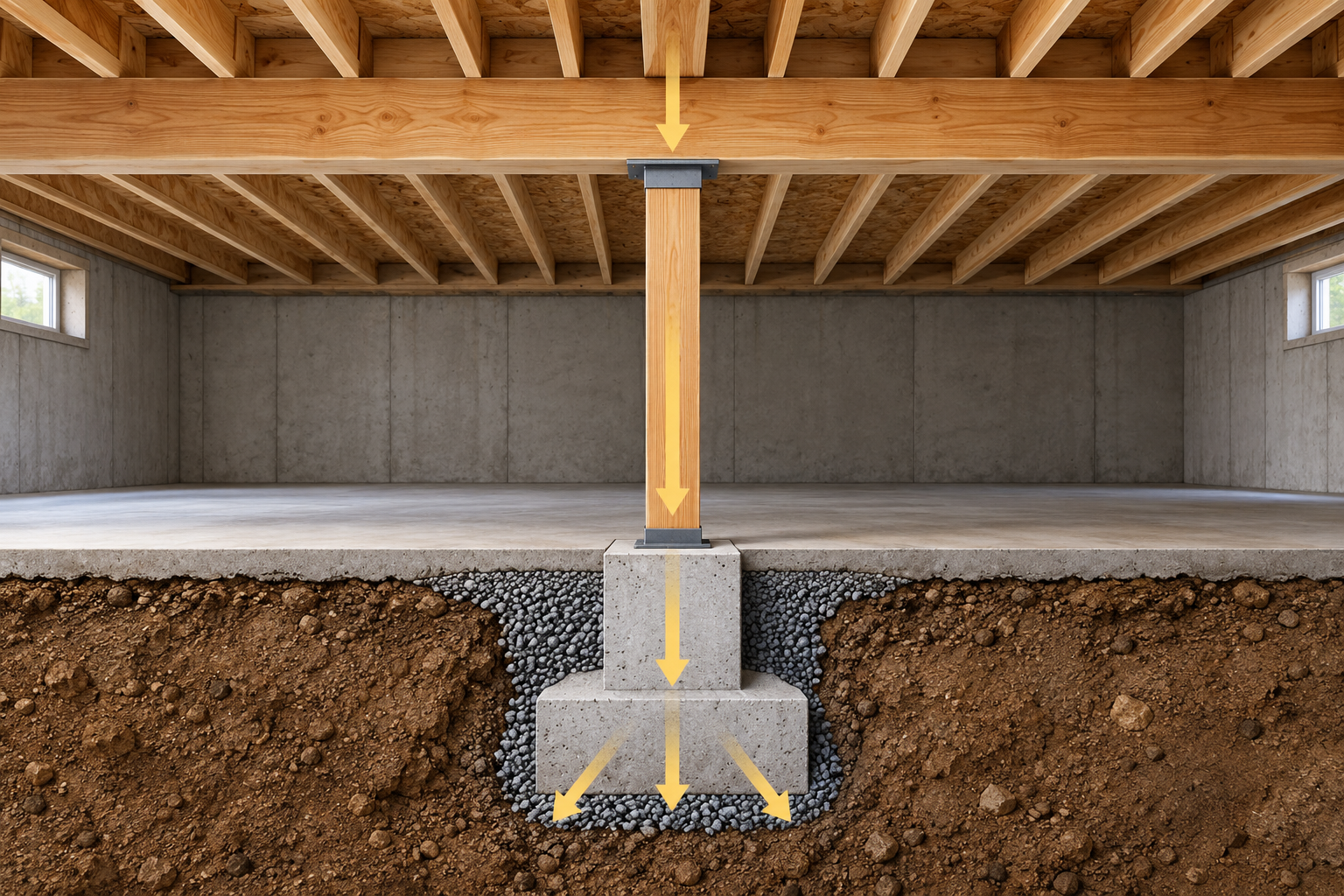
The post is only one part of the support system
A wood post, steel column, masonry pier, or concrete support transfers beam load to a footing or foundation. Rot, corrosion, crushing, inadequate bearing, settlement, movement, or a missing footing can make a simple-looking replacement a system repair. The beam above and ground below need to be evaluated together.
Temporary jacks or shoring may be used during construction, but they are not automatically the permanent solution. The quote should identify the final support, bearing, footing, connection, and protection assumptions. It should not ask a homeowner to infer structural capacity from a product label.
Cost drivers
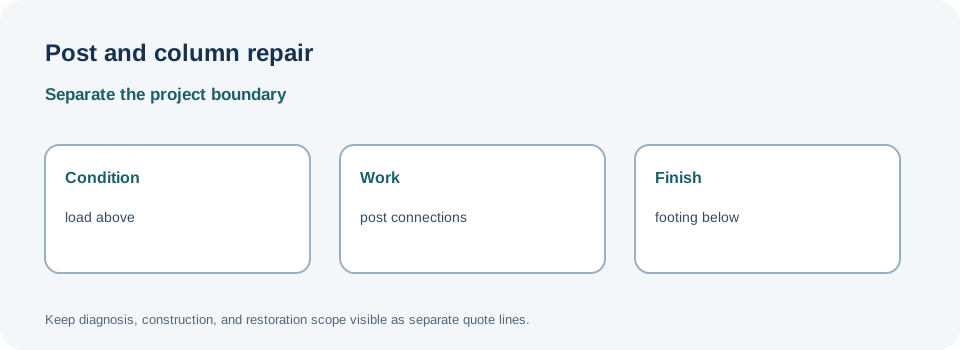 The main drivers are support count, height and access, crawl-space clearance, beam condition, footing size and condition, excavation, concrete, corrosion or rot, temporary support, utilities, engineering, permits, disposal, and finish restoration. A new footing can change the project from a short replacement to a multi-stage structural job.
Several deficient supports may indicate a beam-line, pier-and-beam, settlement, or leveling decision rather than separate post repairs. Replacing supports one at a time can be poor economics if the load pattern is broader.
Scenarios
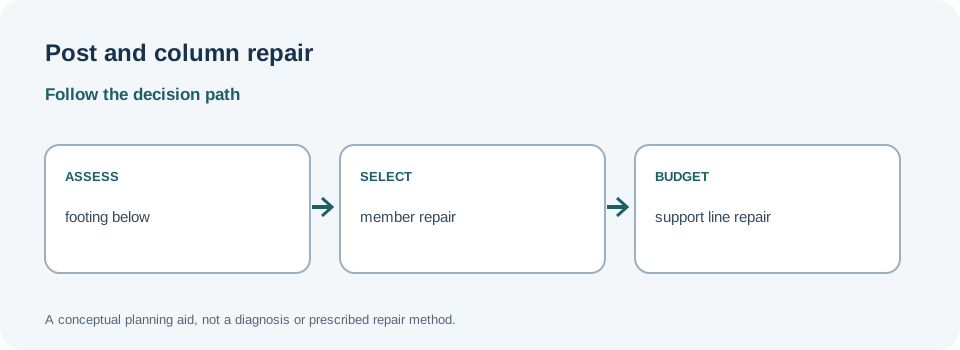 Limited replacement: One accessible support is damaged, the beam and footing are sound, and permanent bearing is clear. Confirm the quote includes connections and protection.
Support plus footing: The existing bearing is inadequate or deteriorated. Budget excavation, concrete, curing or sequencing, temporary support, and any floor restoration.
Multiple supports: Several posts are failing or floors are uneven. Compare a support-line repair, supplemental beam, and broader leveling option instead of adding isolated supports without a system plan.
Quote checklist
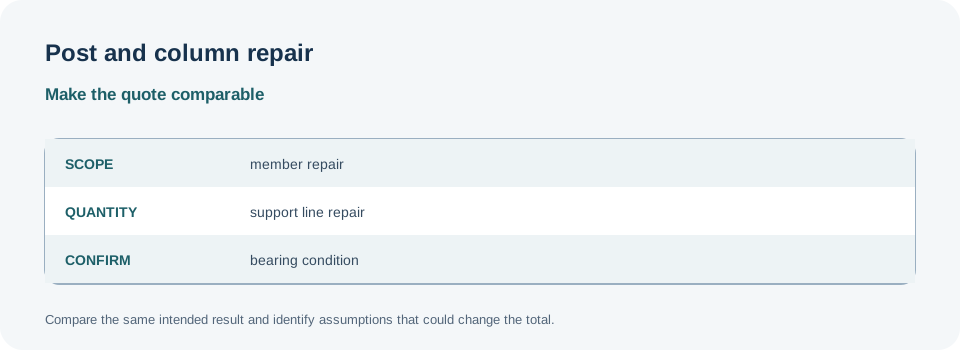 Ask for the affected support, beam interaction, temporary-support responsibility, final material, bearing and footing scope, access, utility conflicts, engineering, permit responsibility, corrosion/rot treatment, restoration, hidden-condition rules, and warranty. Keep decorative porch columns outside this scope unless they are part of the residence’s load path.
If the proposal calls an adjustable support “permanent,” ask what design, protection, inspection, and jurisdictional basis makes that statement applicable. The economic choice is permanent system correction, not the cheapest temporary-looking component.
Price the bearing condition
Before comparing posts, confirm whether the existing footing is sound, whether the beam above is damaged, and whether the support is carrying the intended load. A quote that omits the footing may be lower because it assumes reuse; a quote that includes excavation and concrete may be more complete rather than more expensive.
If several posts need work or floors are changing level, compare an organized support-line or leveling project with isolated replacements. Include future access, finish disruption, and the cost of returning to the same crawl space. Structural work should be documented by the responsible professional, with local engineering and permit requirements checked rather than inferred.
Compare a component repair with a support-line repair
One failed post may be a localized condition; several failed posts, uneven floors, or a sagging beam may indicate a broader support system problem. Ask for the affected locations, beam loads, footing assumptions, and the parts of the crawl space that could not be inspected. A component price should not quietly become a whole-house leveling recommendation.
Include temporary support, final bearing, concrete or footing work, utilities, access, disposal, and finish restoration. If the source is rot, insects, moisture, settlement, or soil movement, price that correction separately. The best quote makes clear what the new support fixes and what it deliberately leaves for another scope.
Compare the support above and below
The post is not economically isolated from the beam, footing, floor, and ground. A replacement may need a new bearing point, concrete footing, connection hardware, corrosion or rot removal, or a temporary support stage. Ask each bidder to state which of those layers was inspected and which is assumed serviceable.
If the home has multiple posts, map their locations and the floor symptoms they serve. An organized support-line repair may cost more now but avoid repeated mobilizations. A short, accessible post repair can remain focused when the evidence supports it. The price should follow the intended permanent load path, not the retail cost of a column.
Check whether one post is really one project
Map the affected post or column, beam line, footing, floor symptoms, and inaccessible areas. Ask whether the quote includes temporary support, final bearing, footing, connection, concrete, corrosion or rot removal, utilities, restoration, engineering, and permits. A post replacement without a bearing plan is not a complete structural price.
If multiple supports are involved, compare a coordinated support-line repair or leveling project with isolated replacements. For long-term ownership, value inspection access and source correction. For short-term ownership, keep the scope bounded only when the surrounding beam and footing conditions are documented.
Concentrated loads make small repairs consequential
A post or column can look like a small component while carrying a large tributary area. Its condition, cap, base, footing, beam above, and alignment all affect the repair. Ask whether the proposal includes temporary support, removal of finishes, a new base or footing, corrosion or rot treatment, connection work, and any correction to the supported beam. Replacing the visible post alone may not restore the system.
Compare a localized member repair with a support-line investigation when adjacent posts show similar distress or the floor above has changed. The quote should identify the intended load path and the condition that will remain at the base and cap. If the post is being moved or a new opening is created, treat it as a design and permitting question rather than a simple replacement. The economic decision is about reliable bearing and transfer, not the price of one column.
Make the support path visible above and below
A post or column quote should identify the member above, the cap or connection, the base, the footing or foundation, and the floor or ground supporting that footing. A new support can correct one component while transferring a concentrated load to an inadequate slab or deteriorated bearing below. Ask what was inspected, what is assumed sound, and what evidence would trigger a new footing, enlarged bearing, or broader support-line repair.
Temporary support is a construction stage, not automatically a permanent solution. The estimate should separate temporary shoring, removal, final support, connections, concrete or footing work, corrosion or rot treatment, and finish restoration. If the proposal calls an adjustable support permanent, ask for the applicable design and jurisdictional basis rather than relying on a product label.
Use the number of supports as a system clue
One damaged post with sound adjacent conditions can be a focused repair. Several damaged posts, a sagging beam, or a changing floor level may indicate a broader foundation, pier-and-beam, moisture, pest, or load-path problem. Map locations, floor symptoms, inaccessible areas, and the beam line before comparing isolated prices. A coordinated repair may cost more initially but avoid repeated mobilization and mismatched support conditions.
For a long horizon, include inspection access, source correction, and records of the final bearing condition. For a short horizon, keep the scope bounded only when the surrounding system is documented and the remaining condition is acceptable. The useful comparison is the reliable permanent load path, not the retail cost of a post or column.
Include the base, cap, and surrounding system
The visible post can be the least expensive part of the repair. The cap above may be crushed or poorly connected, the base may lack adequate bearing, the footing may be undersized or deteriorated, and the beam may have adapted to years of movement. Ask whether the proposal includes selective opening, temporary support, final connections, footing or slab work, corrosion or rot removal, and restoration. If those items are excluded, make the exclusion explicit rather than treating the component price as a finished repair.
Multiple supports deserve a pattern review. Similar damage, uneven floors, a sagging beam, or settlement can indicate a support-line or foundation problem. Map the supports and inaccessible areas, and ask whether the proposed repair addresses one location or the system. A coordinated project may reduce repeat mobilization even when its first cost is higher.
For long-term ownership, preserve access to inspect posts, beams, and footings and correct moisture, pest, or soil causes. For short-term ownership, a limited replacement may be reasonable when adjacent conditions are documented. An adjustable jack, product rating, or simple material substitution does not by itself establish a permanent structural solution.