
Winter resilience is a coordinated budget for cold, freeze-thaw, snow, ice, and outages. It may include envelope work, vulnerable pipe protection, roof or snow-load assessment, drainage reliability, heating continuity, sump redundancy, and access or logistics. The correct package varies by climate, building, occupancy, and how long the home must remain safe without normal services.
Identify the failure pathways
Separate frozen pipes from heat loss, roof overload, ice dams, outage, and water entry. A pipe may freeze because of air leakage, poor insulation, a crawl space, an exterior wall, a vacant home, or a prolonged outage. A roof concern may be structural rather than an ice problem. A sump may work normally but fail when the pump loses power or the discharge freezes.
Start with an inspection and a list of consequences. Critical water, heat, medical, food, communications, and drainage systems deserve different treatment from comfort upgrades. Keep ordinary furnace replacement, insulation, plumbing, roof work, and generators in their system categories while using this article to decide how they combine into a resilience plan.
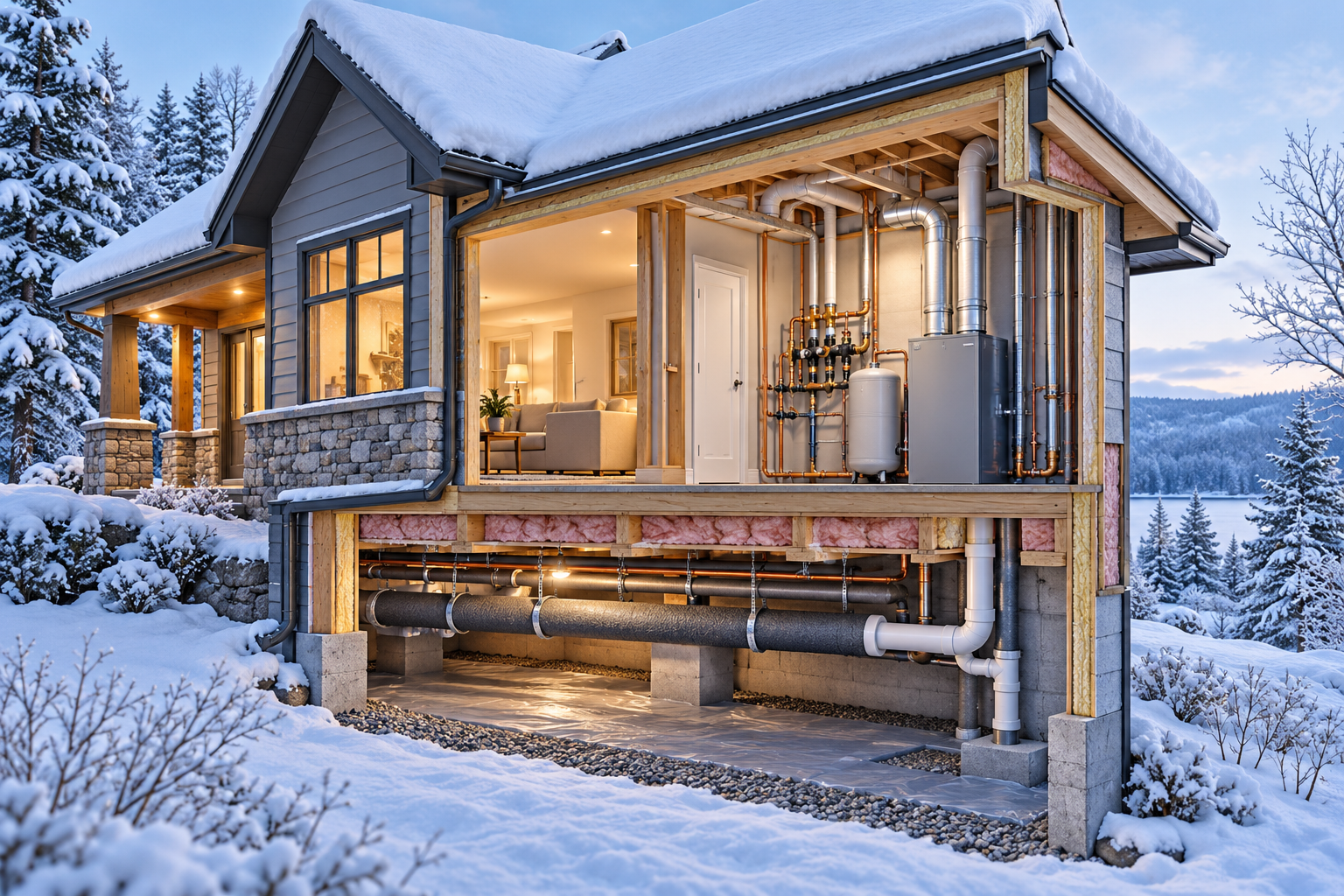
Cost tiers
- Maintenance and preparation: roof and drainage cleaning, weatherstripping, pipe and crawl-space inspection, freeze monitoring, and service checks are usually the smallest phase but recur.
- Targeted envelope and utility work: air sealing, insulation, vulnerable pipe changes, sump alarms or backup, and drainage corrections may require several trades.
- Replacement-cycle coordination: a roof, heating system, window, or envelope project can add winter-resilience features when access already exists.
- Continuity and structural work: backup power enabling work, snow-load assessment, roof strengthening, remote logistics, or major envelope upgrades can become substantial projects.
Use local bids and state assumptions about cold duration, snow, access, and outage. Northern or remote sites can add travel, material transport, limited construction seasons, and scarce skilled labor. Do not treat a Canadian or U.S. figure as a universal market range.
Do not guess at structural risk
Snow-load concerns require professional evaluation. Snow depth alone is not a universal structural rule; roof geometry, framing, drift, additions, condition, and local design loads matter. A roof-strengthening project belongs with an engineer and qualified contractor. Ice-dam prevention and roof maintenance do not replace that evaluation.
Heating and electrical changes also need product and code review. A generator, battery, transfer device, fuel system, or heating appliance can create a safety problem when connected incorrectly. A resilient plan identifies the critical load without providing a generic connection procedure.
Phase around real work
Combine air sealing with envelope work, pipe protection with plumbing access, roof inspection with reroof planning, and sump redundancy with below-grade drainage or backup power when the sequence is sound. Ask what disruption, temporary heating, water shutdown, or finish restoration is included. Plan maintenance for batteries, pumps, filters, vents, roof drainage, and monitoring.
The best winter retrofit is not the longest list. It is the set of measures that prevents the most consequential failure for the home’s actual cold climate and occupancy, with a clear plan for what happens when the event exceeds the design assumption.
Ask for seasonal assumptions
Tell the assessor whether the home is occupied year-round, vacant for part of the winter, remotely monitored, or used by people who need continuous heat or medical equipment. Describe water service, private wells, sump systems, fuel storage, heating type, outage history, snow exposure, and access. A seasonal cottage and a full-time northern home may need very different budgets.
Ask the contractor to show which work prevents freezing, which preserves heat, which protects the roof, and which maintains water and drainage. Separate a normal maintenance recommendation from a resilience upgrade. Include temporary heat, water shutdown, access, disposal, and finish repair when a project opens walls or ceilings.
Maintenance and contingency
Budget for battery changes, pump tests, filters, roof and gutter checks, monitoring, snow or ice observation, and seasonal startup or shutdown. A remote property may need a paid inspection after severe weather. If the project depends on a short building season, order materials and professional services early and include transport or weather delays.
No winter package prevents every freeze, roof failure, or outage. Ask for the conditions that exceed the design and a response plan that does not rely on an unsafe DIY structural or fuel procedure.
Compare resilience with normal replacement
When a furnace, roof, window, water line, sump, or envelope is already near replacement, ask for the ordinary and resilience-upgraded scopes side by side. The incremental cost may be sensible when access is open. Replacing a sound component early may not be. Include service life, warranty, maintenance, energy use, and the cost of a second mobilization.
Remote and northern properties need a logistics line. Ask about material lead time, storage, travel, weather protection, temporary heat, and the availability of a service person during an outage. These costs can be more important than the equipment price.
Keep the final plan readable: critical failure, measure, professional or trade, cost class, maintenance, and residual risk. That prevents a long cold-climate checklist from becoming an unfunded set of assumptions.