
Nonstructural earthquake work secures things inside the home that can fall, spill, move, leak, or block exits during shaking. It may include water-heater restraint, cabinet latches, anchoring furniture and electronics, bracing overhead fixtures, and securing equipment. These measures can be economical compared with structural retrofit, but they do not strengthen the house’s foundation or load path.
What the work may cover
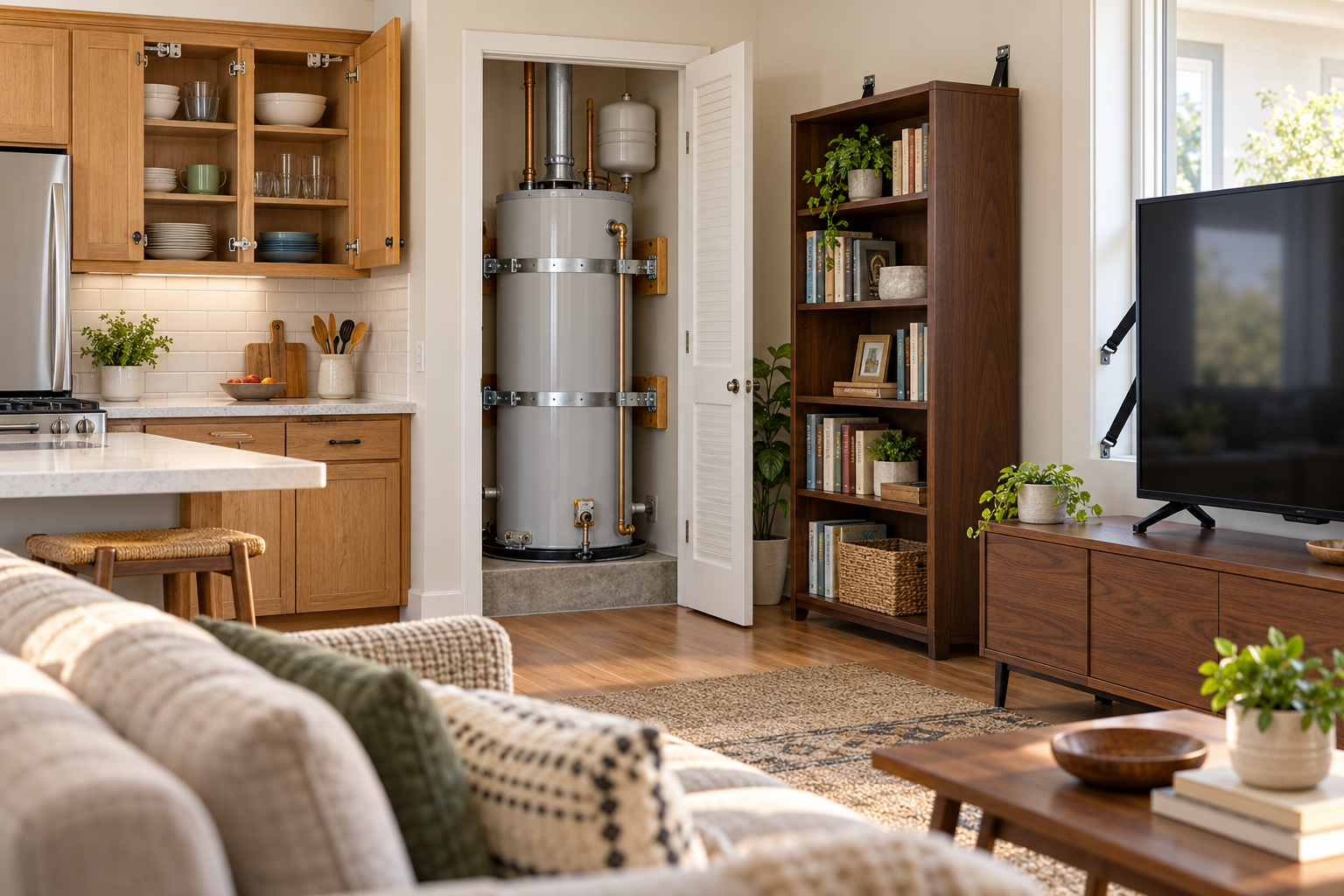
USGS guidance recommends anchoring heavy furniture and electronics, latching cabinets, bracing fixtures, and strapping water heaters to wall studs. A paid package might be a short visit for one water heater and several cabinets, or a larger project covering rooms, equipment, built-ins, and overhead items. The connection must suit the item, wall or floor construction, movement, and service requirements.
Utility connections change the responsible trade. Water, gas, electrical, refrigerant, fuel, and venting work may require licensed professionals and current local rules. A water-heater restraint should not damage a tank, block a relief path, or create an unsafe pipe or fuel connection. Product-specific anchors, straps, latches, and attachment capacities need manufacturer or authority support.
Cost planning
A small package can fit a modest labor budget when access is easy and the items are standard. A whole-home package costs more with many rooms, heavy equipment, built-ins, masonry or weak walls, high cabinets, difficult anchorage, or finish restoration. Ask for a line-item quote by room or item rather than a vague “earthquake-proofing” allowance.
Include inspection, hardware, labor, utility or electrical work, access, restoration, and follow-up testing. Replacement or remodeling can be the right time to add anchorage or latches, but the retrofit should not void a product warranty or prevent maintenance.
Prioritize by consequence
Start with items that can injure occupants, block egress, release water or fuel, damage critical equipment, or fall above beds and seating. The list depends on the household, building, item weight, room layout, and utility connections. Ask the professional to identify the assumptions and limits instead of promising that every object is protected.
Do not confuse a restrained water heater or latched cabinet with a structural seismic retrofit. If the home has a raised foundation, cripple wall, soft story, masonry, or significant movement, use the broader seismic guide and obtain a structural assessment.
U.S. and Canadian verification
Local rules differ, especially around gas, electrical, fuel, water heaters, and attachment to structural members. A U.S. Geological Survey recommendation is useful safety context but does not replace a local installation requirement. Program examples are not national eligibility rules. Use local trades and prices in the home’s market.
The best quote lists each item, attachment method, trade responsibility, maintenance access, and what remains outside the nonstructural package. That makes a small, useful resilience project distinct from an unsupported promise of whole-home earthquake safety.
Create a room-by-room inventory
Mark water heaters, tall cabinets, shelves, televisions, heavy furniture, overhead fixtures, appliances, fuel equipment, and critical electronics. Note who uses each room and where a falling item could block an exit or injure someone. Ask the contractor to separate items that can be anchored to suitable framing from items requiring a structural or utility professional.
Include access, moving contents, patching, painting, electrical or gas disconnection, and post-work testing. Combining the work with a remodel can lower access costs, but a finished wall should not be closed until the connection has been reviewed and documented.
Keep the boundary clear
Nonstructural bracing can be a sensible first phase for a household that also needs a structural seismic assessment. It should be described as risk reduction for identified contents or equipment. It is not a substitute for a foundation, cripple-wall, soft-story, masonry, or post-and-pier evaluation, and it does not justify a universal promise about earthquake survival.
Make the package easy to maintain
Keep the inventory, item locations, anchor type, utility responsibility, and inspection date. A cabinet may be replaced, a water heater moved, or a wall opened during renovation. Future work should preserve the attachment or trigger a new review. Ask whether the hardware remains accessible and whether corrosion, vibration, moisture, or service clearance changes its life.
If the package includes gas, electrical, fuel, or water connections, use the trade and local requirements that apply to that service. A handyman price may be appropriate for one non-utility item but not for a system connection. The lowest-cost package is not the right choice if it leaves a critical item or unsafe connection unresolved.