
FORTIFIED is an IBHS program framework for coordinated resilience work; it is not a building code, a universal roof specification, or a guarantee of an insurance discount. The economics are often strongest when a roof already needs replacement and the homeowner can add documented deck fastening, sealed-deck, edge, connection, wind-driven-rain, or hail-related work while the assembly is open.
Ordinary reroofing versus a resilience upgrade
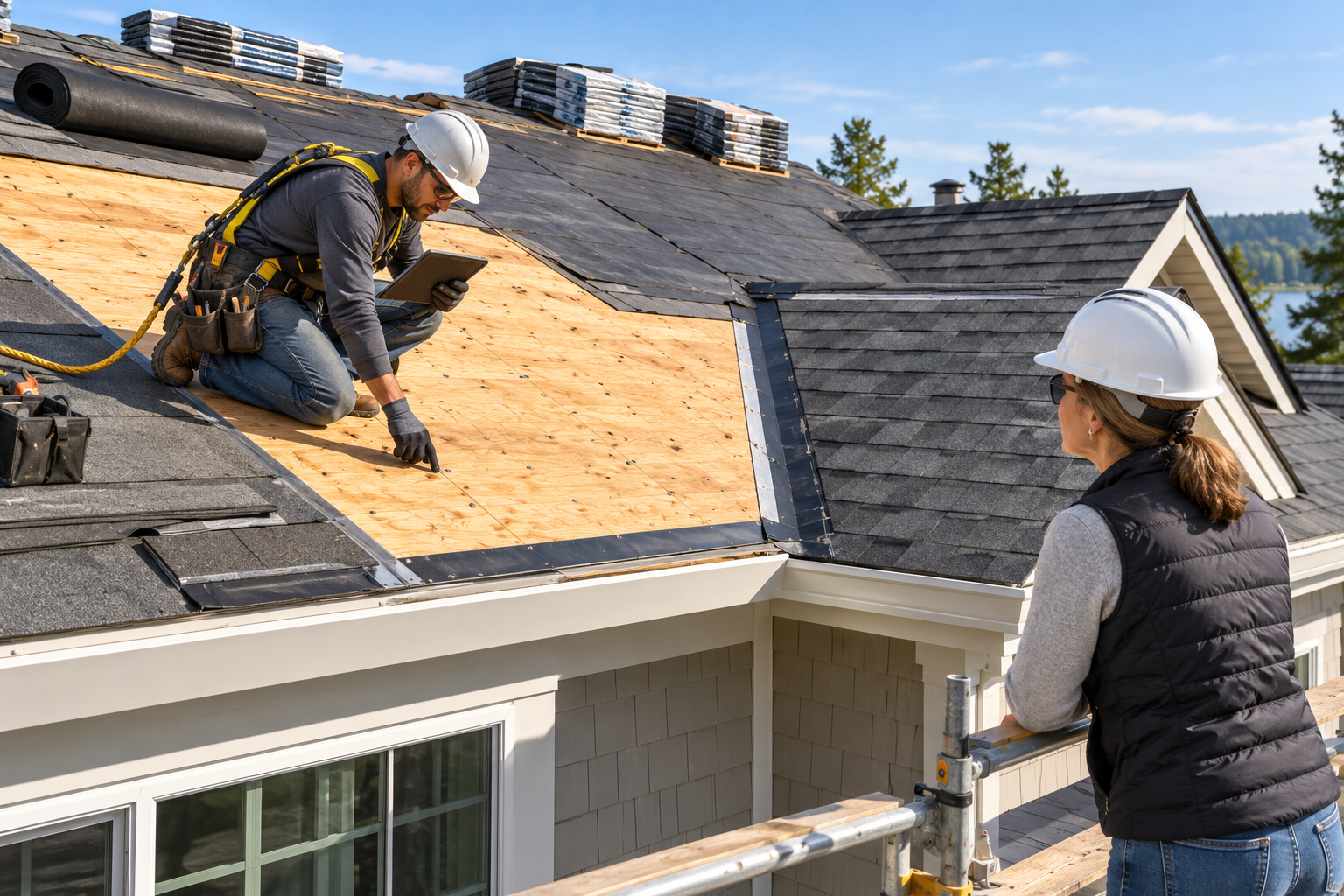
An ordinary reroof quote may cover tear-off, underlayment, roof covering, flashing, ventilation, and disposal. A FORTIFIED-oriented scope can add specific roof-deck attachment, edge details, sealed-deck work, roof-mounted vent protection, documentation, inspections, and a qualified contractor or evaluator. The incremental cost depends on the existing deck, framing, fasteners, roof geometry, access, and standard level.
The 2025 IBHS update described tighter inland roof-deck nailing, tested protection against wind-driven rain for roof-mounted vents, a certified FORTIFIED roofing contractor requirement, and an optional hail supplement with conditions for steep-roof asphalt shingles. Program documents and application requirements can change. Verify the active standard and designation path at the time of the project.
How to budget it
Separate the quote into ordinary roof replacement, resilience upgrades, program or evaluator services, permits and inspections, and contingency. A simple roof with accessible sheathing may have a modest incremental scope. A complex roof, concealed deck, poor sheathing, multiple penetrations, or a requirement to open edges and connections can make the upgrade much larger. Hail, coastal wind, and roof-mounted equipment can add separate decisions.
Ask whether the contractor is certified for the current program, who documents the work, what must be visible for inspection, and what happens if existing conditions do not meet the assumed scope. A low incremental price that excludes documentation or required inspection may not support the desired designation.
Program and insurance boundaries
FORTIFIED is U.S.-focused program information. It is not automatically a Canadian standard, local code, or insurer requirement. Even in the United States, designation, application dates, evaluator requirements, and insurance treatment must be confirmed for the property. Do not promise a premium reduction or treat a historical incentive as current.
One localized assistance example
The Oklahoma Insurance Department’s program page, checked October 12, 2026, describes possible grants of up to USD 10,000 for an eligible roof upgrade to the FORTIFIED Home Roof High Wind designation with the Hail Supplement. The grant is conditional on available funds and approval, is paid to the contractor after completed work and required documentation, and does not cover the evaluator’s fee. The homeowner remains responsible for costs above the award, and the program requires an award before mitigation work begins. These are Oklahoma program terms, not a roof price or guaranteed household payment. Confirm current intake, eligibility, contractors, fees, and award capacity directly with the Oklahoma Insurance Department before including assistance in a budget.
Louisiana participant cost context
A March 2025 Louisiana Legislative Auditor report gives a separate, historical example. Among 449 grant-recipient survey respondents shown in the report’s cost table, the average full roof project was USD 20,492 before grant support and USD 10,528 after an average grant of USD 9,964. In a distinct modeled calculation, the median project was USD 16,229: an estimated USD 12,981 for ordinary code-compliant roof replacement plus USD 3,248 for the FORTIFIED increment and evaluator fee. That median calculation assumed a USD 10,000 grant, which made the modeled net USD 6,229. The average and median figures describe different summaries and should not be combined.
The report’s grant-recipient survey was self-reported, came from one Louisiana program, and reflects its participants and roof mix rather than a representative current market. Roof age and home value affected project costs. Treat the figures as evidence that a grant can offset a large share of a project while the homeowner still faces a substantial gross quote and possible added work—not as a forecast for another state or Canadian province. Read the Louisiana Legislative Auditor’s report, and ask local contractors to separate baseline reroofing, FORTIFIED work, evaluator charges, and grant assumptions. Do not combine this historical Louisiana example with the current Oklahoma program terms above.
Reconcile bids on the same basis
Before comparing proposals, write down whether each one assumes a roof that is due for replacement or an early replacement of a serviceable roof. Then ask each bidder to separate the ordinary code-compliant reroof, the FORTIFIED details, evaluator or inspection costs, repairs to concealed decking, permit and disposal charges, and any designation-renewal costs. If a grant is involved, show the gross contract first and assistance second. A grant may change the household’s cash obligation without changing the work’s underlying price.
Compare the named details and documentation, not just a line called “FORTIFIED upgrade.” One proposal may include deck attachment, sealed-deck work, edges, vents, and inspection while another includes only a subset. Confirm which current standard applies, when the evaluator needs to see concealed work, and how changes are approved if damaged sheathing or framing is found. Ask who pays for extra access, reinspection, and repairs that are outside the assumed scope.
For a roof that is not due, compare the cost of waiting for its ordinary replacement cycle with the risk and maintenance of delaying. The Louisiana participant examples do not resolve that choice for another roof: age, condition, shape, exposure, household budget, program access, and the cost of a storm before replacement all differ. Keep any insurance premium assumption separate and require written confirmation from the insurer.
The roof upgrade also does not replace roof-to-wall connections, opening protection, garage-door work, or flood and wildfire decisions. Use the broader wind guide to determine whether the roof is the first priority. A resilient roof can still be damaged by a weak load path or debris opening.
When the timing is attractive
The best opportunity is often a necessary reroof, major repair, solar coordination, or exterior renovation that already provides access. Paying to remove a sound roof solely for a program upgrade may have a different economic case from adding resilience at the end of its normal life. Compare the remaining roof life, local wind and hail exposure, expected maintenance, documentation, and the cost of repeating access later.
Treat the result as a documented project scope rather than a label. The quote should name the current standard, work package, contractor and evaluator responsibilities, inspection points, warranty limits, maintenance, and any insurance or incentive assumption that still needs written confirmation.
Compare three roof scenarios
Ask for separate budgets for ordinary replacement now, ordinary replacement plus the resilience upgrade now, and replacement later with a planned upgrade at the end of useful roof life. The second scenario may benefit from open-deck access and one mobilization. The third may avoid premature replacement but carries the risk of a storm before the work is done. The comparison should include maintenance, expected service life, documentation, and the cost of opening the roof later.
Check whether the work touches only the roof covering or also the deck, edges, vents, connections, and water-shedding details. A program name should not be used to hide a standard roofing scope. Conversely, a contractor should not promise the designation if the required documentation, contractor status, evaluator, or application timing is not included.
Keep program information current
Write the standard version and application date into the proposal. Ask who confirms any transition rule and who receives the final records. IBHS requirements evolve, and a news release is not a substitute for the current program documents. If the project is in Canada, use the local market and authority context rather than treating FORTIFIED as a domestic code or insurance requirement.
Read the scope line by line
Ask whether the proposal includes tear-off, deck replacement, fastening, sealed-deck details, edges, vents, flashing, roof-mounted equipment, underlayment, hail options, documentation, evaluator visits, and final designation. A contractor may use “FORTIFIED roof” as shorthand for an ordinary roof with one upgrade. The current program documents should determine the actual scope.
Consider the cost of a failed designation or an incomplete record. If a concealed condition prevents the planned detail, the contractor should identify the change and its effect before closing the roof. Keep photographs and product records for maintenance and future work.
The incremental project can be worthwhile when it shares access with reroofing, but it should be evaluated against roof age, local exposure, future maintenance, and the possibility that a different wind vulnerability deserves the next dollar. Retain designation and inspection records with the roof warranty and maintenance history.