
Hail resilience is a replacement and prioritization decision. Roof coverings often receive the most attention, but skylights, windows, siding, garage doors, exterior equipment, gutters, and soft or exposed components can also be damaged. An impact rating may improve performance for a defined test, but it does not make a product or house hail-proof.
Start with the damage pattern
Review prior claims, roof age, slope, material, skylights, exposed equipment, siding, and the direction and size of local storms. A roof due for replacement presents a different opportunity from a new roof with recurring damage at one vulnerable detail. Hail, wind, tree exposure, and water entry can overlap, so the priority should not be selected from material marketing alone.
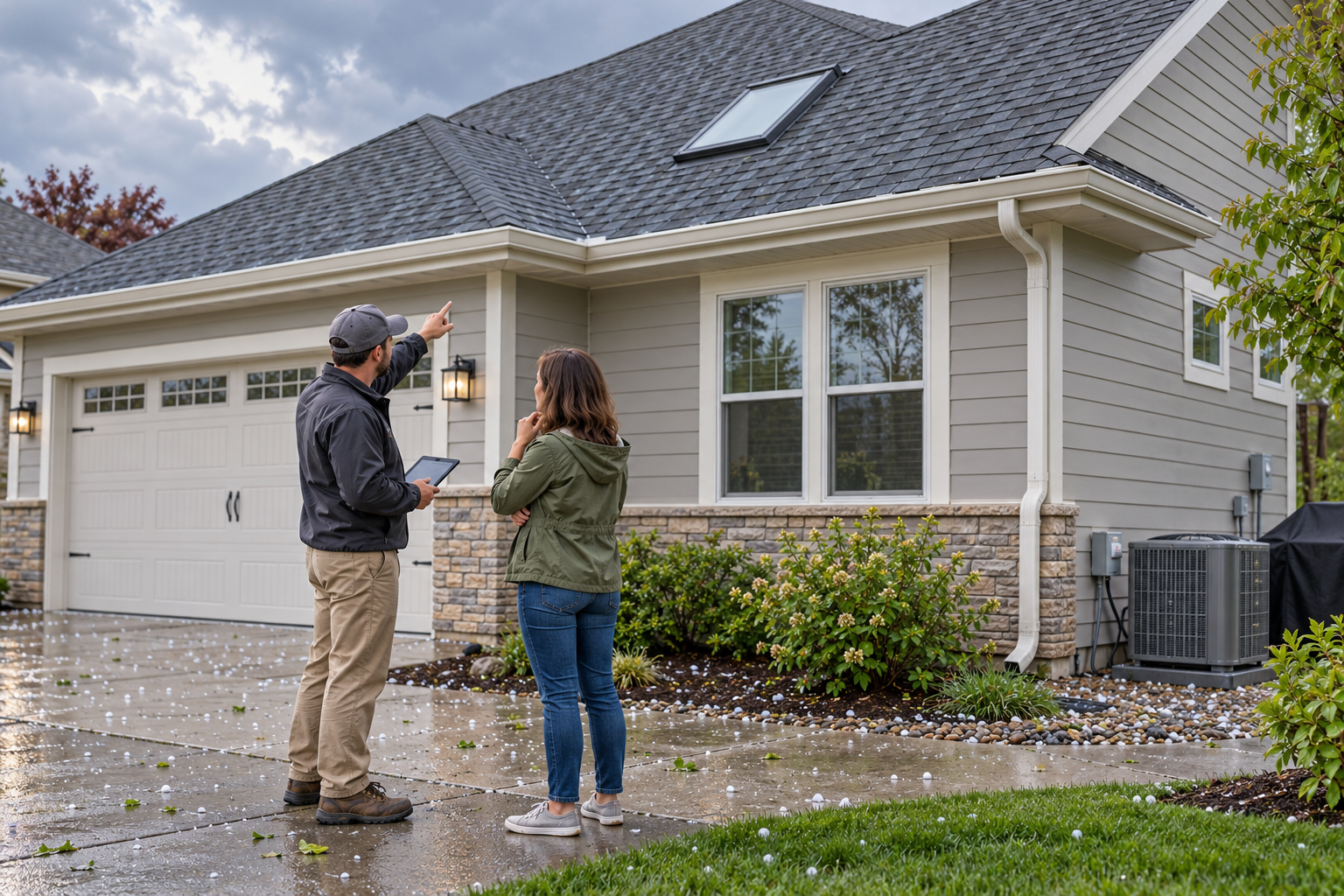
Cost tiers
- Maintenance and repair: replace damaged components, improve flashing, secure loose exterior items, and clear drainage. These actions may be relatively small but do not turn a vulnerable assembly into a high-impact system.
- Replacement-cycle upgrade: choose a documented impact-resistant roof covering, stronger skylight, improved garage door, or more durable exterior product when the ordinary component is due for replacement.
- Coordinated resilience work: combine roof-deck, edge, opening, and water-shedding details with a reroof or exterior project. Design, access, removal, and documentation affect the incremental cost.
- Early replacement: replacing sound components before their useful life ends can be expensive and may not be justified unless the exposure and expected loss support it.
Product, labor, disposal, access, roof geometry, opening size, trim, and finish restoration drive the quote. U.S. and Canadian prices should be gathered in their local markets; exchange-rate conversion is not a market estimate.
Read ratings carefully
Hail and impact terminology is not identical across all products. Confirm the exact standard, test, product line, installation condition, warranty, and whether the rating applies to the whole assembly. The 2025 IBHS update describes an optional FORTIFIED hail supplement and a condition for steep-roof asphalt shingles, but that program condition is not a universal product or insurer requirement.
Ask whether the roof, skylight, siding, garage door, and exterior equipment have compatible approvals for the home’s wind and hail exposure. A higher-rated roof does not protect a weak window or prevent water entry at a failed flashing detail. A local building authority or qualified contractor must confirm any code or product requirement.
Insurance and replacement timing
Some insurers or programs may consider mitigation, but discounts, eligibility, deductibles, and documentation vary. Get written confirmation rather than assuming the upgrade pays for itself. Include future repairability, warranty limits, and the cost of replacing the component after a later event.
The most useful hail quote identifies the components being upgraded, their test or rating basis, the incremental cost over ordinary replacement, disposal and restoration, maintenance, and the damage pathway addressed. Use FORTIFIED and the broader wind guide to coordinate priorities, but keep the article’s focus on hail-specific economics rather than duplicating ordinary roofing or window replacement.
Build the priority list from exposure
Review the roof’s age and condition, slope, skylights, windows, siding, garage door, outdoor equipment, gutters, and prior damage. Ask whether the next storm is more likely to create a leak, broken glazing, dents, cosmetic damage, or loss of an entire component. The priority may be a replacement-cycle upgrade rather than early removal of sound materials.
For each proposed product, record the impact test or classification, what the rating covers, installation limits, warranty, and whether the assembly is compatible with wind and water requirements. “Impact-resistant” is not a universal promise. Ask who verifies the product and whether the insurer or local authority uses that exact classification.
Include repairability and future cost. A more durable product may carry a higher initial price, but the value depends on actual exposure, replacement timing, availability, and the rest of the exterior. Insurance savings or claim treatment should be considered only after written confirmation.
Coordinate with the roof and opening plan
If the roof is being replaced, ask whether deck, edge, flashing, skylight, and vent work can be combined. If windows or a garage door are near replacement, compare the incremental impact or wind package. Do not allow a hail upgrade to create a water-shedding, egress, or ventilation problem.
The quote should name the product, test or classification, installation conditions, warranty, ordinary replacement scope, resilience increment, disposal, finish work, and future maintenance. A product with an impact label still needs a compatible substrate and correct installation.
Hail risk is not the same as wind, wildfire, or flood risk, although the projects may overlap. Rank the work by the damage pattern and replacement timing rather than buying every advertised upgrade at once.
If you are planning a Canadian new home
The ICLR/CHBA’s 2025 Part 9 hail-resilience guide offers a good/better/best construction framework that can help a homeowner ask for comparable builder options before the roof and exterior package is fixed. Its tiers and cost-or-difficulty indicators are guidance, not installed prices, adopted code requirements, or proof of an insurer award. Ask for the locally required baseline and any optional hail package on the same plans, with products, testing basis, labor, exclusions, and incremental price shown separately. This is a new-build comparison, not a price for retrofitting an existing roof or opening. The guide does not supply a Canadian market price schedule; verify any technical choice with the complete current guidance, builder, product documentation, and local authority.
For a useful comparison, have the builder fill in three versions of the same house rather than quoting unrelated packages:
| Quote line | Baseline | Hail package option | What to confirm |
|---|---|---|---|
| Roof and underlayment | Locally required assembly | Named upgrade, if selected | Product, installation method, test basis, and ordinary replacement scope |
| Openings and exterior | Standard windows, skylights, doors, and cladding | Specific upgraded components | Which elevations and openings are included, plus any limits or exclusions |
| Labor and coordination | Base installation | Incremental labor or design work | Whether access, flashing, trim, disposal, and finish restoration are included |
| Documentation and follow-up | Standard warranty records | Any added inspection or product record | Who verifies the assembly and what future maintenance or warranty conditions apply |
The table is a request format, not a prescribed technical package. The guide does not establish that every “better” or “best” item is available in every municipality or appropriate for every exposure. A builder should identify the exact components and explain any interaction with wind resistance, water shedding, ventilation, egress, or product warranty. If a proposed line has no separately stated price, ask whether it is included in the base specification or omitted.
For an existing home, use a different worksheet. Record each damaged or aging component, remaining service life, removal and disposal, substrate condition, access, and the cost to restore adjacent finishes. Then compare the hail-oriented option with like-for-like ordinary replacement. A new-build builder package cannot supply the cost of opening an existing wall or roof, and a retrofit quote should not be treated as an installed-price version of the construction guide.
Choose the next component by timing
If the roof is already due, ask whether the roofer can price a more resilient covering and compatible edge, skylight, and flashing work during the same mobilization. If the roof is sound but one exposed opening has repeated damage, price that opening separately and compare it with waiting for normal replacement. If several systems are near end of life, request a coordinated package and show both its total and the incremental cost over ordinary replacement. These are quote scenarios, not universal priorities; local hail exposure and the actual damage record should determine which is relevant.
Ask the contractor to distinguish hail damage from wind damage, water entry, and cosmetic marks when the same event affects more than one component. This matters because a repair proposal or insurance scope may cover a different set of work from a planned resilience upgrade. Keep the damage repair, any code-required correction, and the optional improvement visible as separate amounts. That separation helps the homeowner compare the project with another contractor and avoids treating claim proceeds or an insurance discount as a guaranteed subsidy.
A practical bid review ends with a short record: the component being protected, its current condition, the exact replacement product or assembly, its applicable test basis, the incremental cost, the warranty and maintenance conditions, and the uncertainty that remains. If a salesperson cannot identify the assembly or test behind an “impact” label, the homeowner does not yet have enough information to compare the premium with ordinary replacement.