
Professional snow removal commonly costs several hundred dollars per visit, while large, steep, high, icy, drifted, remote, or urgent work can reach the low thousands. Pricing may be hourly, by crew, by roof area, or fixed after a site review. Recurring service can be contracted by event or season.
Snow depth alone does not establish structural risk or a safe removal method.
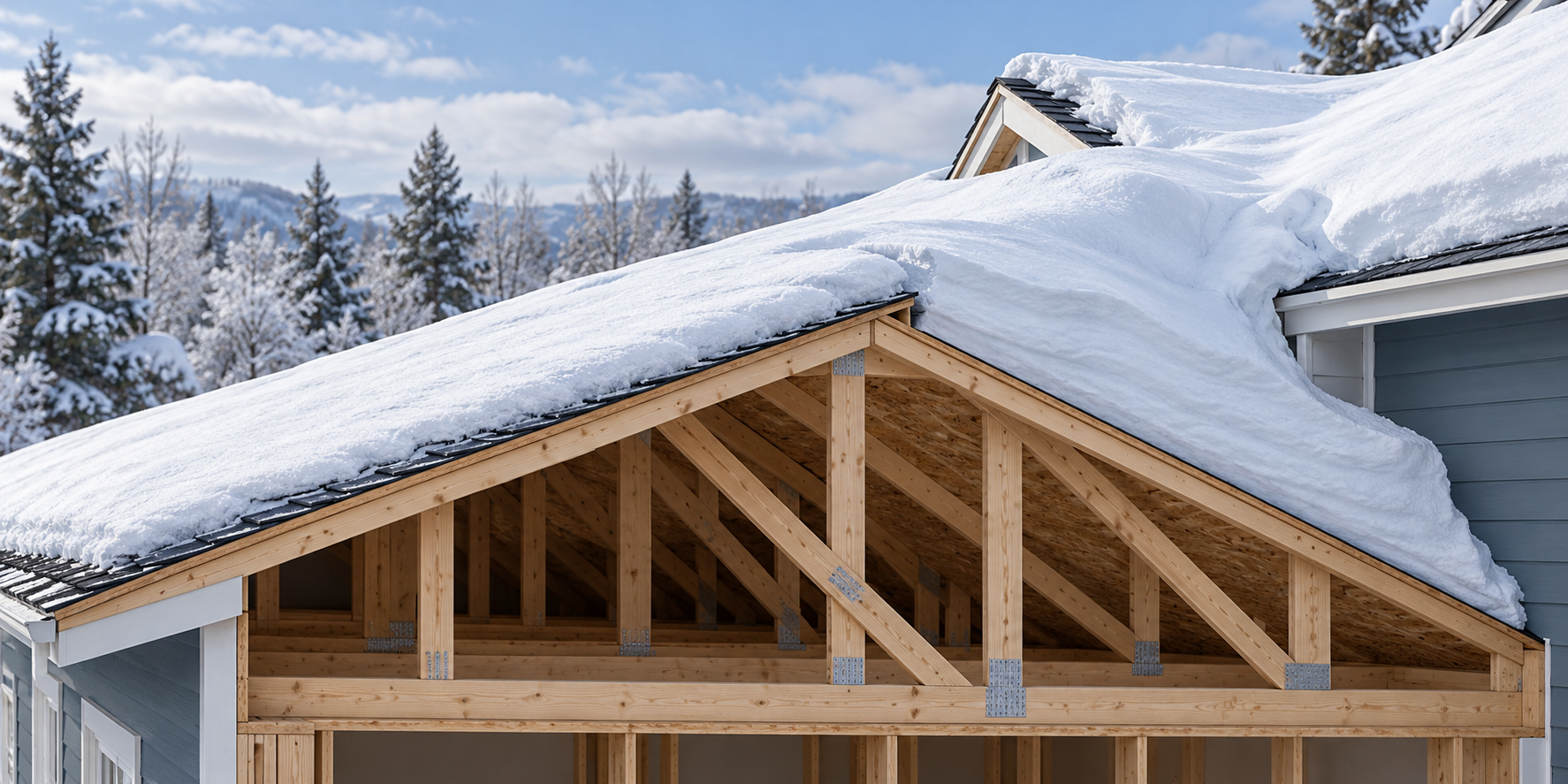
Why identical depths are not identical loads
Fresh dry snow, wet snow, compacted layers, ice, and rain-on-snow carry different weight. Drifting can concentrate load. Roof span, framing, geometry, prior alterations, material condition, and local design assumptions matter. A universal “remove at X inches” rule would create false confidence.
If there is sagging, unusual movement or sounds, sticking doors, cracking, major leaks, or another sign of structural distress, keep people away and seek local emergency or structural guidance. Snow removal is not a substitute for structural assessment.
Cost drivers
- roof area, pitch, and number of levels;
- safe access and where removed snow can land;
- snow depth, density, crust, and ice;
- valleys, solar panels, skylights, vents, and fragile coverings;
- need to protect entrances, decks, landscaping, and utilities;
- emergency callout, travel, and severe-weather demand;
- whether full removal or load reduction is appropriate;
- repeated mobilization during a long winter.
The cheapest proposal may exclude relocation of snow at ground level or damage responsibility around roof equipment.
Removal can damage the roof
Scraping, chopping, improper tools, and uncontrolled movement can damage shingles, membranes, coatings, flashings, gutters, and solar equipment. Ice conditions increase both roof and worker hazards. Contractors should choose methods and safety controls for the actual material and site.
This guide explains procurement, not a homeowner roof-access procedure.
Snow versus ice dams
Removing part of the snow load is different from removing an ice dam or correcting recurrent melt/refreeze. Ice-dam response may involve drainage relief, roof repair, and attic air-sealing/insulation work. Clarify which problem the service addresses.
Decision scenarios
Accessible low roof after unusual accumulation: A planned professional visit reduces load and protects roof details at moderate cost.
Steep multi-level roof with drifting: Specialized access and controlled placement raise cost; structural advice may be needed if load concern is material.
Recurring seasonal property: A trigger and response contract can reduce emergency premiums, but the trigger must use local/property-specific judgment rather than one universal depth.
Solar-covered roof: Coordinate with the solar provider’s restrictions and protect wiring, mounts, and panels. Do not assume snow removal is required for production or safe for the equipment.
Quote checklist
Require included roof areas, method at a high level, protection of materials/equipment, snow placement, ground cleanup, ice treatment exclusions, damage responsibility, safety/insurance documentation, event trigger, and emergency rates. If structural concern motivates the job, establish who evaluates it.
Professional removal is warranted when site-specific risk, access, or consequences exceed what can be managed safely from the ground—not because a generic internet threshold has been crossed.
How providers price the work
Hourly pricing transfers snow-condition uncertainty to the owner; fixed pricing transfers more to the contractor and may include conservative margin. Per-square-foot pricing can work only when access, depth, ice, and disposal assumptions are defined. Seasonal agreements should state event triggers, response time, exclusions, and unusually severe conditions.
Compare crew size, estimated time, equipment, included roof areas, and ground cleanup. The lowest hourly number may use fewer workers and cost more overall.
Partial removal and balance
Professional strategy may reduce load or clear critical areas rather than scrape every surface. Uneven removal and drifting can matter structurally, so the appropriate approach is site-specific. The homeowner should not direct a universal pattern from generic guidance.
Related systems
Solar arrays, skylights, vents, chimneys, gutters, low roofs, decks, and entrances change work. Snow thrown from an upper roof can overload a lower area or damage property. Define staging and placement.
Alternatives and prevention
Long-term choices can include structural evaluation, snow-retention design, roof/attic heat-loss correction where ice is the concern, access planning, or resilient retrofit. Those are capital decisions, not automatic substitutes for removal during an unusual event.
Emergency decision boundary
Leaks from ice dams and concern about load are different. If local authorities or a structural professional issue property-specific direction, follow it. If signs of distress exist, do not wait for a routine snow contractor to decide structural safety.
Annual budgeting
Snow climates may justify a winter contingency rather than an automatic annual service. Base it on roof exposure, history, remote occupancy, and local contractor availability. Early contracting can reduce emergency pricing, but only if the service scope and trigger are meaningful.
Normalize removal proposals
Compare roof areas, access, method, depth or layer assumptions, safe remaining layer, treatment around solar/skylights/vents, ice exclusion, ground protection, snow placement or hauling, entrances and lower roofs, crew/equipment minimum, travel, and after-hours terms. A ground-based edge service and a fully staged roof service are not substitutes for the same concern.
Ask what condition would stop the crew. Unknown fragile roofing, hidden skylights, electrical service, falling-ice zones, structural distress, or unsafe weather can change the plan. A contractor should not promise complete removal regardless of roof and safety conditions.
Three service cases
A low-complexity preventive service may address accessible eaves or selected drift areas before water backup, while leaving a protective layer and avoiding roof traffic. Mobilization can be most of the price.
A typical service covers several roof planes with careful staging, protection of gutters and penetrations, and planned snow placement. Quantity and time vary with density, layering, and access rather than depth alone.
A complex case involves heavy drifting, ice layers, high or steep roofs, solar, lower roofs that receive discharge, limited ground storage, or signs suggesting structural concern. Structural evaluation, exclusion zones, lifting equipment, or staged hauling may be separate scopes.
Service economics and decision thresholds
Do not set a universal depth trigger from this guide. Use property-specific guidance, actual drift patterns, local alerts, building condition, and qualified structural input where load is a concern. Interior distress, unusual movement, or official/project-specific direction moves the decision out of routine maintenance.
For recurring service, compare an on-call minimum with a seasonal agreement by actual included events, response commitment, areas, and cancellation—not by a promised unlimited winter. Remote or vacant properties may value monitoring and response more than the cheapest individual visit.
Track where drifting recurs and what the service removes. If the same geometry creates repeated high-cost access, evaluate snow-retention design, structural or roof changes, and safe permanent access during planned capital work. Those alternatives should solve a documented pattern, not be sold automatically after one unusual winter.
Related-cost boundaries
Roof repair, ice-dam response, gutter damage, interior drying, tree work, structural evaluation, and snow hauling should remain separately priced. Snow removal can reduce one immediate exposure but does not repair a leak, prove capacity, or correct heat loss. Clear boundaries prevent one urgent service from inheriting responsibility for every winter problem.
Read seasonal-contract promises
A “per visit” price needs a trigger, areas, quantity assumption, response time, and extra-work rules. A seasonal price needs event limits or service conditions, monitoring responsibility, excluded ice, disposal, access, and cancellation. “Emergency priority” has economic value only when the response commitment and safety exceptions are written.
For absentee properties, decide who observes conditions and who has authority to mobilize. For occupied properties, define safe ground exclusion and communication. These administrative details affect whether the purchased service arrives before the condition becomes an emergency.
Closeout after removal
Record treated areas, approximate conditions, damage observed, snow placement, and any zones not accessed. Inspect roof, flashings, gutters, and penetrations later when safely visible. A removal report distinguishes service-caused damage from pre-existing conditions and gives a structural or roofing professional better context if the event recurs.
Final decision checklist
Identify the concern—load, drifting, falling snow, ice backup, blocked equipment, or access—because each changes the right provider and scope. Confirm property-specific trigger, safe method, roof-material precautions, snow placement, related-system exclusions, and escalation for distress. If the objective and stopping rule cannot be stated, an urgent-looking removal quote is not yet a defined service.
Ownership horizon and preparedness
A long-term owner in repeated exposure can invest in documented roof maps, marked skylights/vents, safe professional access, monitoring, and prearranged service thresholds. A short-term owner still needs safe response but should not assume a large retrofit or seasonal contract is recovered at sale. Record unusual drift and damage so the next owner can distinguish a recurring property condition from one exceptional storm.
Preparedness has economic value because it reduces emergency diagnosis and avoids crews discovering hidden roof features under snow. It does not justify automatic removal when no property-specific trigger or concern exists.
Uncertainty boundary
Snow density, drifting, ice layers, and future weather cannot be converted into one universal depth or annual budget. Use property-specific guidance and event ranges. The provider can still price access, areas, method, disposal, and escalation clearly even when final crew time depends on actual conditions.