
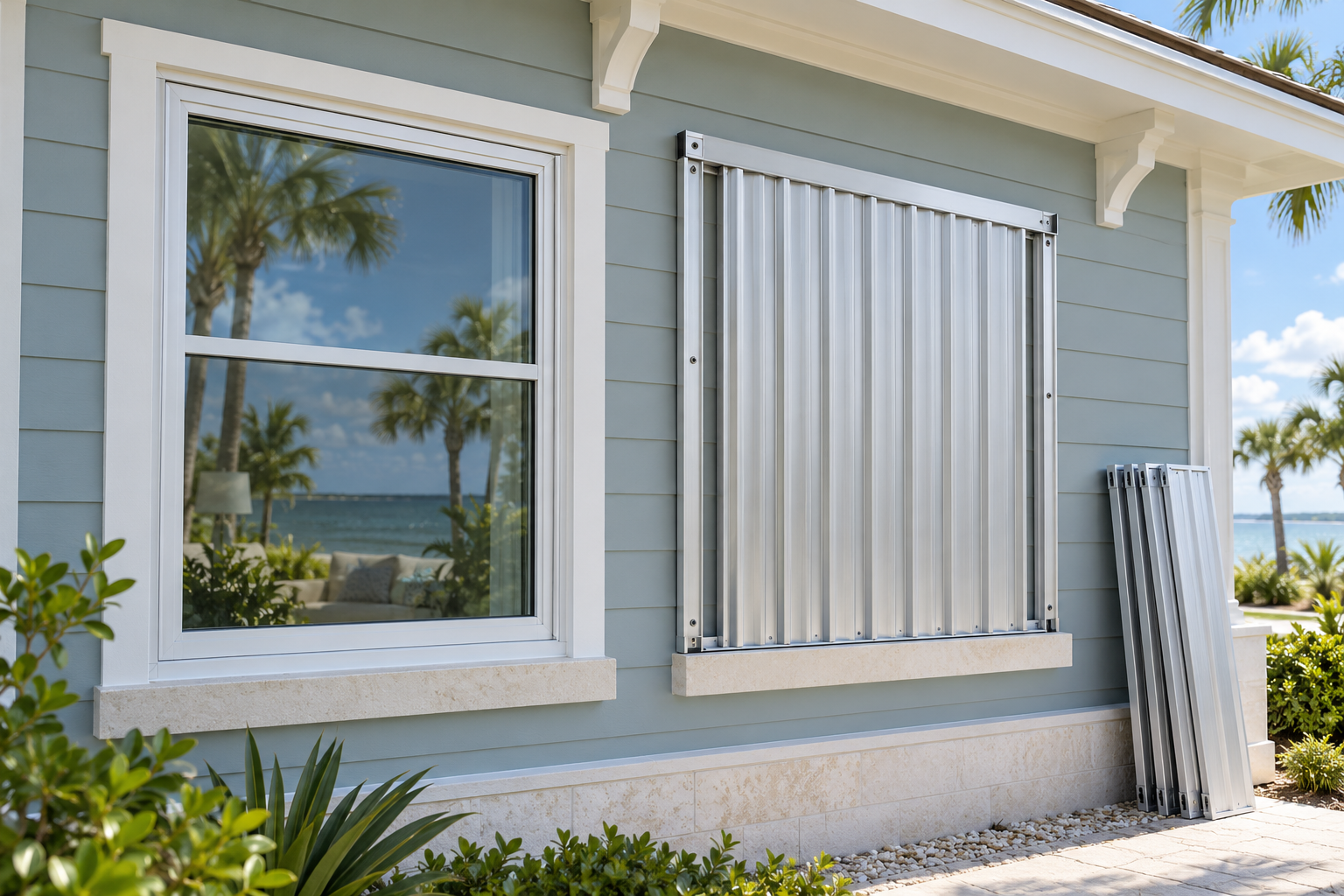
Impact-resistant windows and hurricane shutters address the same broad concern—wind-borne debris and opening failure—but create different ownership decisions. Impact windows are a permanent glazing and frame project. Shutters may be removable panels, accordion systems, roll-down products, colonial-style systems, or another approved approach. The right comparison includes the whole opening, deployment, storage, replacement cycle, and local performance requirements.
Impact windows
Impact glazing can provide everyday windows, daylight, and permanent opening protection without a storm installation step. The project may include window removal, frame and sill repair, flashing, interior and exterior finish restoration, egress review, and disposal. It can be economically attractive when ordinary windows are already failing or due for replacement.
The price depends on opening size and count, frame material, custom shapes, access, glass specification, structural opening condition, trim, and local product approval. A replacement window should not be called impact-rated merely because it is laminated or heavy. Confirm the exact tested assembly and its design-pressure suitability for the location.
Hurricane shutters
Removable panels often have a lower initial material cost but require storage, labeling, deployment time, fasteners, and labor before a storm. Permanent shutter systems can improve deployment and appearance but add tracks, hardware, maintenance, and installation cost. Large openings, unusual shapes, balconies, high stories, and weak substrates raise the budget.
The owner must be able to install and secure the system early enough. A panel locked in a shed, a missing fastener, a corroded track, or an opening overlooked during a warning can defeat the plan. Ask whether the quote covers every window, door, skylight, and garage opening that the wind package requires.
Compare total ownership cost
Use a table in the quote that shows initial installation, ordinary window replacement avoided or retained, storm deployment labor, storage, maintenance, repairs, and future replacement. A permanent system can cost more initially but reduce seasonal labor. Removable panels may be financially sensible for a seasonal home or a limited number of openings if the household has reliable deployment capacity.
Product testing, design pressure, opening geometry, egress, frame attachment, and local approvals are not interchangeable across U.S. and Canadian markets. FEMA guidance provides the retrofit decision framework; it does not approve a specific product for a specific home. Confirm the current authority and manufacturer documentation.
Protection is broader than glass
Opening protection may reduce debris entry and internal pressurization, but it does not address roof loss, garage failure, roof-to-wall connections, wind-driven rain at edges, or flooding. Include the openings in the wider wind assessment and coordinate the work with ordinary window replacement, siding, or exterior renovation when that lowers access and finish costs.
Do not treat insurance discounts as a guaranteed offset. Ask the insurer about the exact product and documentation, then price the project in the local market. The best choice is the system the house needs and the household can maintain and deploy correctly—not simply the lowest advertised cost.
Use an opening schedule
List every window, exterior door, patio door, skylight, and garage opening by size, story, direction, existing frame, egress role, and proposed protection. Note which openings can be covered by a removable system, which need permanent protection, and which have no practical storage or deployment path. A quote that prices only the front windows may leave the largest or most exposed opening unprotected.
Ask whether installation includes sill and jamb repair, flashing, interior trim, exterior cladding, screens, locks, egress, and disposal. For shutters, include tracks, anchors, labels, storage, handling, and practice. For impact windows, include frame attachment, glass, product approval, and the ordinary window replacement scope so the incremental resilience cost is clear.
Include household operations
A seasonal or elderly household may value a permanent system because deployment is difficult. A frequently occupied home may value everyday glazing and daylight. A rental, historic property, or multi-unit home may have appearance, approval, or shared-wall constraints. These are economic and practical factors, not reasons to ignore performance requirements.
Ask the insurer or local authority about documentation in writing, then treat any savings as uncertain until confirmed. Opening protection works best when it is part of a roof, garage, connection, and water-intrusion plan.
Do not overlook ordinary window functions
Ask whether the proposed protection preserves ventilation, daylight, emergency escape, cleaning, screens, locks, and everyday operation. A shutter can protect an opening during a storm but make a room difficult to use if it cannot be stored or deployed. An impact window can change frame, glass, solar gain, noise, and replacement cost. These are part of the household’s value calculation.
For doors and windows in a coastal or high-wind location, verify the whole assembly and the installation substrate. An approved glass product installed into a weak or damaged opening may not deliver the assumed performance. Keep the product and installation documents for future replacement, insurance, and remodeling.
Compare the opening package with roof, garage, and load-path work. The best protection choice is the one that closes a documented vulnerability without leaving a larger failure pathway untouched.