
A blower-door test is a paid measurement of how much air moves through a home’s enclosure when the building is placed under a controlled pressure difference. A current U.S. specialist cost guide reports about USD 100–300 as a blower-door add-on, while a broader audit package that includes blower-door testing, infrared imaging, and utility-bill analysis is reported at about USD 200–700. Those are package observations, not guaranteed standalone prices. Canadian EnerGuide work is structured differently: Natural Resources Canada reports that pre- and post-retrofit evaluations together may average CAD 600–1,000, with the provider and province or territory affecting the amount.
What the test measures
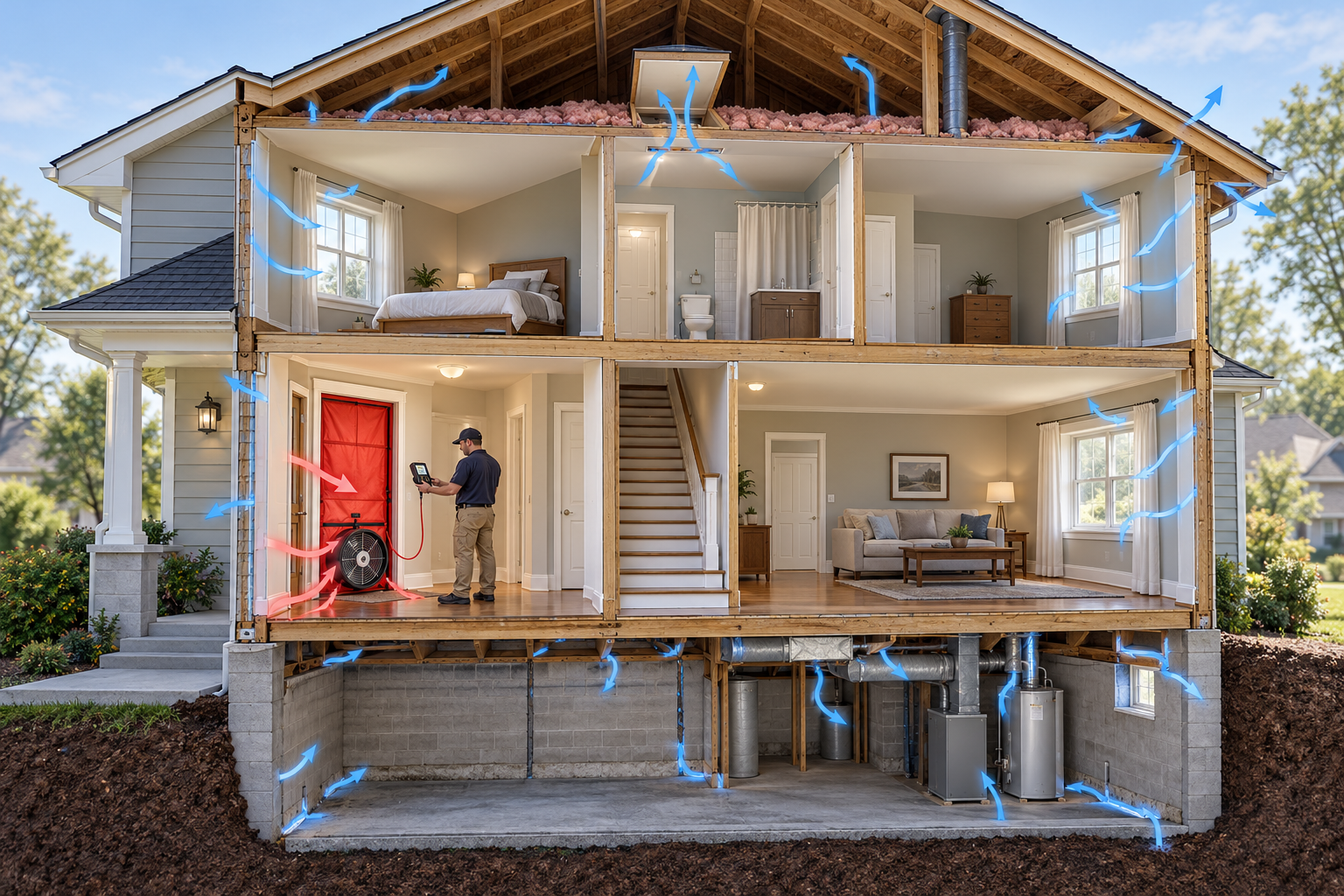
The equipment temporarily pressurizes or depressurizes the house and measures the airflow needed to maintain the test pressure. That produces a whole-house indication of airtightness. It can tell you whether the enclosure appears relatively leaky or tight under the test conditions, but it does not automatically identify every leak or tell you which repair has the best return.
Ask what measurement the report will provide. A commonly reported output is airflow at a test pressure of 50 pascals, written CFM50. If the home’s conditioned volume is known, the tester may also express that result as air changes per hour at 50 pascals, or ACH50. ACH50 is a normalized test result; it is not the number of times outdoor air naturally replaces indoor air during ordinary weather. The calculation and test protocol should be stated so results from different homes or visits are not compared as though conditions were identical.
Leak-location work may be performed during the test using smoke, pressure observations, infrared imaging, or visual inspection. Ask whether that investigation is included. A test-only quote can be cheaper than a diagnostic visit that maps leakage locations and turns them into a repair scope.
When testing is worth paying for
Testing is most useful before a broad air-sealing or weatherization project, when symptoms do not point to one obvious location, or when you want a baseline to compare with a post-work result. It can also prevent an insulation project from being treated as a substitute for leakage control. If the proposed work is a small, visible repair such as replacing a damaged hatch gasket, a standalone test may add little value.
The decision is economic rather than ideological. Compare the test fee with the cost of the work it may prevent, prioritize, or verify. A house with multiple additions, finished ceilings, difficult attic access, or competing HVAC and opening problems may benefit more from a complete building-envelope assessment than from a number alone.
What changes the price
The tester may charge more for a large home, an unusual layout, a multi-unit or shared building, rural travel, difficult setup, a written report, or a leak-location investigation. A pre- and post-retrofit pair costs more than one visit but gives a clearer way to discuss whether the work changed measured airtightness. Ask whether the equipment and reporting are included, how long the visit is expected to take, and whether the provider has a defined interpretation process.
Canadian homeowners should confirm whether the service is part of an EnerGuide evaluation and contact the appropriate registered service organization. Do not assume that an online price for a U.S. add-on describes the Canadian program or a local standalone test.
Before the appointment
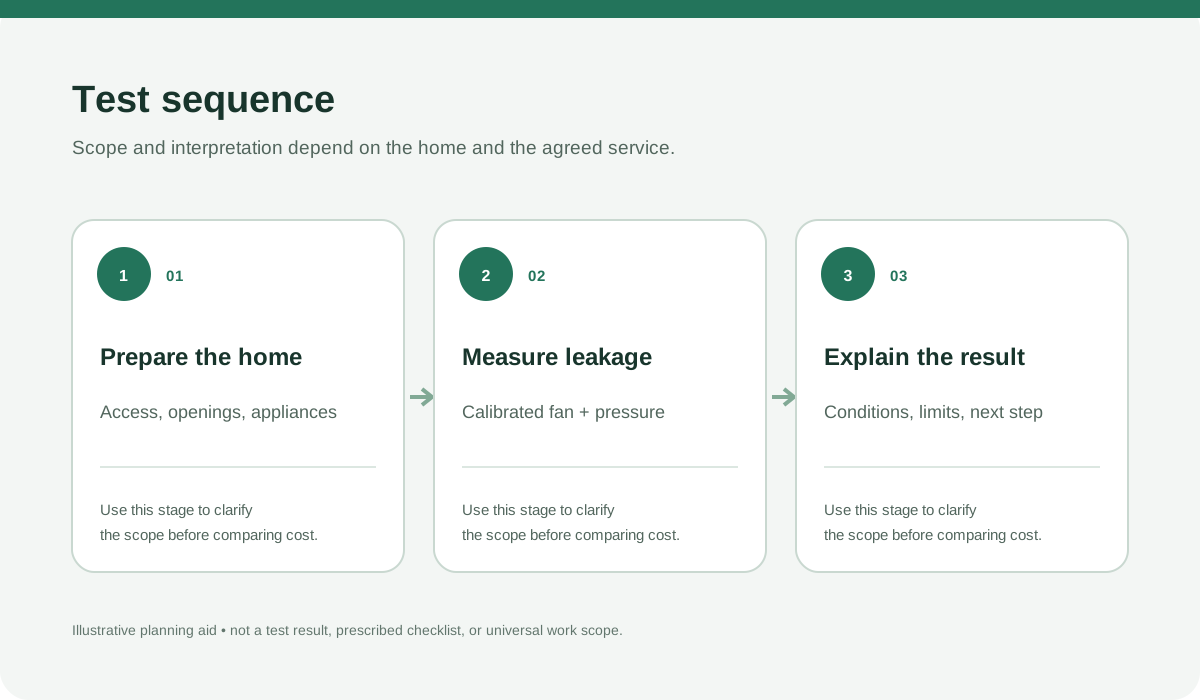
Ask how to prepare the house. The tester may need access to rooms, attic hatches, crawl spaces, utility areas, and exterior doors. Fuel-burning appliances and exhaust systems can create safety questions during depressurization. The provider should give the preparation instructions and explain any limits rather than asking a homeowner to improvise around combustion equipment.
Keep a list of symptoms and recent work. Note rooms with drafts, unusual odors, condensation, ice dams, dust patterns, or large temperature differences. Bring utility bills if the assessment includes energy-use analysis. This information helps the tester relate the measured result to the decision you are actually making.
Pre- and post-work testing
A second test can show whether a project changed the measured airtightness, but the number is not the whole result. A successful air-sealing project also needs appropriate ventilation, moisture control, and safe operation of fuel-burning equipment. A lower leakage result does not prove that every room will feel comfortable or that energy bills will fall by a fixed percentage.
Ask the contractor what work the measurement supports and what remains unverified. A quote that promises a particular savings percentage from a blower-door result is making a stronger claim than the test alone supports. Treat the test as one input to a scope, not as a self-executing diagnosis.
Questions for the quote
Request a line for the test, any leak-location investigation, infrared add-on, report, and post-work verification. Ask whether the test is standalone or bundled, whether a minimum service charge applies, and whether the provider will identify inaccessible areas. If the result leads to air sealing, require the construction proposal to identify locations, materials, access, restoration, and exclusions.
A blower-door test is most valuable when it changes a decision: which work to do first, whether a broad retrofit is justified, or whether the completed work performed as intended. If it only supplies an unexplained number, a more complete assessment may be the better purchase.
What the result does and does not answer
The test can show how much air moves through the enclosure under a defined pressure difference. It cannot, by itself, tell you which hole is responsible, whether a cold room is an HVAC problem, or whether a moisture stain is a roof leak. Leak location may require visual inspection, infrared imaging, smoke observation, or access to the attic, basement, crawl space, and finished surfaces.
That distinction matters economically. A low test price may be reasonable when the homeowner already knows the next repair and only needs a measurement. A broader assessment may be better when the alternatives include replacing windows, opening walls, sealing a roof line, or insulating several assemblies. Ask what decision the service is designed to support before comparing a standalone test with an audit package.
Preparation and safety are part of the scope
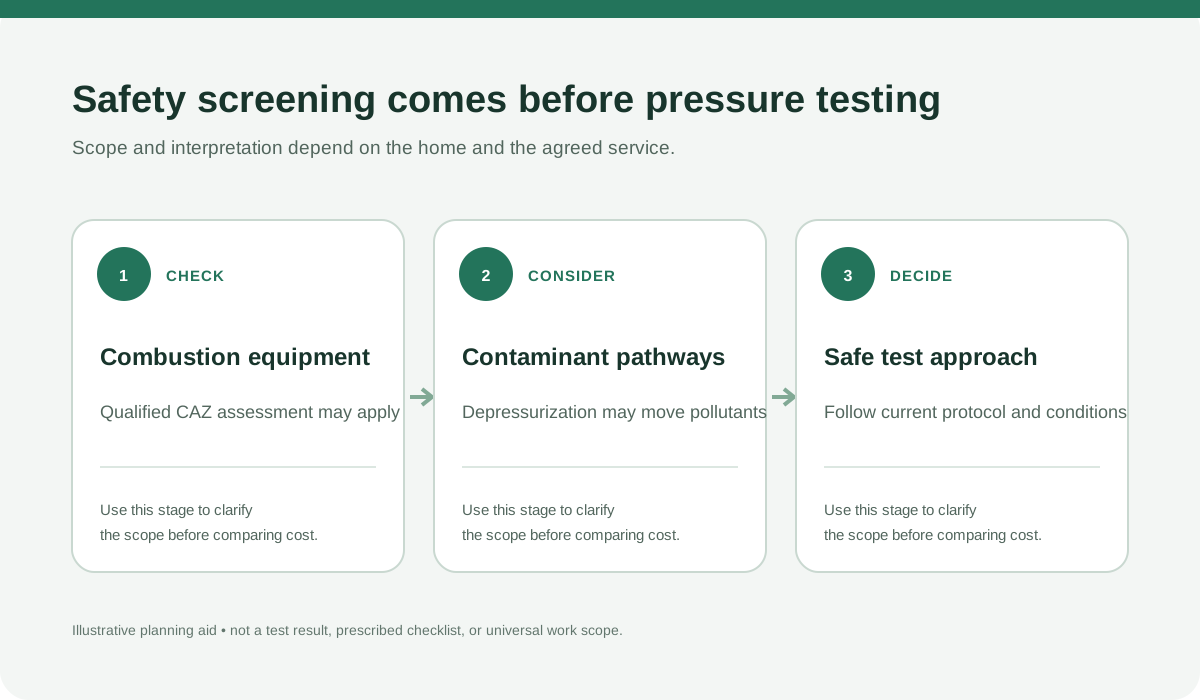
The provider should explain what doors, windows, exhaust fans, fireplaces, fuel-burning appliances, and other openings need to be treated during the test. A home with naturally vented combustion equipment may require professional safety checks before and after substantial air sealing. Do not bypass a safety device or alter a flue because a generic testing checklist says the opening should be closed.
For an existing home, ask how the provider screens for conditions that could make depressurization unsafe, including possible movement of contaminants from an enclosure into occupied space. Where atmospherically vented combustion appliances are present, qualified personnel may need to assess the combustion-appliance zone under worst-case depressurization before testing. The exact procedure depends on the home and applicable protocol; a cost guide cannot determine whether a particular test setup is safe. A quote should say who makes that decision and whether any specialist visit is separate.
Access also affects the usefulness of the result. A test may measure the house, but an installer still needs a plan for reaching the leakage locations. If large parts of the boundary are inaccessible, the report should say so. A precise number with no practical path to repair is not the same as a complete retrofit plan.
U.S. and Canadian pricing
Current U.S. specialist observations put a blower-door add-on at roughly USD 100–300, while Canadian EnerGuide evaluations are priced as a provider- and province-dependent pre/post bundle rather than a universal standalone test. These figures are not interchangeable. Keep currencies, service definitions, and reporting depth separate.
Ask whether the quote includes a report, leak-location work, infrared pairing, travel, a minimum charge, and post-work comparison. The best value comes from a result that is interpreted in the context of the home’s assemblies and the next construction decision.
Choosing the right service level
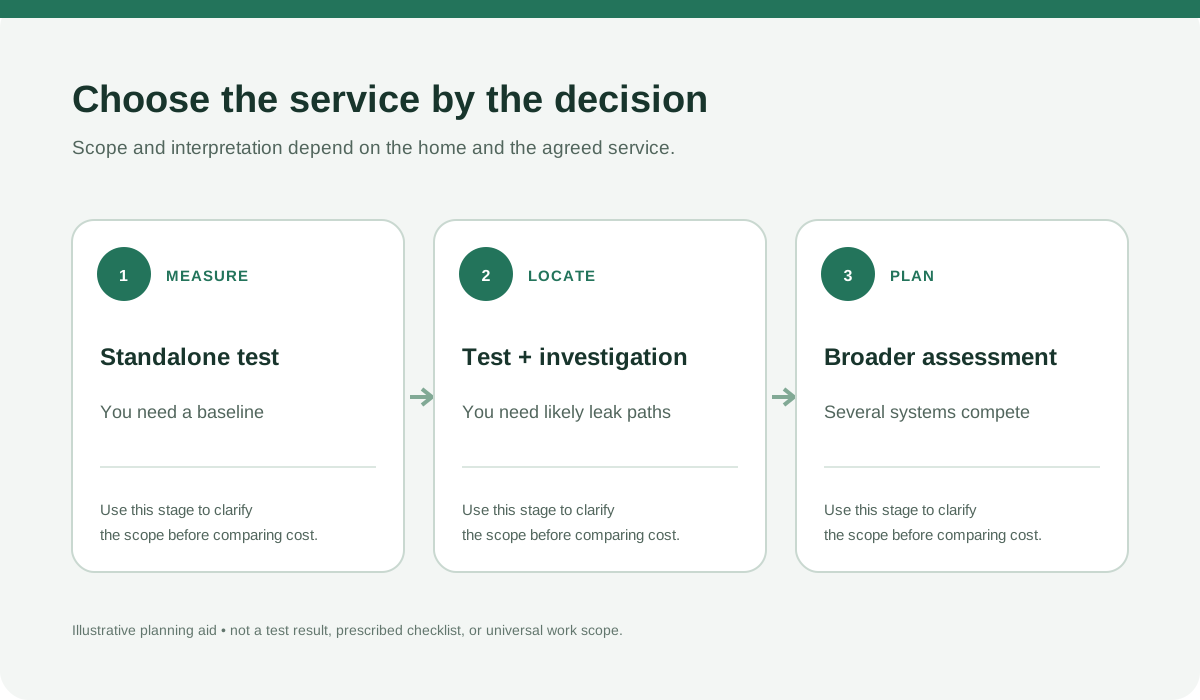
Choose a standalone measurement when the next decision is already narrow and the homeowner needs a calibrated baseline. Choose a leak-location service when the measurement must lead to a list of accessible paths. Choose a broader assessment when the alternatives include windows, walls, insulation, moisture correction, HVAC, or a major renovation. Each service has a different deliverable and should not be compared by the test name alone.
Ask what happens if the test finds high leakage but the locations cannot be reached, or if the measured leakage is modest while one room remains uncomfortable. The result should narrow the decision, not force the homeowner into a preselected product. A careful provider explains the test conditions, the limitations, and the next step in plain language.
Ask what the number can and cannot prove
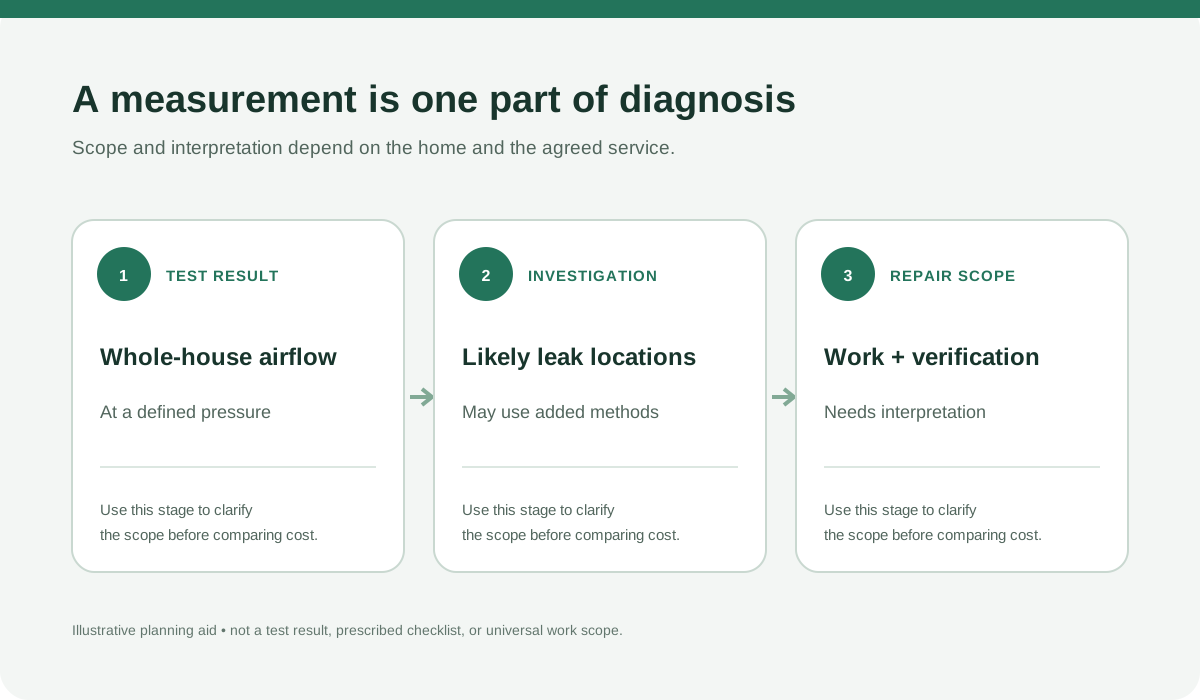
A blower-door result describes whole-building leakage under a test condition; it does not, by itself, identify every opening or prove that a particular room will become comfortable. Ask whether the provider will perform smoke tracing, pressure diagnostics, or a visual attic and basement review, and whether those services are included. If a test is used before and after air sealing, request the same test setup and a written explanation of what changed between the two measurements.
Record whether the home was occupied, which doors or vents were open, whether combustion appliances were operating, and whether weather conditions affected the test. Those details make repeated measurements more comparable. The useful deliverable is a decision path: the largest likely leakage areas, the areas that could not be tested, the safety implications, and the next repair that can be checked.