
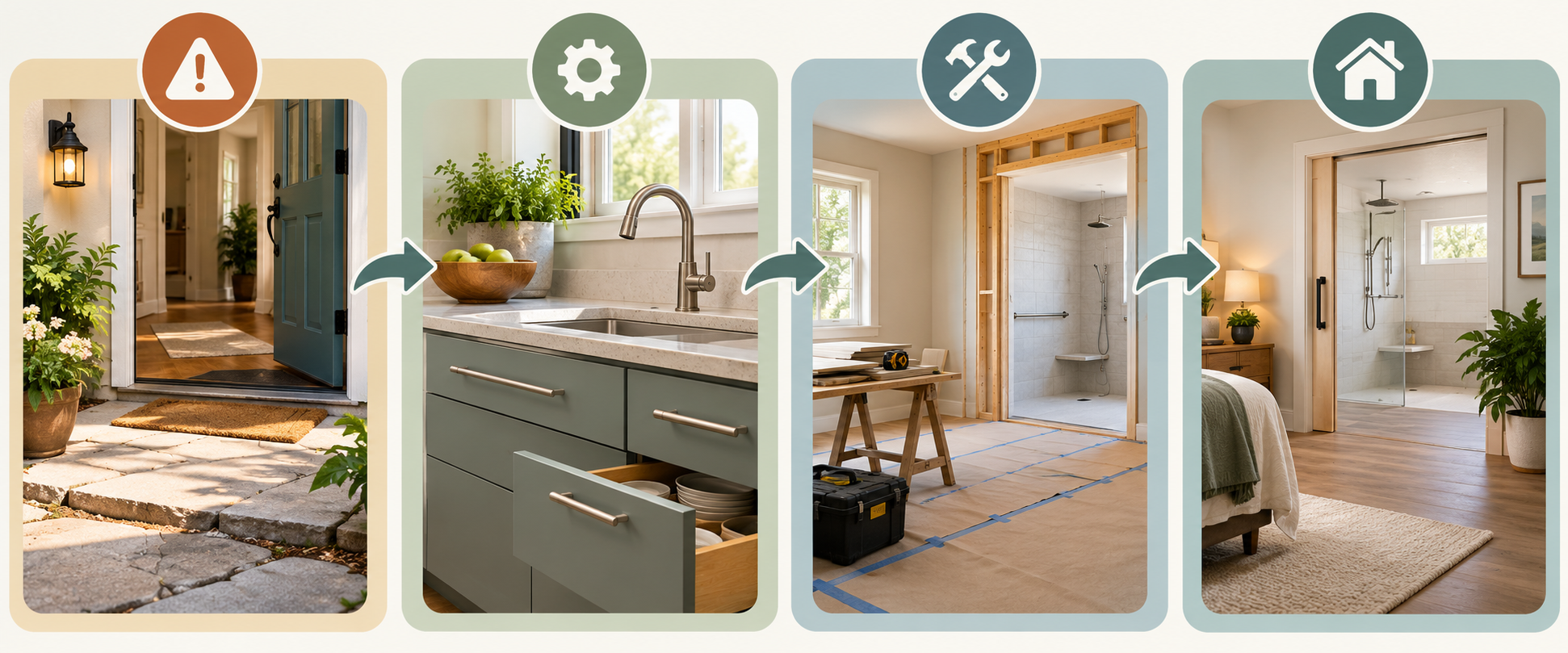
Phasing can keep a home project tied to real activities instead of a speculative list of future features. It can also avoid installing specialized equipment before the household knows whether it fits, will be used, can be maintained, and is allowed in the property. A phase plan should state what problem each step solves and what condition would trigger the next one.
First, describe the current routine
Map the route from the entrance to the rooms used every day. Include bathing, dressing, cooking, sleeping, laundry, visitors, and caregiver access where relevant. Identify which barriers are immediate and which are frustrating but manageable. A household may need a safer stair route now, a different bathing setup later, and no change to the kitchen at all.
Use an assessment when the barrier or appropriate response is unclear. Separate the person’s priorities from the building’s constraints so the plan does not spend money on an appealing feature that leaves the most-used route unresolved.
Phase 1: address hazards and interruptions
Start with current hazards that affect frequent activities: loose or curled rugs, cluttered routes, poor lighting, loose handrails, slippery transitions, difficult controls, or an entry that is hard to operate. Low-disruption changes may include moving furniture, improving lighting, changing hardware, adding contrast, or repairing an unstable surface.
These examples do not guarantee that a fall or injury will be prevented. Confirm the modification addresses the actual issue and does not create another barrier, such as glare, a cord across a route, or a new level change. Where a support product is involved, use an appropriate product and verified installation.
Phase 2: improve everyday use
Group small changes by task: entering the home, using a bathroom, reaching kitchen storage, seeing controls, or moving between rooms. A collection of low-cost improvements can still require coordination. For example, a new night light is less useful if it creates glare at a reflective floor or leaves the bathroom door difficult to find.
Price products, installation, power, finish repair, and recurring service separately. Decide who will maintain, test, or replace batteries and devices. Review the result in the actual routine rather than assuming the product label describes how it feels to use.
Phase 3: prepare during planned construction
When a bathroom or wall is already being opened, discuss future support blocking, route continuity, drain and floor constraints, control locations, and concealed utilities. During a kitchen or circulation remodel, consider whether a doorway, electrical pathway, or first-floor bathroom location can be made more adaptable.
Preparation is useful only when the extra work is understood and does not compromise the current design. A reinforced wall does not guarantee that a future support device will fit; a conduit does not determine the right control system; and a wider doorway alone does not create a usable route. Keep drawings or photos of concealed work and record what was actually installed.
Phase 4: undertake room, route, and major projects
Bathroom remodeling, door widening, a zero-step entry, first-floor living, a ramp, a lift, an elevator, and an addition need separate scopes. Compare the destinations each option connects, installation disruption, maintenance, structural prerequisites, and the household’s routine. A lift that serves one level change may not solve entry access; a first-floor suite may preserve independence without changing the stairs but displace another room.
Obtain a measured scope and compare the base work with alternatives. Ask which work must occur together, what can safely wait, and whether separate phases will duplicate demolition or finish costs. For rentals, condominiums, and shared structures, identify approval and restoration responsibilities before committing.
Budget across phases
Make a simple plan with columns for current need, preferred action, dependencies, local quote, and review trigger. Build the first phase around a complete need rather than the lowest priced item. Include assessment, design, permits, construction, equipment, alternate arrangements during work, and maintenance. Keep a contingency for concealed conditions without leaving safety-critical items undefined.
Do not assume that future needs, costs, technology, or program rules can be predicted. Reassess after a life or household change, before a major renovation closes walls, and when a workaround stops serving the routine. A good phase plan can change without treating earlier choices as a failure.
Make the phases trigger-based
A calendar can help coordinate work, but a phase plan should also define what would make the next project necessary. A trigger might be a route that is no longer usable, a bathroom that cannot be entered safely, a temporary device that is unreliable, or planned construction that will expose the relevant wall or floor. Record who will notice the trigger and how the household will reassess the choice.
This approach avoids two opposite problems: delaying a current need because a larger project may happen someday, and installing a costly system now to solve an uncertain future situation. When a feature is only preparatory, describe what it preserves and what it does not guarantee. When a current safety issue exists, get qualified help promptly rather than waiting for an ideal multi-year remodel.
Review the plan when quotes, household composition, or available assistance changes. A canceled phase is not automatically wasted planning; it may mean that the need changed or a simpler route became workable. Keep notes and drawings so a future professional can understand the earlier decision.