
Defensible-space work changes the immediate property conditions around a home so embers and fire have fewer ways to ignite the structure. It is not simply “clear everything.” The work may include vegetation removal, pruning, combustible mulch replacement, fence and deck changes, storage relocation, tree-risk assessment, and recurring maintenance. The right scope depends on the home, terrain, vegetation, weather, ownership, and local rules.
A zone-based way to budget
FireSmart Canada describes three zones around the home: an immediate zone from 0 to 1.5 metres, an intermediate zone from 1.5 to 10 metres, and an extended zone from 10 to 30 metres. These distances are a Canadian guidance framework, not a universal code or an instruction that every property can be treated the same way.
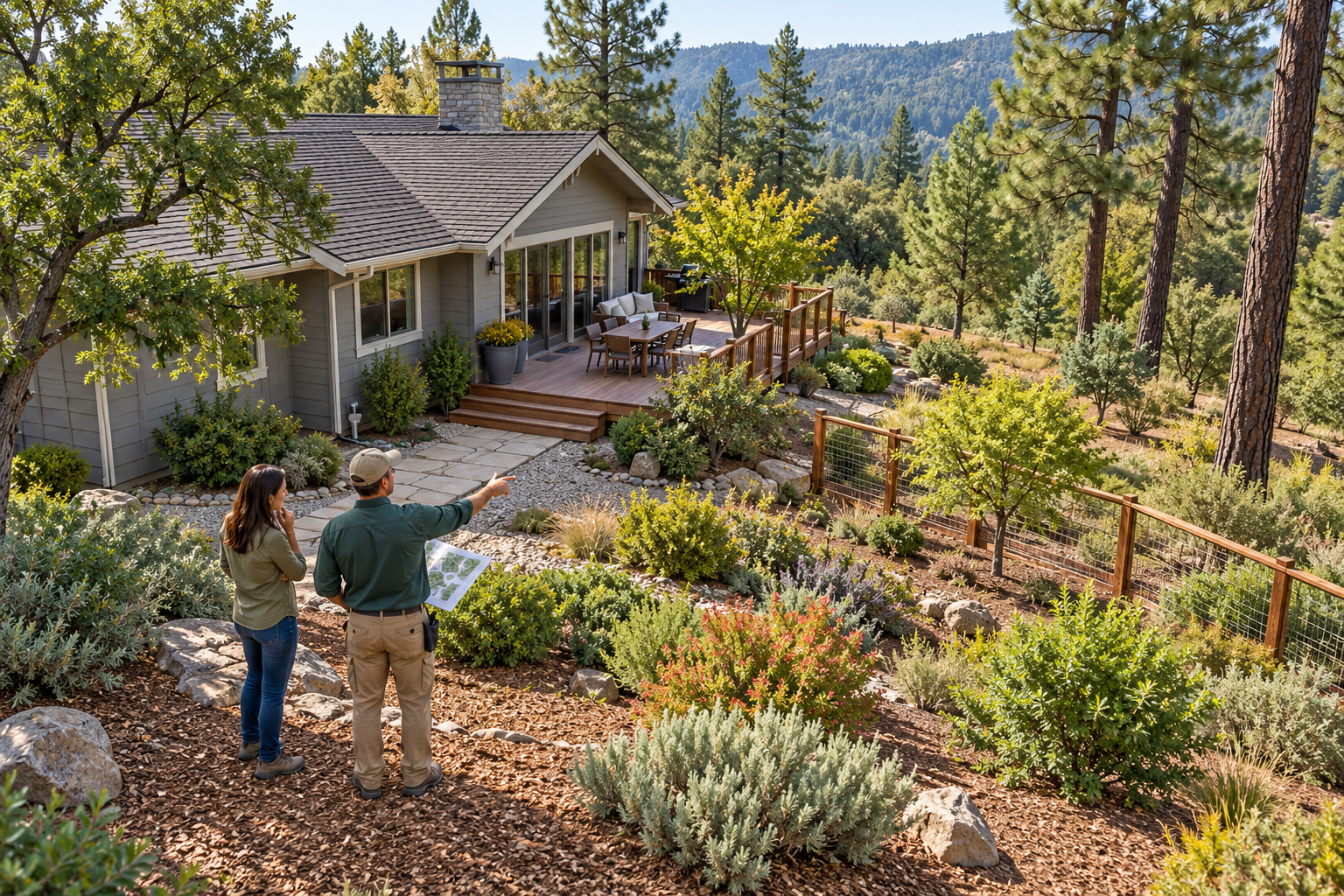
The immediate zone usually receives the highest priority because combustible material next to the home, attached structures, or decks can bridge an ignition pathway. Costs may include non-combustible surface materials, removal of vegetation and stored items, gutter and deck cleaning, fence transitions, and small repairs. The intermediate zone can involve shrub and tree management, mulch changes, access, and removal of fuel continuity. The extended zone may require larger tree work, lower-branch pruning, surface-fuel reduction, and a forest professional on steep or complex land.
What drives the initial project cost
Tree size, slope, access, disposal, utility lines, structures, protected trees, property boundaries, and the distance to a disposal facility can dominate the bill. A small urban lot may need pruning and material replacement; a wooded rural property may need a multi-day crew, chipping, hauling, stump work, or specialized equipment. A tree near the home may require an arborist or a separate removal permit rather than routine landscaping.
Ask for separate prices for assessment, pruning, removal, stump or root work, disposal, replanting, mulch or hardscape, fence/deck changes, and follow-up maintenance. Confirm who owns vegetation beyond the property line and whether a neighbor, municipality, conservation authority, or fire district must approve the work.
Maintenance is a continuing cost
Defensible space is not a one-time clearance purchase. Grass, shrubs, fallen branches, needles, leaf litter, mulch, and stored combustibles return. Budget seasonal cleanup, pruning, gutter cleaning, and inspection after storms. The maintenance interval depends on vegetation growth, wind, drought, slope, and the local fire season.
Avoid universal clearance claims. FireSmart’s zone framework and FEMA guidance support reducing combustible material near the structure, but local authorities may set different requirements or recommendations. A property professional can account for slope, wind, vegetation type, and the way adjacent lots interact. Over-clearing can create erosion, drainage, habitat, or privacy problems and does not automatically improve resilience.
Coordinate with the house
Vegetation work has the most value when it connects to structural hardening. A clear immediate zone does not correct an ember-prone vent, damaged roof edge, combustible deck connection, or open window. Conversely, a hardened house may still be exposed to a nearby fence, woodpile, or tree that carries fire to the structure. Use the home-hardening and vent guides to coordinate the decision without duplicating ordinary landscaping or tree-service work.
Price the work in the local market. Do not convert U.S. landscaping prices into Canadian costs or treat a grant, insurer recommendation, or municipal program as permanent. The quote should state the zones addressed, disposal, access, permits, excluded areas, maintenance, and the specific ignition pathways the work is meant to reduce.
What a detailed scope should show
Request a site sketch or marked photographs showing the home, decks, fences, sheds, propane or fuel storage, vegetation, slopes, driveways, and property boundaries. Ask the contractor to label which work is pruning, removal, replacement, hauling, replanting, hardscape, or structural repair. This prevents a low landscape quote from being compared with a broader ignition-zone project.
Confirm who is responsible for utility locating, protected or heritage trees, wildlife, erosion control, and disposal. Tree removal near a house or line may require an arborist, crane, traffic control, or a separate permit. Work on a neighboring or shared boundary may require written consent. These conditions can change cost more than the plant material itself.
Decide what to keep
Wildfire guidance is not a command to remove every tree. Shade, slope stability, privacy, habitat, and erosion can matter. The professional should explain why a plant, branch, fence, mulch, or stored item creates a relevant ignition pathway and what lower-impact alternative exists. On steep land, seek forest or slope expertise before clearing vegetation.
After the initial work, price seasonal cleanup and inspection. A defensible-space budget that omits recurring work is incomplete, especially in drought, wind, or long fire seasons.
Compare one-time and recurring cost
Ask for the first-year project and the expected annual or seasonal maintenance separately. Removal and hauling may be a large first cost; pruning, leaf removal, gutter cleaning, and replacing combustible mulch may recur. A lower-cost plant or hardscape choice can have a different upkeep burden. Include irrigation, erosion control, and access where those affect the work.
Review ownership boundaries before the crew starts. A fence, tree, road edge, shared driveway, or vegetation beyond the lot may require another owner’s consent or a public permit. A work plan that ignores those boundaries can create delay and legal or neighbor costs.
The goal is a maintained ignition-zone treatment that fits the property and household, not a one-time clearing that grows back or creates a new slope and drainage problem.